


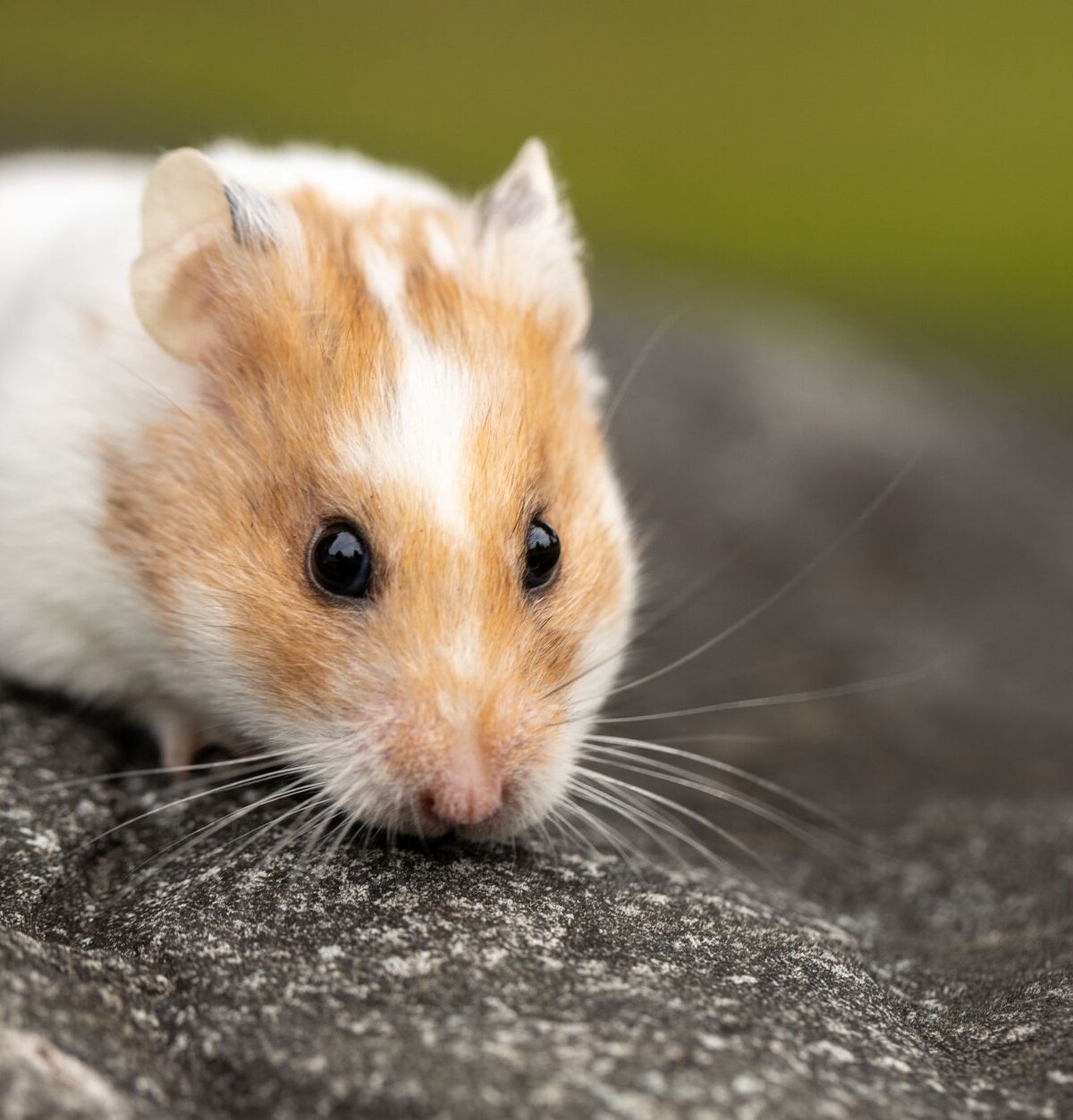
SYRIAN HAMSTER
Mesocricetus auratus
DESCRIPTION
Syrian Hamster (Mesocricetus auratus) is commonly known as the Golden Hamster and is characterized by its stout body, short legs, and large cheek pouches. This species exhibits a range of colors, including golden, black, and white, and is known for its docile nature, making it a popular pet. In the wild, they are primarily nocturnal and are solitary creatures, often creating extensive burrow systems for shelter and food storage.
FUN FACTS
- Syrian Hamsters have cheek pouches that can expand to store food, allowing them to transport it back to their burrows
- | They were first domesticated in the 1930s and have since become one of the most popular pet species worldwide, often used in scientific research due to their docile nature
QUICK INFO
Lifespan2-3 years in the wild, up to 4 years in captivity
Average Weight120-150 g
Average Length12-15 cm
Diet TypeOmnivore
Social Structuresolitary, they prefer to live alone and can be aggressive towards other hamsters.
Activity PatternNocturnal
Breeding SeasonYear-round in captivity, but typically spring in the wild.
- Habitat
- They inhabit dry grasslands and scrub areas, often creating burrows in sandy soils. These burrows provide protection from predators and harsh environmental conditions.
- Biomes
- Grassland, Desert
- Native Range
- Native to the arid regions of northern Syria and parts of Turkey.
- Continent
- Asia
- Countries
- Syria, Turkey
- Diet
- Syrian Hamsters are omnivorous, primarily feeding on seeds, grains, and vegetables. They also enjoy occasional protein sources such as insects.
- Diet Type
- Omnivore
- Favorite Food
- seeds, grains, vegetables
- Social Structure
- solitary, they prefer to live alone and can be aggressive towards other hamsters.
- Activity Pattern
- Nocturnal
- Group Size
- 1
- Territorial
- 1

 LC
LC
120-150 g
Weight
12-15 cm
Length
- Coloration
- Typically golden-brown with a lighter underbelly, but can also be found in various color morphs.
- Sexual Dimorphism
- Males are generally larger than females.
- Lifespan
- 2-3 years in the wild, up to 4 years in captivity
- Gestation Period
- 16 days
- Offspring per Birth
- 5-12
- Sexual Maturity
- 6-8 weeks
- Breeding Season
- Year-round in captivity, but typically spring in the wild.
LC
Least Concern
IUCN Red List Status
- Population Status
- The population is stable in captivity, but wild populations are threatened by habitat loss.
- Wild Population Estimate
- Unknown
- Population Trend
- Decreasing
- Endangered
- 0
- Threats
- Main threats include habitat destruction due to agriculture and urbanization. Additionally, they face predation from various animals.
- Predators
- Owls, foxes, snakes, and other small carnivores.
- Defense Mechanisms
- They can bite when threatened and use their burrows for escape.
- Compatible Animals
- None, they are best kept alone.
- Found in Zoos
- Common