


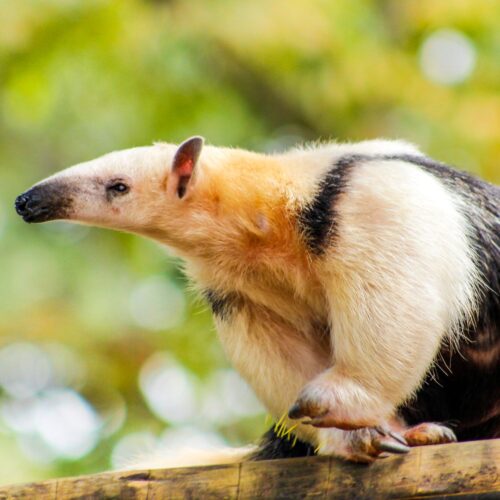
TAMANDUA
Tamandua tetradactyla
DESCRIPTION
The tamandua (Tamandua tetradactyla) is a medium-sized anteater known for its long snout and prehensile tail. It is primarily arboreal and is found in various forested habitats across Central and South America.
FUN FACTS
- Tamanduas have a prehensile tail that helps them balance while climbing | They can consume thousands of ants in a single day | Their long tongues can extend up to 16 inches
QUICK INFO
Lifespan7-9 years in the wild, up to 15 years in captivity
Average Weight4-10 kg
Average Length0.9-1.2 m
Diet TypeInsectivore
Social Structuresolitary, typically found alone except during mating season
Activity PatternNocturnal
Breeding SeasonYear-round, with peaks depending on the region
- Habitat
- Tamanduas inhabit a range of environments, including tropical rainforests, savannas, and woodlands. They are often found in areas with abundant trees for climbing.
- Biomes
- Tropical Rainforest, Savanna, Woodland
- Native Range
- The native range of the tamandua extends from southern Mexico to northern Argentina.
- Continent
- North America, South America
- Countries
- Mexico, Guatemala, Honduras, Nicaragua, Costa Rica, Panama, Colombia, Venezuela, Ecuador, Peru, Brazil, Bolivia, Paraguay, Argentina
- Diet
- Tamanduas primarily feed on ants and termites, using their long tongues to extract them from nests. They may also consume some fruits and other soft plant materials.
- Diet Type
- Insectivore
- Favorite Food
- ants, termites
- Social Structure
- solitary, typically found alone except during mating season
- Activity Pattern
- Nocturnal
- Group Size
- 1
- Territorial
- 0

4-10 kg
Weight
0.9-1.2 m
Length
- Coloration
- The tamandua has a distinctive coat with a yellowish-brown color and darker markings on its back.
- Lifespan
- 7-9 years in the wild, up to 15 years in captivity
- Gestation Period
- 150 days
- Offspring per Birth
- 1
- Sexual Maturity
- 2-3 years
- Breeding Season
- Year-round, with peaks depending on the region
LC
Least Concern
IUCN Red List Status
- Population Status
- The tamandua is currently considered to have a stable population, though habitat loss poses a threat.
- Wild Population Estimate
- Unknown
- Population Trend
- Stable
- Endangered
- 0
- Threats
- Main threats include habitat destruction due to deforestation and hunting. They are also sometimes killed by domestic dogs.
- Predators
- Large cats, such as jaguars and pumas, may prey on tamanduas.
- Defense Mechanisms
- Tamanduas can defend themselves with their sharp claws and strong bite if threatened.
- Found in Zoos
- Uncommon