


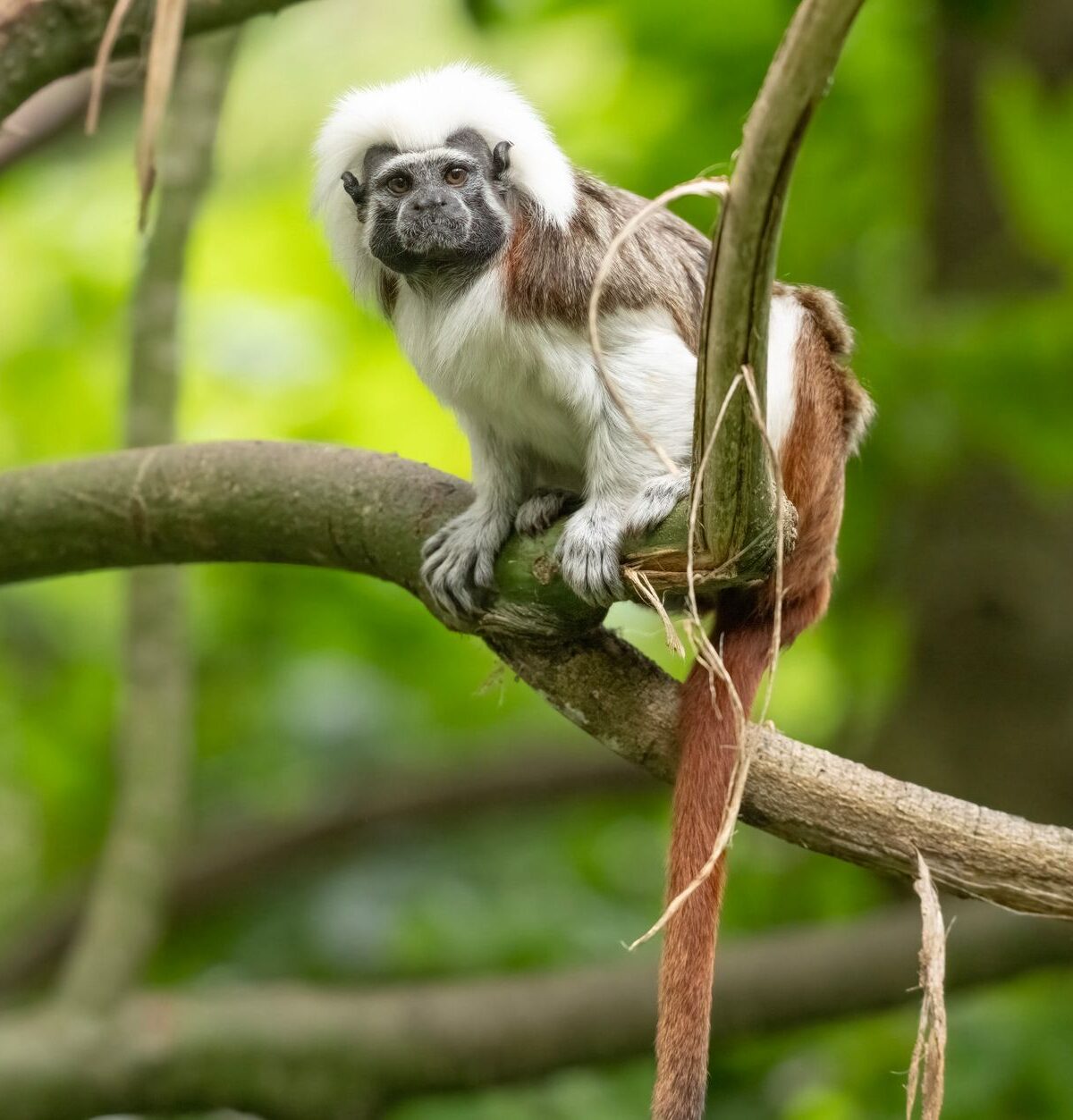
TAMARIN
Saguinus
DESCRIPTION
Tamarins are small, New World monkeys known for their distinctive appearance and social behavior. They typically have a tufted or bearded face, with varying coloration depending on the species, such as the striking golden fur of the Golden Lion Tamarin. These primates are highly social, often living in family groups and exhibiting complex social interactions, which are crucial for their survival in the wild.
FUN FACTS
- Tamarins are known for their unique social structures, often involving cooperative breeding where older siblings help care for younger ones
- This behavior not only strengthens family bonds but also increases the survival rate of the young
- | The Emperor Tamarin is particularly famous for its distinctive mustache-like facial hair, which gives it a regal appearance
- This species is also known for its playful nature and agility in the trees, making it a favorite among zoo visitors
QUICK INFO
Lifespan10-15 years in the wild, up to 20 years in captivi
Average Weight0.5-1 kg
Average Length25-40 cm
Diet TypeOmnivore
Social StructureTamarins typically live in family groups, which can consist of a breeding pair and their offspring. This social structure helps them to raise young and defend their territory.
Activity PatternDiurnal
Breeding SeasonYear-round, with peaks depending on species and habitat conditions
- Habitat
- Tamarins inhabit tropical rainforests and secondary forests, often preferring areas with abundant tree cover. They are arboreal, spending most of their time in the trees.
- Biomes
- Tropical Rainforest
- Native Range
- Tamarins are native to the forests of Central and South America, particularly in Brazil, Colombia, and surrounding regions.
- Continent
- South America
- Countries
- Brazil, Colombia, Peru
- Diet
- Tamarins primarily consume a diet of fruits, insects, and small vertebrates. They are known to forage in trees, using their dexterous hands to extract food from crevices.
- Diet Type
- Omnivore
- Favorite Food
- Fruits, insects
- Social Structure
- Tamarins typically live in family groups, which can consist of a breeding pair and their offspring. This social structure helps them to raise young and defend their territory.
- Activity Pattern
- Diurnal
- Group Size
- 2-15
- Territorial
- 1
 VU
VU
 LC
LC
0.5-1 kg
Weight
25-40 cm
Length
- Coloration
- Varies by species; often includes bright colors and distinctive markings.
- Sexual Dimorphism
- Males and females are similar in size and appearance.
- Lifespan
- 10-15 years in the wild, up to 20 years in captivi
- Gestation Period
- 140 days
- Offspring per Birth
- 1-3
- Sexual Maturity
- 1-2 years
- Breeding Season
- Year-round, with peaks depending on species and habitat conditions
EN
Endangered
IUCN Red List Status
- Population Status
- Some species of tamarins are considered endangered due to habitat loss and fragmentation.
- Wild Population Estimate
- Unknown, varies by species
- Population Trend
- Decreasing
- Endangered
- 1
- Threats
- The main threats to tamarins include deforestation, habitat destruction, and the illegal pet trade. These factors have led to significant declines in their populations.
- Conservation Program
- Various conservation programs are in place, including habitat restoration and breeding programs in captivity.
- Predators
- Birds of prey, snakes, and larger mammals can pose threats to tamarins, particularly to young individuals.
- Defense Mechanisms
- Tamarins use vocalizations to warn of predators and may also engage in mobbing behavior to deter threats.
- Compatible Animals
- Other small primates, such as marmosets, in controlled environments.
- Found in Zoos
- Common