


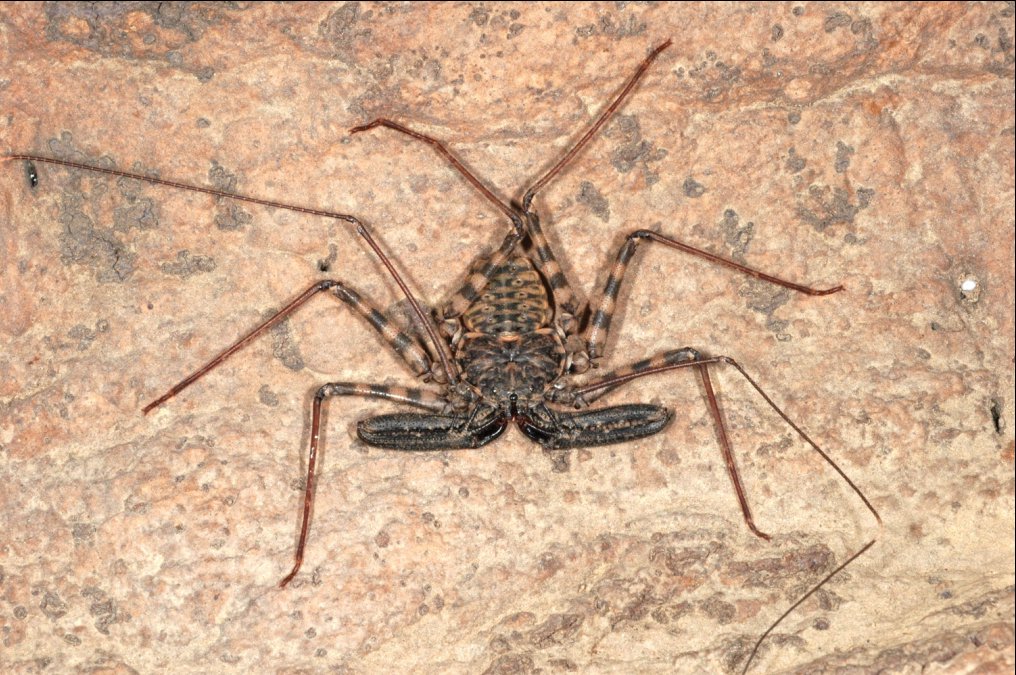
TANZANIAN WHIP SCORPION
DESCRIPTION
Also called whip scorpion and tailless whip scorpion, the Tanzanian Whip Scorpion is a unique arachnid known for its elongated body and long, whip-like pedipalps that it uses for sensing its environment. These creatures are typically dark brown to black in color, with a flattened body that allows them to navigate through their forest floor habitat. They are primarily nocturnal, preferring to hide under rocks and leaf litter during the day, emerging at night to hunt for prey.
FUN FACTS
- Tanzanian Whip Scorpions are not true scorpions, despite their name, and they lack the stinger that characterizes true scorpions
- They are fascinating for their unique method of hunting, using their long pedipalps to sense and capture prey in the dark, showcasing an interesting adaptation to their nocturnal lifestyle
QUICK INFO
Lifespanup to 7 years in captivity
Average Length5-10 cm
Diet TypeCarnivore
Social Structuresolitary, typically found alone except during mating
Activity PatternNocturnal
Breeding Seasonvaries, typically during warmer months
- Habitat
- These whip scorpions inhabit moist, tropical environments, often found in leaf litter or under rocks in forests. They thrive in areas with high humidity and ample cover for hiding.
- Biomes
- Tropical Rainforest
- Native Range
- The Tanzanian Whip Scorpion is native to the tropical forests of Tanzania.
- Continent
- Africa
- Countries
- Tanzania
- Diet
- Tanzanian Whip Scorpions are carnivorous, primarily feeding on insects and other small invertebrates. They use their pedipalps to capture and immobilize their prey before consuming it.
- Diet Type
- Carnivore
- Favorite Food
- insects, small invertebrates
- Social Structure
- solitary, typically found alone except during mating
- Activity Pattern
- Nocturnal
- Group Size
- 1
- Territorial
- 0
 VU
VU

5-10 cm
Length
- Coloration
- dark brown to black
- Sexual Dimorphism
- males are generally smaller than females
- Lifespan
- up to 7 years in captivity
- Offspring per Birth
- 10-30
- Sexual Maturity
- 1-2 years
- Breeding Season
- varies, typically during warmer months
LC
Least Concern
IUCN Red List Status
- Population Status
- The population status is not well-documented, but they are not considered endangered.
- Population Trend
- Stable
- Endangered
- 0
- Threats
- Habitat loss due to deforestation and human encroachment poses a threat to their populations. However, they are not currently facing significant threats.
- Predators
- birds, small mammals, larger arthropods
- Defense Mechanisms
- They can produce a mild venom and have the ability to spray a defensive fluid that can deter predators.
- Found in Zoos
- Uncommon