


TARSIER
DESCRIPTION
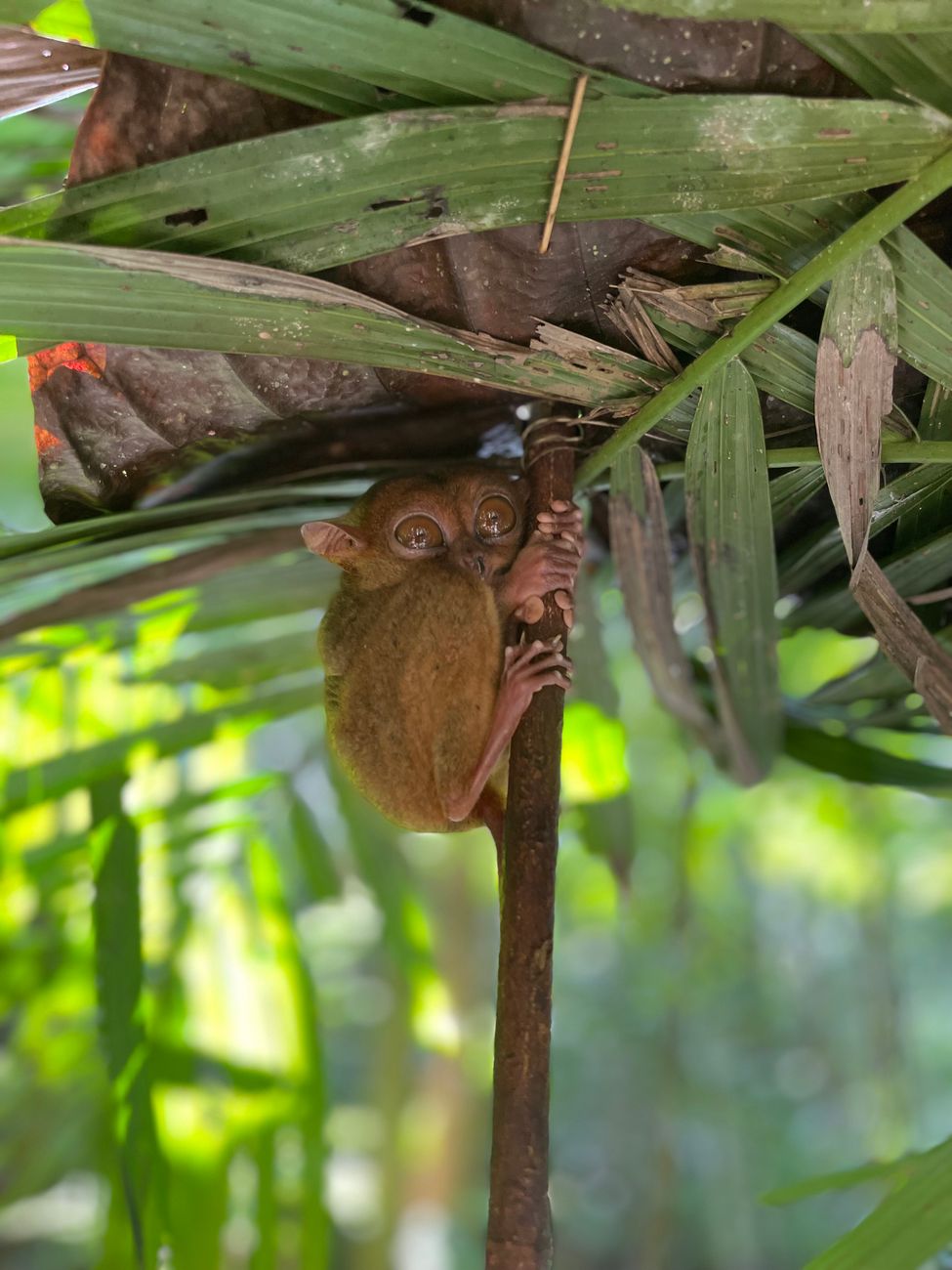
Tarsier is commonly known as the Philippine Tarsier and the Spectral Tarsier. These small primates are characterized by their large eyes, which are adapted for nocturnal vision, and their long fingers and toes that aid in climbing. Tarsiers are highly agile and can leap up to 10 times their body length, making them exceptional hunters in their forest habitats.
FUN FACTS
- Tarsiers have the largest eyes relative to their body size of any mammal, which allows them to see in low light conditions
- Interestingly, Tarsiers can rotate their heads almost 180 degrees, similar to owls, which helps them spot prey without moving their bodies.|Despite their small size, Tarsiers are capable of making loud calls that can be heard over long distances, which they use to communicate with others in their territory
QUICK INFO
Lifespan12-16 years in the wild, up to 20 years in captivi
Average Weight80-160 g
Average Length10-15 cm
Diet TypeInsectivore
Social Structuresolitary, occasionally in pairs or small family groups
Activity PatternNocturnal
Breeding SeasonYear-round, with peaks depending on the region
- Habitat
- Tarsiers inhabit tropical forests, particularly in areas with dense vegetation that provide ample cover and hunting opportunities. They are arboreal and spend most of their time in trees.
- Biomes
- Tropical Rainforest
- Native Range
- Tarsiers are native to Southeast Asia, specifically found in the Philippines, Borneo, and Sumatra.
- Continent
- Asia
- Countries
- Philippines, Indonesia, Malaysia
- Diet
- Tarsiers primarily eat insects, but they also consume small vertebrates such as birds and lizards. Their diet is largely dependent on the availability of prey in their environment.
- Diet Type
- Insectivore
- Favorite Food
- insects, small vertebrates
- Social Structure
- solitary, occasionally in pairs or small family groups
- Activity Pattern
- Nocturnal
- Group Size
- 1-4
- Territorial
- 1
 VU
VU
 LC
LC
80-160 g
Weight
10-15 cm
Length
- Coloration
- soft fur that ranges from gray to brown, with lighter underparts
- Sexual Dimorphism
- males are generally larger than females
- Lifespan
- 12-16 years in the wild, up to 20 years in captivi
- Gestation Period
- 6 months
- Offspring per Birth
- 1-2
- Sexual Maturity
- 1-2 years
- Breeding Season
- Year-round, with peaks depending on the region
VU
Vulnerable
IUCN Red List Status
- Population Status
- The population of Tarsiers is currently declining due to habitat loss and hunting.
- Wild Population Estimate
- unknown
- Population Trend
- Decreasing
- Endangered
- 1
- Threats
- Main threats to Tarsiers include deforestation and habitat destruction due to logging and agricultural expansion. Additionally, they are sometimes hunted for the pet trade.
- Conservation Program
- Various local conservation efforts are in place, particularly in the Philippines, to protect their habitats.
- Predators
- Birds of prey, snakes, and larger mammals can pose threats to Tarsiers.
- Defense Mechanisms
- Tarsiers rely on their agility and ability to blend into their surroundings to avoid predators.
- Found in Zoos
- Uncommon