


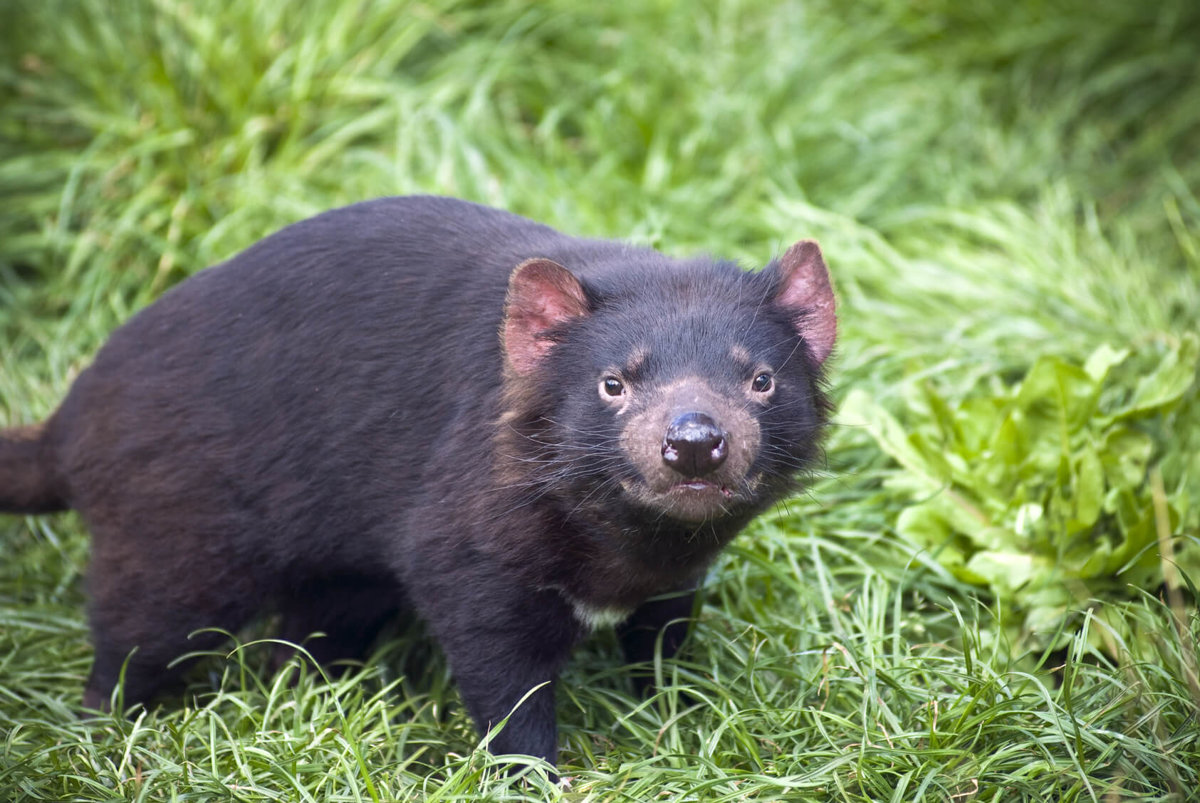
TASMANIAN DEVIL
Sarcophilus harrisii
DESCRIPTION
The Tasmanian Devil is a carnivorous marsupial native to Tasmania. It is known for its stocky build, black fur, and loud, disturbing screeches.
FUN FACTS
- Tasmanian Devils can consume up to 40% of their body weight in one meal | They have a unique immune system that allows them to resist certain diseases | Their screeches can be heard up to a mile away
QUICK INFO
Lifespan5-8 years in the wild, up to 10 years in captivity
Average Weight8-14 kg
Average Length57-65 cm
Diet TypeCarnivore
Social Structuresolitary, occasionally social when feeding
Activity PatternNocturnal
Breeding SeasonSpring (February-April)
- Habitat
- They inhabit a variety of environments, including forests, grasslands, and scrublands. They prefer areas with dense vegetation for shelter.
- Biomes
- Temperate Forest, Grassland
- Native Range
- Endemic to Tasmania, Australia.
- Continent
- Australia
- Countries
- Australia
- Diet
- Tasmanian Devils primarily scavenge for carrion but will also hunt small animals. They have powerful jaws that allow them to consume bones and fur.
- Diet Type
- Carnivore
- Favorite Food
- carrion, small mammals
- Social Structure
- solitary, occasionally social when feeding
- Activity Pattern
- Nocturnal
- Group Size
- 1-2
- Territorial
- 1
8-14 kg
Weight
57-65 cm
Length
- Coloration
- black with white markings on the chest and face
- Sexual Dimorphism
- males are generally larger than females
- Lifespan
- 5-8 years in the wild, up to 10 years in captivity
- Gestation Period
- 30 days
- Offspring per Birth
- 2-4
- Sexual Maturity
- 2 years
- Breeding Season
- Spring (February-April)
EN
Endangered
IUCN Red List Status
- Population Status
- The population has significantly declined due to disease and habitat loss.
- Wild Population Estimate
- 20,000-50,000
- Population Trend
- Decreasing
- Endangered
- 1
- Threats
- The main threats include Devil Facial Tumor Disease (DFTD), habitat destruction, and vehicle strikes.
- Conservation Program
- Tasmanian Devil Recovery Program
- Defense Mechanisms
- They exhibit aggressive vocalizations and can deliver powerful bites when threatened.
- Found in Zoos
- Common