


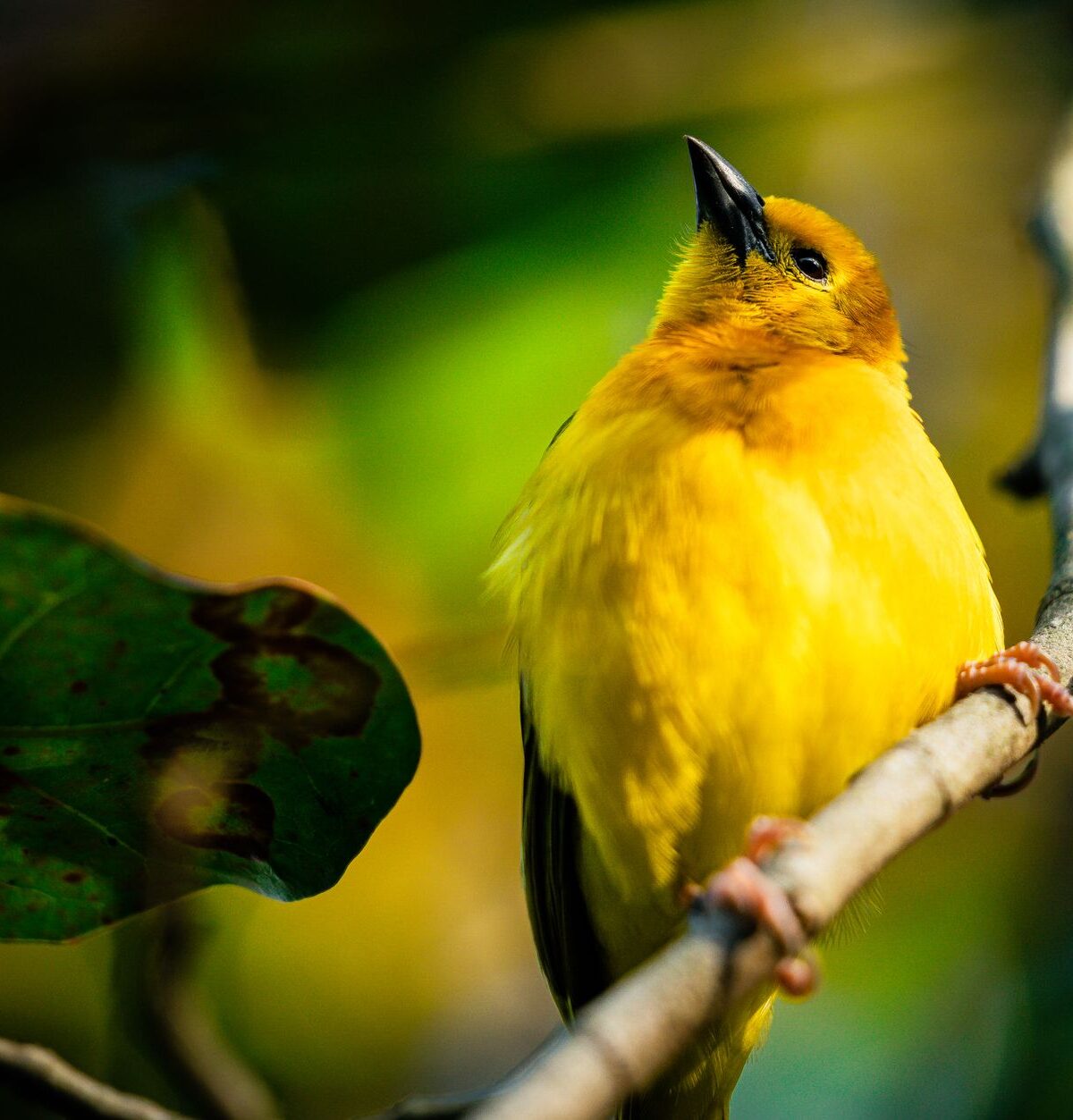
TAVETA WEAVER
Ploceus vitellinus
DESCRIPTION
Taveta Weaver (Ploceus vitellinus), also known as the Yellow Weaver, is a small, colorful bird characterized by its bright yellow plumage and distinctive black mask around the eyes. This species exhibits a strong sexual dimorphism, with males being more vibrantly colored than females, especially during the breeding season when they display their striking hues to attract mates. Taveta Weavers are social birds, often found in flocks, and are known for their intricate nest-building skills, weaving grass and other plant materials into elaborate structures suspended from branches.
FUN FACTS
- Taveta Weavers are remarkable architects, capable of constructing complex nests that can take several days to complete
- These nests are often built in colonies, providing safety in numbers from predators
- | During the breeding season, male Taveta Weavers engage in elaborate courtship displays, showcasing their vibrant plumage and performing acrobatic flights to attract females
- Their nests are not only functional but also serve as a visual spectacle in their natural habitat
QUICK INFO
Lifespan5-10 years in the wild
Average Weight20-30 g
Average Length15-18 cm
Diet TypeOmnivore
Social StructureThey are typically found in groups, often forming flocks that can number in the hundreds during non-breeding seasons.
Activity PatternDiurnal
Breeding SeasonVaries by region, typically during the rainy season.
- Habitat
- These birds inhabit grasslands, savannas, and open woodlands, often near water sources. They prefer areas with abundant vegetation for nesting and foraging.
- Biomes
- Savanna, Grassland
- Native Range
- Taveta Weavers are native to East Africa, specifically found in regions of Kenya and Tanzania.
- Continent
- Africa
- Countries
- Kenya, Tanzania
- Diet
- Taveta Weavers primarily feed on seeds, grains, and insects, foraging in trees and on the ground. They are particularly fond of grass seeds and are often seen in agricultural fields.
- Diet Type
- Omnivore
- Favorite Food
- grass seeds, insects
- Social Structure
- They are typically found in groups, often forming flocks that can number in the hundreds during non-breeding seasons.
- Activity Pattern
- Diurnal
- Group Size
- 10-50
- Territorial
- 0
 LC
LC
 VU
VU
20-30 g
Weight
15-18 cm
Length
- Coloration
- Bright yellow body with a black face and throat in males; females are more subdued in color, with brownish-yellow tones.
- Sexual Dimorphism
- Males are more brightly colored than females, especially during the breeding season.
- Lifespan
- 5-10 years in the wild
- Offspring per Birth
- 2-5 eggs
- Sexual Maturity
- 1 year
- Breeding Season
- Varies by region, typically during the rainy season.
LC
Least Concern
IUCN Red List Status
- Population Status
- The population of Taveta Weavers is currently stable, but they face habitat loss due to agricultural expansion.
- Wild Population Estimate
- Unknown
- Population Trend
- Stable
- Endangered
- 0
- Threats
- Main threats include habitat destruction due to agriculture and urbanization. Additionally, they may be affected by changes in land use and climate change.
- Predators
- Snakes, birds of prey, and domestic cats are known predators of Taveta Weavers.
- Defense Mechanisms
- They often use their nesting skills to evade predators, building nests high in trees to avoid ground-based threats.
- Found in Zoos
- Uncommon