


TEXAS BLIND SALAMANDER
Eurycea rathbuni
DESCRIPTION
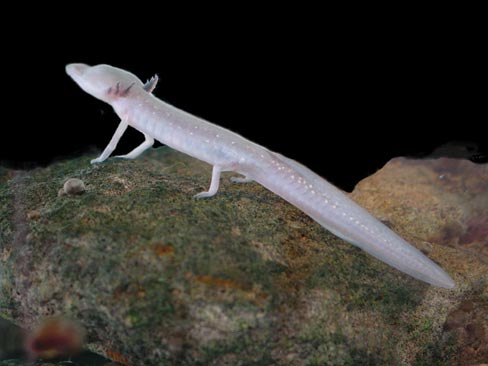
Texas Blind Salamander (Eurycea rathbuni) is a unique species of salamander that is completely blind and adapted to a subterranean lifestyle. It has a pale, almost translucent body, which is a characteristic feature of cave-dwelling organisms. This species is primarily found in the aquifers of central Texas, where it plays a crucial role in the aquatic ecosystem by helping to maintain the balance of its habitat.
FUN FACTS
- Texas Blind Salamanders are completely adapted to life in darkness, which is why they have lost their eyesight over generations
- Their unique adaptations also include a heightened sense of smell and touch, allowing them to navigate and find food in their dark environment
- | This species is an important indicator of the health of the aquifer ecosystems in which they live
- Their presence signifies a balanced and functioning aquatic environment, making them crucial for ecological studies and conservation efforts
QUICK INFO
Lifespanup to 20 years in captivity
Average Length10-15 cm
Diet TypeInsectivore
Social Structuresolitary
Activity PatternNocturnal
Breeding SeasonSpring (March-May)
- Habitat
- This species inhabits underground water systems, particularly in limestone caves and aquifers. The cool, dark, and moist environment is ideal for their survival and reproduction.
- Biomes
- Cave, Aquatic
- Native Range
- Endemic to the Edwards Plateau region of Texas, USA.
- Continent
- North America
- Countries
- United States
- Diet
- Texas Blind Salamanders primarily feed on small invertebrates, such as crustaceans and insect larvae, which they capture using their sticky tongues. Their diet is essential for their growth and reproduction.
- Diet Type
- Insectivore
- Favorite Food
- small invertebrates
- Social Structure
- solitary
- Activity Pattern
- Nocturnal
- Group Size
- 1-2
- Territorial
- 0
 LC
LC
10-15 cm
Length
- Coloration
- pale, almost translucent body
- Lifespan
- up to 20 years in captivity
- Offspring per Birth
- 10-20
- Sexual Maturity
- 2-3 years
- Breeding Season
- Spring (March-May)
EN
Endangered
IUCN Red List Status
- Population Status
- The population of Texas Blind Salamanders is considered vulnerable due to their limited range and specific habitat requirements.
- Wild Population Estimate
- unknown
- Population Trend
- Decreasing
- Endangered
- 1
- Threats
- Main threats include habitat destruction due to urban development and pollution of water sources. These factors significantly impact their fragile ecosystem.
- Conservation Program
- The species is protected under the Endangered Species Act, and various conservation efforts are in place to preserve its habitat.
- Predators
- Fish, larger amphibians, and invertebrates may prey on Texas Blind Salamanders, although specific predator relationships are not well-documented.
- Defense Mechanisms
- They rely on their subterranean habitat for protection from predators, as well as their ability to remain hidden in the dark.
- Found in Zoos
- Rare