


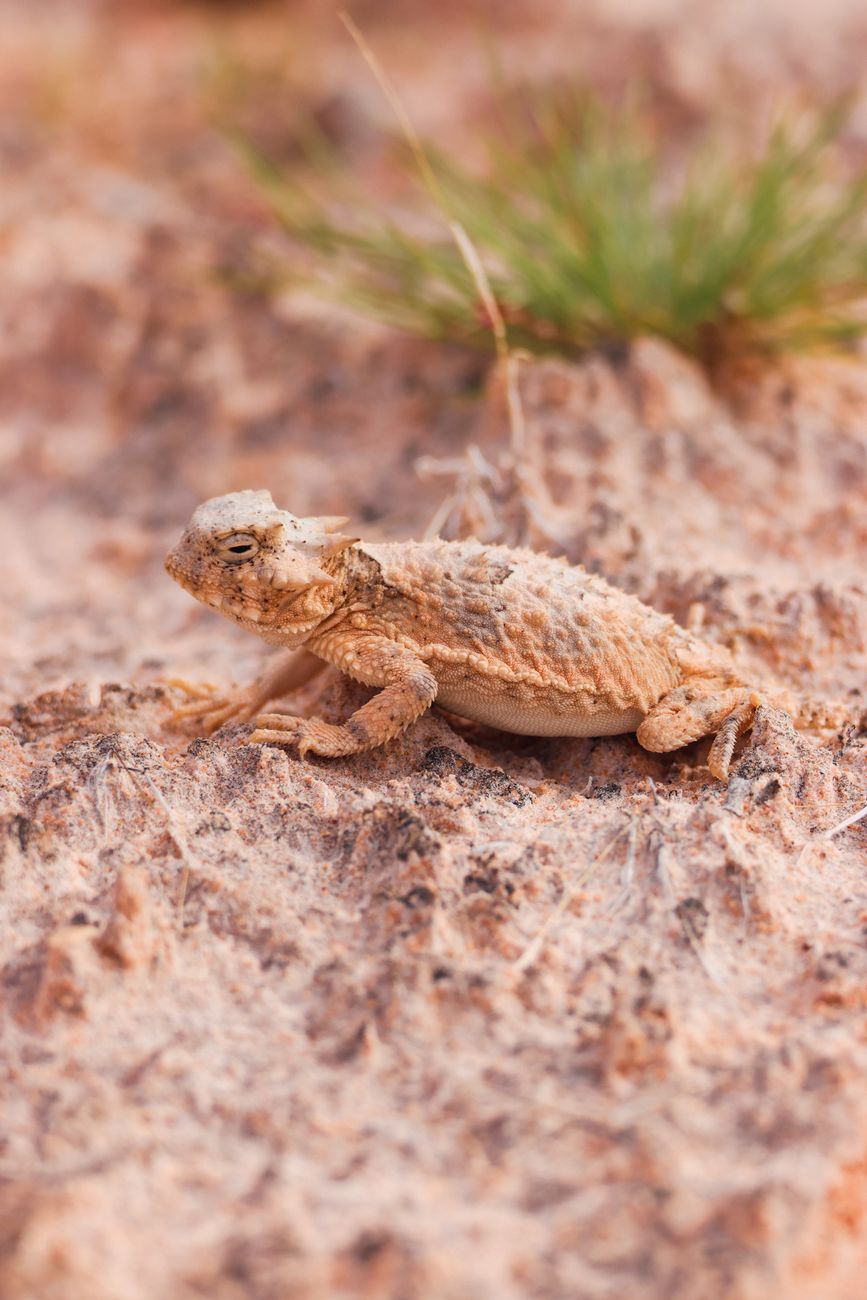
TEXAS HORNED LIZARD
DESCRIPTION
Also called Horned Lizard and Horn Toad, Texas Horned Lizard is a distinctive reptile known for its flattened body and prominent horns on its head. This lizard exhibits a unique defense mechanism by flattening its body and blending into its surroundings, making it less visible to predators. It primarily inhabits arid and semi-arid regions, where it can often be seen basking in the sun or hiding under rocks and vegetation.
FUN FACTS
- Texas Horned Lizards are often referred to as 'horny toads' due to their flattened bodies and horn-like projections on their heads, which give them a toad-like appearance
- They have a unique ability to change color based on their environment and temperature, helping them regulate their body heat and blend in with their surroundings.|These lizards have a fascinating relationship with ants, as they primarily feed on them and can consume thousands of ants in a single day
- Their specialized diet makes them vulnerable to changes in ant populations, which can significantly impact their survival
QUICK INFO
Lifespan5-8 years in the wild, up to 10 years in captivity
Average Weight30-100 g
Average Length10-15 cm
Diet TypeInsectivore
Social Structuresolitary, typically found alone except during mating season
Activity PatternDiurnal
Breeding SeasonSpring (April-June)
- Habitat
- Texas Horned Lizards prefer open, sandy areas with sparse vegetation, such as grasslands and scrublands. They are often found in regions with loose soil that allows for easy burrowing.
- Biomes
- Desert, Grassland
- Native Range
- The native range of the Texas Horned Lizard includes parts of the southwestern United States and northern Mexico.
- Continent
- North America
- Countries
- United States, Mexico
- Diet
- Texas Horned Lizards primarily feed on ants, but they may also consume other small invertebrates. Their diet is heavily reliant on the availability of their favorite food sources.
- Diet Type
- Insectivore
- Favorite Food
- Ants
- Social Structure
- solitary, typically found alone except during mating season
- Activity Pattern
- Diurnal
- Group Size
- 1-2
- Territorial
- 0
 VU
VU
 LC
LC
 LC
LC
30-100 g
Weight
10-15 cm
Length
- Coloration
- Typically brown or gray with darker markings, providing excellent camouflage against the ground.
- Sexual Dimorphism
- Males are generally smaller than females and may have more vibrant coloration during the breeding season.
- Lifespan
- 5-8 years in the wild, up to 10 years in captivity
- Offspring per Birth
- 10-30
- Sexual Maturity
- 1-2 years
- Breeding Season
- Spring (April-June)
VU
Vulnerable
IUCN Red List Status
- Population Status
- The population of Texas Horned Lizards has been declining due to habitat loss and other factors.
- Wild Population Estimate
- Unknown
- Population Trend
- Decreasing
- Endangered
- 1
- Threats
- Main threats include habitat destruction due to urban development and agricultural practices, as well as predation by domestic animals. Climate change may also impact their habitat and food sources.
- Predators
- Birds of prey, snakes, and mammals such as coyotes and domestic cats.
- Defense Mechanisms
- Texas Horned Lizards can squirt blood from their eyes as a defense mechanism against predators, which can startle and deter them.
- Found in Zoos
- Uncommon