


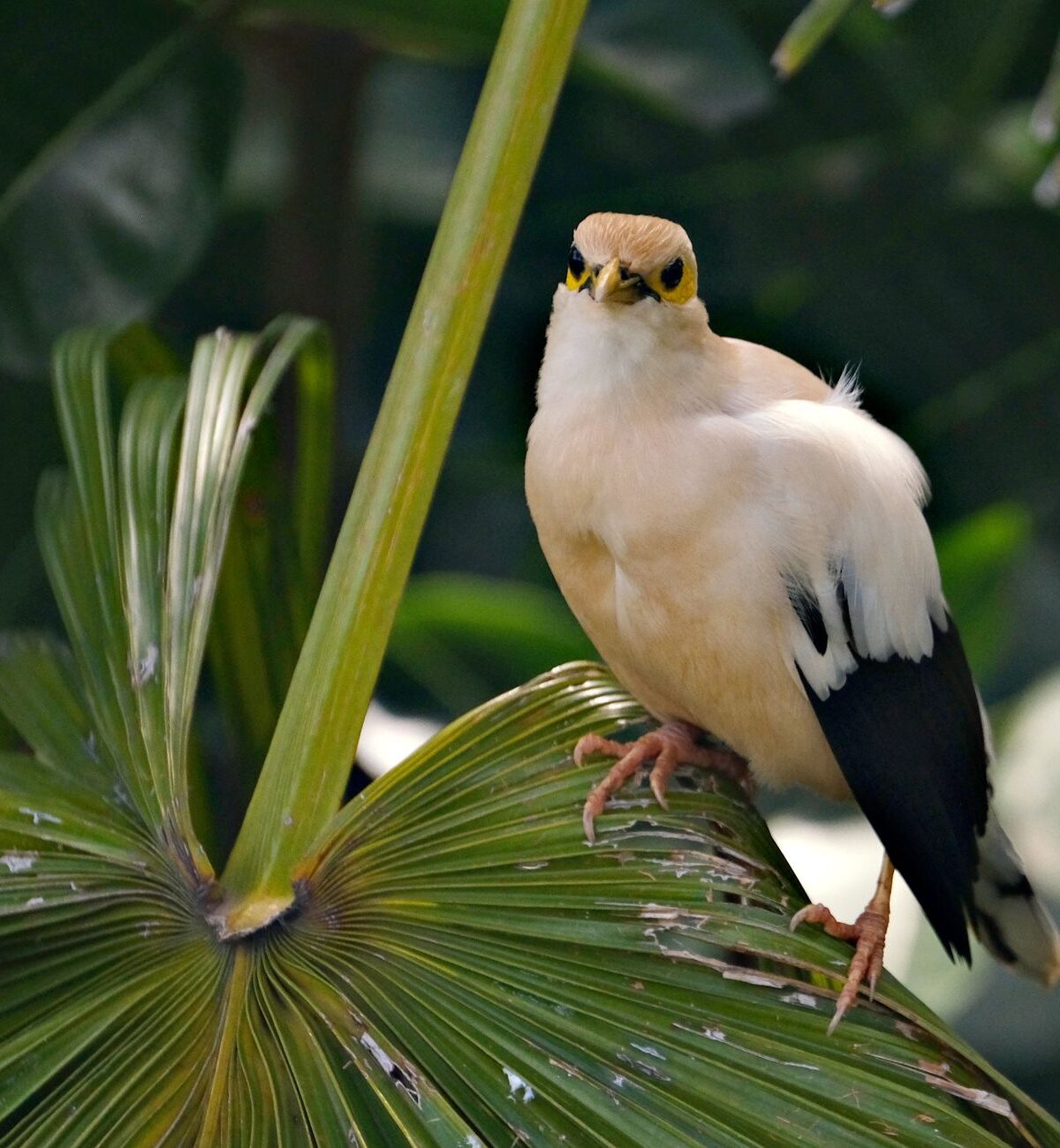
THREE-COLORED STARLING
Onychognathus morio
DESCRIPTION
Three-Colored Starling (Onychognathus morio) is a striking bird known for its vibrant plumage, which features a combination of black, white, and chestnut colors. This species is often found in open woodlands and savannas, where it forages for food and interacts with other birds. Its social behavior includes forming small groups, and it is known for its melodious calls that can be heard during the day.
FUN FACTS
- Three-Colored Starlings are known for their impressive vocal abilities, often mimicking the sounds of other birds and environmental noises
- They play a crucial role in their ecosystem by helping to control insect populations and dispersing seeds through their diet
QUICK INFO
Lifespan5-10 years in the wild
Average Weight100-150 g
Average Length25-30 cm
Diet TypeOmnivore
Social Structuregroup — they are often seen in small flocks, especially when foraging.
Activity PatternDiurnal
Breeding SeasonSpring (March-May)
- Habitat
- This species inhabits open woodlands, savannas, and grasslands. It prefers areas with scattered trees and shrubs for nesting and foraging.
- Biomes
- Savanna, Grassland
- Native Range
- The Three-Colored Starling is native to parts of sub-Saharan Africa, particularly in countries like Kenya and Tanzania.
- Continent
- Africa
- Countries
- Kenya, Tanzania, Uganda
- Diet
- The Three-Colored Starling primarily feeds on insects, fruits, and seeds. It forages on the ground and in trees, using its sharp beak to extract food.
- Diet Type
- Omnivore
- Favorite Food
- insects, fruits, seeds
- Social Structure
- group — they are often seen in small flocks, especially when foraging.
- Activity Pattern
- Diurnal
- Group Size
- 5-15
- Territorial
- 0
 LC
LC
 VU
VU
100-150 g
Weight
25-30 cm
Length
- Coloration
- The plumage is predominantly black with white wing patches and a chestnut-colored belly.
- Lifespan
- 5-10 years in the wild
- Offspring per Birth
- 2-4
- Sexual Maturity
- 1 year
- Breeding Season
- Spring (March-May)
LC
Least Concern
IUCN Red List Status
- Population Status
- The population is currently stable, but habitat loss poses a potential threat.
- Wild Population Estimate
- Unknown
- Population Trend
- Stable
- Endangered
- 0
- Threats
- Main threats include habitat destruction due to agriculture and urbanization. These activities reduce their natural foraging and nesting areas.
- Predators
- Snakes, birds of prey, and domestic cats are known predators of the Three-Colored Starling.
- Defense Mechanisms
- They often use their vocalizations to warn others of potential threats and may engage in mobbing behavior against predators.
- Found in Zoos
- Uncommon