


TIGER SALAMANDER
Ambystoma tigrinum
DESCRIPTION
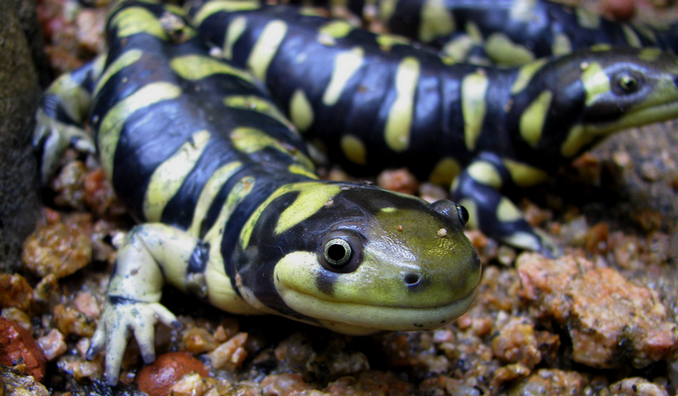
Tiger Salamander (Ambystoma tigrinum) is a large, stocky salamander characterized by its striking yellow or white spots against a dark background, which can vary from black to olive green. This species is primarily nocturnal, emerging at night to hunt for food and engage in breeding activities during the rainy season. They inhabit a variety of environments, including grasslands and forests, often relying on temporary ponds for breeding, which are crucial for their reproductive cycle.
FUN FACTS
- Tiger Salamanders are known for their impressive ability to regenerate lost limbs, a trait shared with many amphibians
- This regeneration capability allows them to recover from injuries that would be fatal to many other species
- | They have a unique life cycle that includes both aquatic larvae and terrestrial adults, showcasing a fascinating transformation as they grow
- The larvae are often brightly colored and can be quite different in appearance from the adult form
QUICK INFO
Lifespan10-15 years in the wild, up to 25 years in captivi
Average Weight50-200 g
Average Length20-25 cm
Diet TypeCarnivore
Social Structuresolitary, typically found alone except during breeding
Activity PatternNocturnal
Breeding SeasonSpring (March-May)
- Habitat
- Tiger Salamanders prefer moist environments, often found in grasslands, forests, and near temporary ponds where they breed. They require both terrestrial and aquatic habitats to complete their life cycle.
- Biomes
- Temperate Forest, Grassland
- Native Range
- Tiger Salamanders are native to North America, ranging from southern Canada to northern Mexico.
- Continent
- North America
- Countries
- United States, Canada, Mexico
- Diet
- Tiger Salamanders are carnivorous, primarily feeding on insects, worms, and small invertebrates. They are known to consume a wide range of prey items, including small amphibians and even small mammals when the opportunity arises.
- Diet Type
- Carnivore
- Favorite Food
- insects, worms
- Social Structure
- solitary, typically found alone except during breeding
- Activity Pattern
- Nocturnal
- Group Size
- 1-10
- Territorial
- 0
 VU
VU
 LC
LC

50-200 g
Weight
20-25 cm
Length
- Coloration
- dark body with bright yellow or white spots
- Sexual Dimorphism
- males are generally smaller and have more vibrant coloration during breeding season
- Lifespan
- 10-15 years in the wild, up to 25 years in captivi
- Offspring per Birth
- 100-300 eggs
- Sexual Maturity
- 2-4 years
- Breeding Season
- Spring (March-May)
LC
Least Concern
IUCN Red List Status
- Population Status
- The population of Tiger Salamanders is generally stable, but some local populations may be declining due to habitat loss.
- Wild Population Estimate
- unknown
- Population Trend
- Stable
- Endangered
- 0
- Threats
- Main threats include habitat destruction, pollution, and climate change, which can affect their breeding ponds. Additionally, road mortality poses a significant risk during their migration to breeding sites.
- Predators
- birds, snakes, larger amphibians, mammals
- Defense Mechanisms
- Tiger Salamanders can secrete toxins from their skin as a defense mechanism against predators.
- Found in Zoos
- Common