


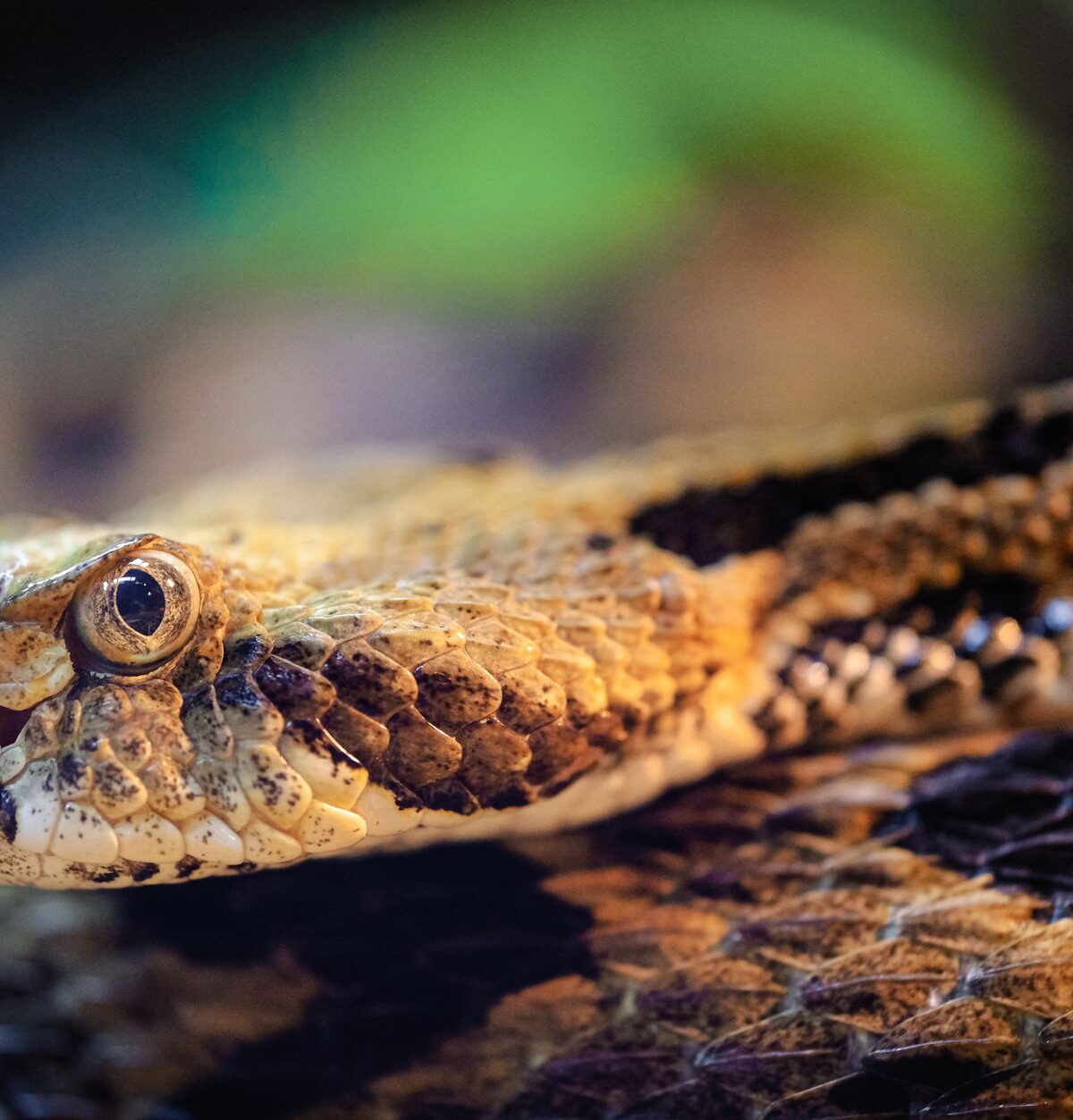
TIMBER RATTLESNAKE
Crotalus-horridus
DESCRIPTION
Timber Rattlesnake (Crotalus-horridus) is commonly known as the Eastern Timber Rattlesnake and Canebrake Rattlesnake. This species is characterized by its distinctive coloration, which typically includes a pattern of dark bands on a lighter background, allowing it to blend into its forested habitat. Timber Rattlesnakes are known for their behavior of remaining motionless when threatened, relying on their cryptic coloration for camouflage, and they are primarily found in wooded areas, where they play a crucial role in the ecosystem as both predator and prey.
FUN FACTS
- Timber Rattlesnakes are known for their unique rattle, which is made of keratin and grows with each shedding of their skin
- This rattle serves as a warning to potential threats, and interestingly, the number of segments in the rattle can indicate the age of the snake, although it can be misleading due to wear and tear
- | These snakes are viviparous, meaning they give birth to live young rather than laying eggs, which is relatively rare among reptiles
- This adaptation allows them to thrive in cooler climates where egg-laying would be less viable
QUICK INFO
Lifespan10-20 years in the wild, up to 30 years in captivi
Average Weight1.5-2.5 kg
Average Length1.2-1.8 m
Diet TypeCarnivore
Social Structuresolitary, they typically do not form social groups except during mating season.
Activity PatternCrepuscular
Breeding SeasonSpring (April-June)
- Habitat
- Timber Rattlesnakes inhabit deciduous forests, mixed woodlands, and sometimes grasslands. They prefer areas with ample cover and basking sites, such as rocky outcrops.
- Biomes
- Temperate Forest, Grassland
- Native Range
- The native range of the Timber Rattlesnake extends across the eastern United States, from southern New England to the Gulf Coast.
- Continent
- North America
- Countries
- United States
- Diet
- Timber Rattlesnakes primarily feed on small mammals, birds, and occasionally amphibians. They use their heat-sensing pits to locate warm-blooded prey.
- Diet Type
- Carnivore
- Favorite Food
- Rodents, birds
- Social Structure
- solitary, they typically do not form social groups except during mating season.
- Activity Pattern
- Crepuscular
- Group Size
- 1
- Territorial
- 0
 VU
VU
 LC
LC
1.5-2.5 kg
Weight
1.2-1.8 m
Length
- Coloration
- Typically yellowish or gray with dark brown or black bands.
- Sexual Dimorphism
- Males are generally smaller than females.
- Lifespan
- 10-20 years in the wild, up to 30 years in captivi
- Gestation Period
- 90-100 days
- Offspring per Birth
- 4-12
- Sexual Maturity
- 3-4 years
- Breeding Season
- Spring (April-June)
VU
Vulnerable
IUCN Red List Status
- Population Status
- The population of Timber Rattlesnakes is declining in many areas due to habitat loss and persecution.
- Wild Population Estimate
- Unknown
- Population Trend
- Decreasing
- Endangered
- 1
- Threats
- Main threats include habitat destruction, road mortality, and illegal collection. These factors have led to significant declines in their populations across various regions.
- Conservation Program
- Various state-level conservation programs are in place to protect their habitats and educate the public.
- Predators
- Birds of prey, larger mammals, and other snakes.
- Defense Mechanisms
- Timber Rattlesnakes use their rattle as a warning signal when threatened, and they can also deliver a venomous bite if provoked.
- Found in Zoos
- Uncommon