


TOAD
Bufonidae
DESCRIPTION
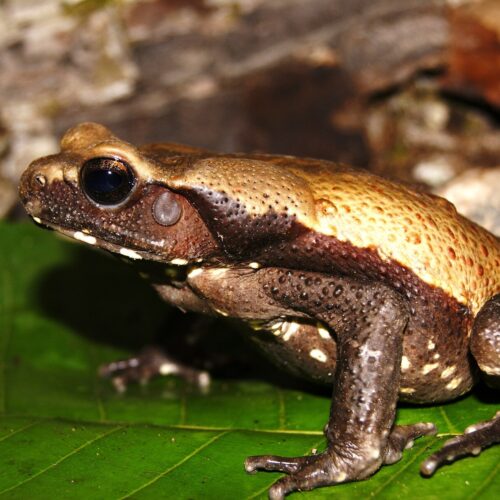
Toads are stout-bodied amphibians characterized by their dry, warty skin and short legs. They typically have a broad, flattened head and prominent parotoid glands behind their eyes, which secrete toxins as a defense mechanism. Toads are primarily terrestrial and are known for their distinctive hopping movement, although they can also walk slowly when necessary.
FUN FACTS
- Toads can absorb water through their skin, allowing them to survive in drier environments without direct access to water sources
- | Some toad species can live for several decades, making them one of the longer-lived amphibians, and they can often be found in the same areas year after year during the breeding season
QUICK INFO
Lifespan10-15 years in the wild, up to 30 years in captivi
Average Weight0.5-1 kg
Average Length10-15 cm
Diet TypeInsectivore
Social Structuresolitary, though they may gather in groups during breeding season
Activity PatternNocturnal
Breeding SeasonSpring (March-May)
- Habitat
- Toads are commonly found in a variety of habitats, including forests, grasslands, and gardens. They prefer moist environments but can adapt to drier areas, often seeking shelter under rocks or leaf litter.
- Biomes
- Temperate Forest, Grassland, Wetland
- Native Range
- Toads are found on every continent except Antarctica, with a wide distribution across North America, Europe, Asia, and Africa.
- Continent
- North America, Europe, Asia, Africa
- Countries
- United States, Canada, Mexico, United Kingdom, Germany, India, China
- Diet
- Toads are primarily insectivorous, feeding on a variety of invertebrates. They use their sticky tongues to catch prey, which includes insects, spiders, and other small invertebrates.
- Diet Type
- Insectivore
- Favorite Food
- insects, spiders
- Social Structure
- solitary, though they may gather in groups during breeding season
- Activity Pattern
- Nocturnal
- Group Size
- 1-10
- Territorial
- 0
 VU
VU
 LC
LC

0.5-1 kg
Weight
10-15 cm
Length
- Coloration
- typically brown or gray with darker mottling, providing camouflage
- Sexual Dimorphism
- males are usually smaller and have more colorful markings than females
- Lifespan
- 10-15 years in the wild, up to 30 years in captivi
- Offspring per Birth
- 1,000-10,000 eggs
- Sexual Maturity
- 2-3 years
- Breeding Season
- Spring (March-May)
LC
Least Concern
IUCN Red List Status
- Population Status
- Toad populations are generally stable, but some species face threats from habitat loss and pollution.
- Wild Population Estimate
- unknown
- Population Trend
- Stable
- Endangered
- 0
- Threats
- Main threats include habitat destruction, pollution, and climate change. Some species are also affected by diseases such as chytridiomycosis.
- Predators
- birds, snakes, mammals, and larger amphibians
- Defense Mechanisms
- Toads secrete toxic substances from their skin to deter predators, and their warty skin provides additional protection.
- Found in Zoos
- Common