


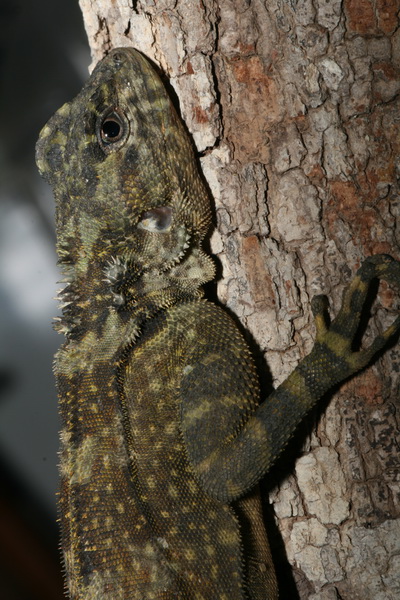
TREE RUNNER
Plica plica
DESCRIPTION
Tree Runner (Plica plica) is a unique lizard known for its remarkable ability to climb trees and navigate through the forest canopy. It has a distinctive appearance with a long, slender body and a prehensile tail that aids in its arboreal lifestyle. This species is primarily found in tropical rainforests, where it exhibits a range of behaviors including foraging for food and basking in the sun on branches.
FUN FACTS
- Tree Runners are fascinating for their ability to change color slightly to blend in with their environment, which helps them avoid predators
- Additionally, they have a unique method of locomotion, using their prehensile tails to stabilize themselves while navigating the treetops.|These lizards are also known for their vocalizations, which they use to communicate with each other, especially during the mating season
- Their calls can be heard echoing through the forest, adding to the rich soundscape of their tropical habitat
QUICK INFO
Lifespan5-10 years in the wild
Average Length0.5-1 m
Diet TypeInsectivore
Social Structuresolitary, typically found alone or in pairs during mating season
Activity PatternDiurnal
- Habitat
- Tree Runners inhabit tropical rainforests, where they are well-adapted to life in the trees. They prefer areas with dense foliage that provide ample cover and hunting opportunities.
- Biomes
- Tropical Rainforest
- Native Range
- This species is native to the tropical regions of Central and South America.
- Continent
- South America
- Countries
- Colombia, Venezuela, Brazil, Ecuador, Peru
- Diet
- Tree Runners primarily feed on insects and other small invertebrates, which they catch using their quick reflexes. They may also consume some plant material occasionally.
- Diet Type
- Insectivore
- Favorite Food
- insects
- Social Structure
- solitary, typically found alone or in pairs during mating season
- Activity Pattern
- Diurnal
- Group Size
- 1-2
- Territorial
- 0
 VU
VU
 LC
LC
0.5-1 m
Length
- Coloration
- They typically have a greenish-brown coloration that helps them blend into their leafy surroundings.
- Sexual Dimorphism
- males may be slightly larger than females
- Lifespan
- 5-10 years in the wild
- Sexual Maturity
- 1-2 years
LC
Least Concern
IUCN Red List Status
- Population Status
- The population status of Tree Runners is not well-documented, but they are not currently considered endangered.
- Population Trend
- Stable
- Endangered
- 0
- Threats
- Habitat loss due to deforestation poses a significant threat to Tree Runners. Additionally, climate change may impact their habitat and food sources.
- Predators
- Birds of prey, snakes, and larger mammals may prey on Tree Runners.
- Defense Mechanisms
- They rely on their agility and climbing ability to escape from predators, often retreating to higher branches.
- Found in Zoos
- Uncommon