


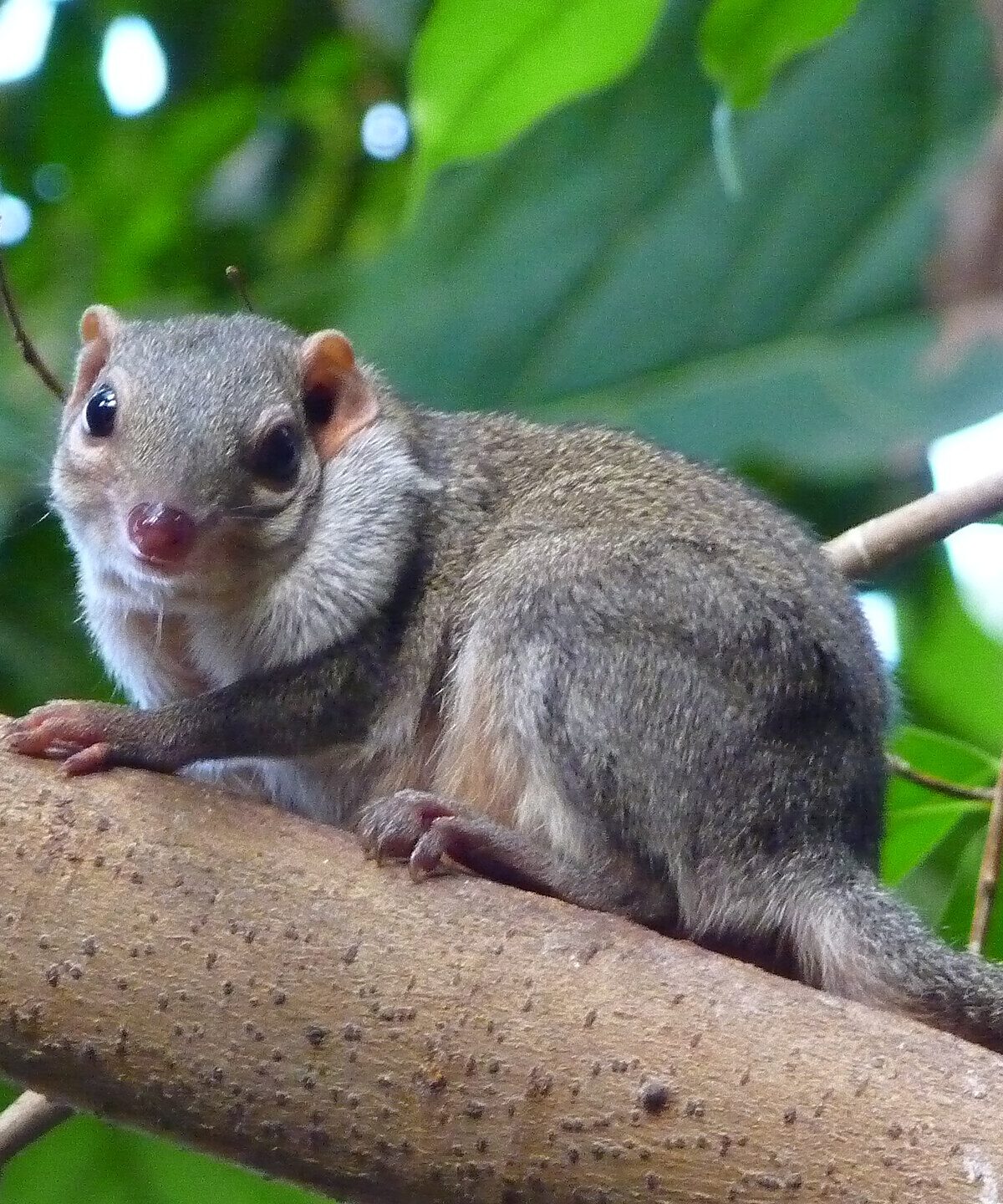
TREE SHREW
DESCRIPTION
Tree Shrew is a small mammal that resembles a cross between a squirrel and a mouse. It has a long snout, large eyes, and a bushy tail, with fur that can vary in color from brown to gray. These creatures are known for their agility and are often found in trees, where they forage for food and build nests, showcasing a mix of arboreal and terrestrial behaviors.
FUN FACTS
- Tree Shrews are often mistaken for rodents, but they are more closely related to primates, sharing a common ancestor
- They have a unique ability to leap from tree to tree, using their long tails for balance and stability while navigating through the forest canopy.| Despite their name, Tree Shrews are not true shrews; they belong to a separate order called Scandentia, which highlights their distinct evolutionary path and adaptations to arboreal life
QUICK INFO
Lifespan5-10 years in the wild, up to 15 in captivity
Average Weight150-300 g
Average Length20-30 cm
Diet TypeOmnivore
Social Structuresolitary, with occasional pairings during breeding
Activity PatternDiurnal
Breeding SeasonYear-round, with peaks depending on the region
- Habitat
- Tree Shrews inhabit tropical and subtropical forests, often preferring areas with dense vegetation. They are adept climbers and spend much of their time in trees, but they also forage on the ground.
- Biomes
- Tropical Rainforest, Subtropical Forest
- Native Range
- Tree Shrews are native to Southeast Asia, primarily found in countries like Malaysia, Indonesia, and parts of southern Thailand.
- Continent
- Asia
- Countries
- Malaysia, Indonesia, Thailand, Myanmar
- Diet
- Tree Shrews are omnivorous, feeding on a variety of fruits, insects, and small vertebrates. Their diet can vary significantly based on the availability of food sources in their habitat.
- Diet Type
- Omnivore
- Favorite Food
- fruits, insects
- Social Structure
- solitary, with occasional pairings during breeding
- Activity Pattern
- Diurnal
- Group Size
- 1-2
- Territorial
- 1
 LC
LC
 VU
VU
150-300 g
Weight
20-30 cm
Length
- Coloration
- brown to gray fur with lighter underparts
- Sexual Dimorphism
- males are generally larger than females
- Lifespan
- 5-10 years in the wild, up to 15 in captivity
- Gestation Period
- 45-50 days
- Offspring per Birth
- 1-3
- Sexual Maturity
- 6-12 months
- Breeding Season
- Year-round, with peaks depending on the region
LC
Least Concern
IUCN Red List Status
- Population Status
- The population status of Tree Shrews is not well-documented, but they are generally considered to be stable in their natural habitats.
- Wild Population Estimate
- Unknown
- Population Trend
- Stable
- Endangered
- 0
- Threats
- Habitat loss due to deforestation and agricultural expansion poses a significant threat to Tree Shrews. Additionally, hunting and the pet trade can impact local populations.
- Predators
- Snakes, birds of prey, and small carnivorous mammals are known to prey on Tree Shrews.
- Defense Mechanisms
- Tree Shrews rely on their agility and climbing skills to escape predators, often retreating to the safety of trees.
- Found in Zoos
- Uncommon