


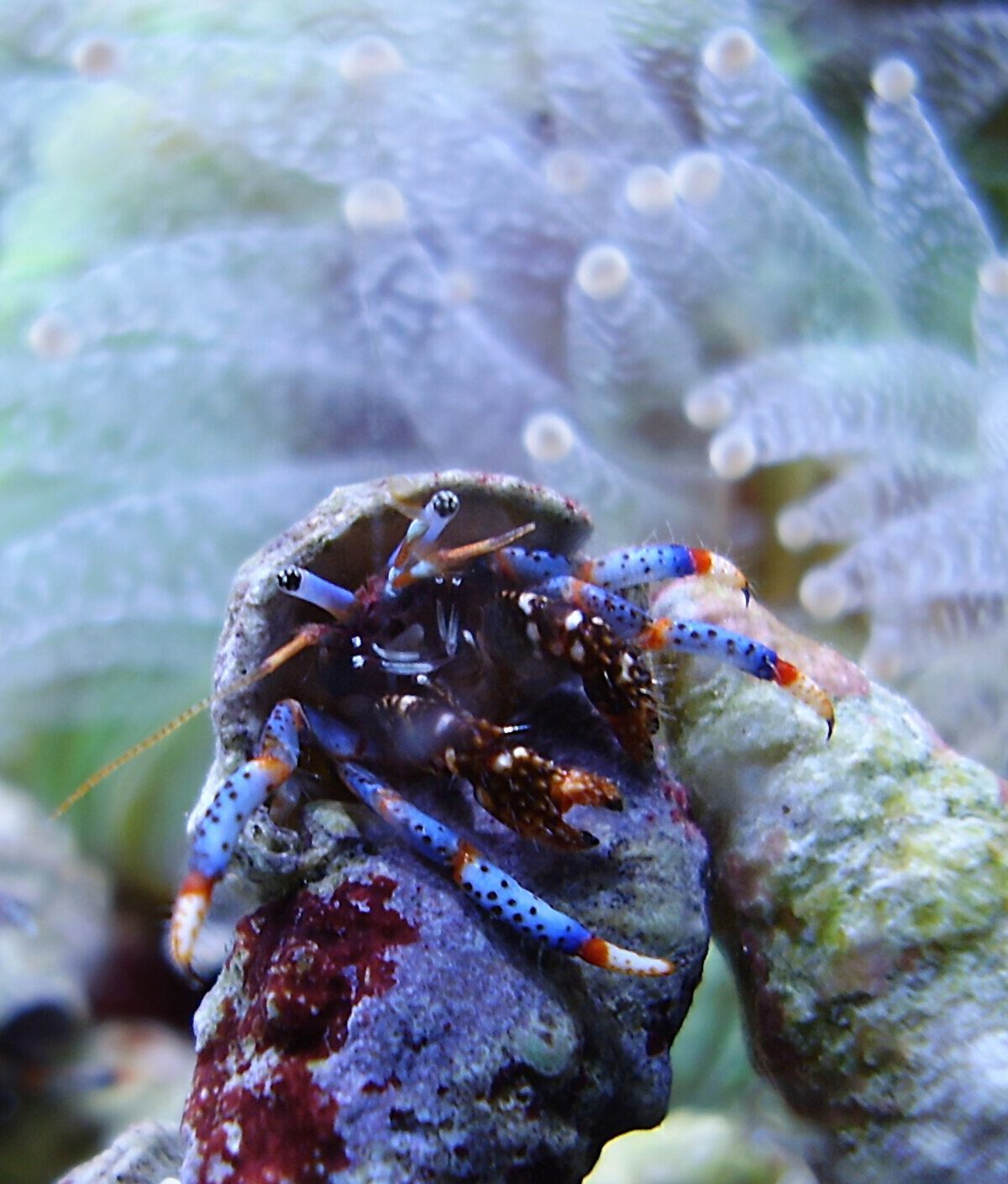
TRICOLOR HERMIT
DESCRIPTION
Tricolor Hermit is a striking species of hermit crab known for its vibrant coloration, which typically features a mix of red, yellow, and blue hues. This species is often found in coastal areas, where it exhibits a fascinating behavior of scavenging for food and utilizing empty shells for protection. Tricolor Hermit plays a crucial role in its ecosystem by helping to clean up detritus and organic matter on the ocean floor.
FUN FACTS
- Tricolor Hermit crabs are known for their unique behavior of switching shells with one another, which can be a complex social interaction
- This species also has a symbiotic relationship with certain sea anemones, which they carry on their shells for added protection and camouflage.|These hermit crabs are fascinating because they can live both on land and in water, making them versatile in their habitat choices
- They have adapted to breathe air but still require moisture to survive, which is why they are often found in humid environments
QUICK INFO
Lifespan5-10 years in the wild
Average Length5-10 cm
Diet TypeOmnivore
Social Structuregroup — they often gather in small groups but can also be found alone.
Activity PatternDiurnal
- Habitat
- This species typically inhabits sandy or rocky coastal areas, often near tide pools and coral reefs. They are known to burrow into the substrate for shelter and protection.
- Biomes
- Coastal, Coral Reef
- Native Range
- Tricolor Hermit is native to the tropical and subtropical regions of the Pacific and Indian Oceans.
- Continent
- Asia, Australia, Africa
- Countries
- Philippines, Indonesia, Australia, Madagascar
- Diet
- Tricolor Hermit primarily feeds on detritus, algae, and decaying plant material, making it an important scavenger in its habitat. It may also consume small invertebrates when available.
- Diet Type
- Omnivore
- Favorite Food
- detritus, algae
- Social Structure
- group — they often gather in small groups but can also be found alone.
- Activity Pattern
- Diurnal
- Group Size
- 5-15
- Territorial
- 0
 LC
LC
 VU
VU
5-10 cm
Length
- Coloration
- vibrant mix of red, yellow, and blue
- Sexual Dimorphism
- males tend to be larger than females
- Lifespan
- 5-10 years in the wild
- Offspring per Birth
- up to 100
- Sexual Maturity
- 1-2 years
LC
Least Concern
IUCN Red List Status
- Population Status
- The population of Tricolor Hermit is currently stable, but habitat destruction poses a potential threat.
- Wild Population Estimate
- unknown
- Population Trend
- Stable
- Endangered
- 0
- Threats
- Main threats include habitat loss due to coastal development and pollution. Over-collection for the pet trade can also impact local populations.
- Predators
- fish, birds, and larger crustaceans
- Defense Mechanisms
- Tricolor Hermit uses its shell for protection and can quickly retreat into it when threatened.
- Found in Zoos
- Uncommon