


TROPICAL BIRD
DESCRIPTION
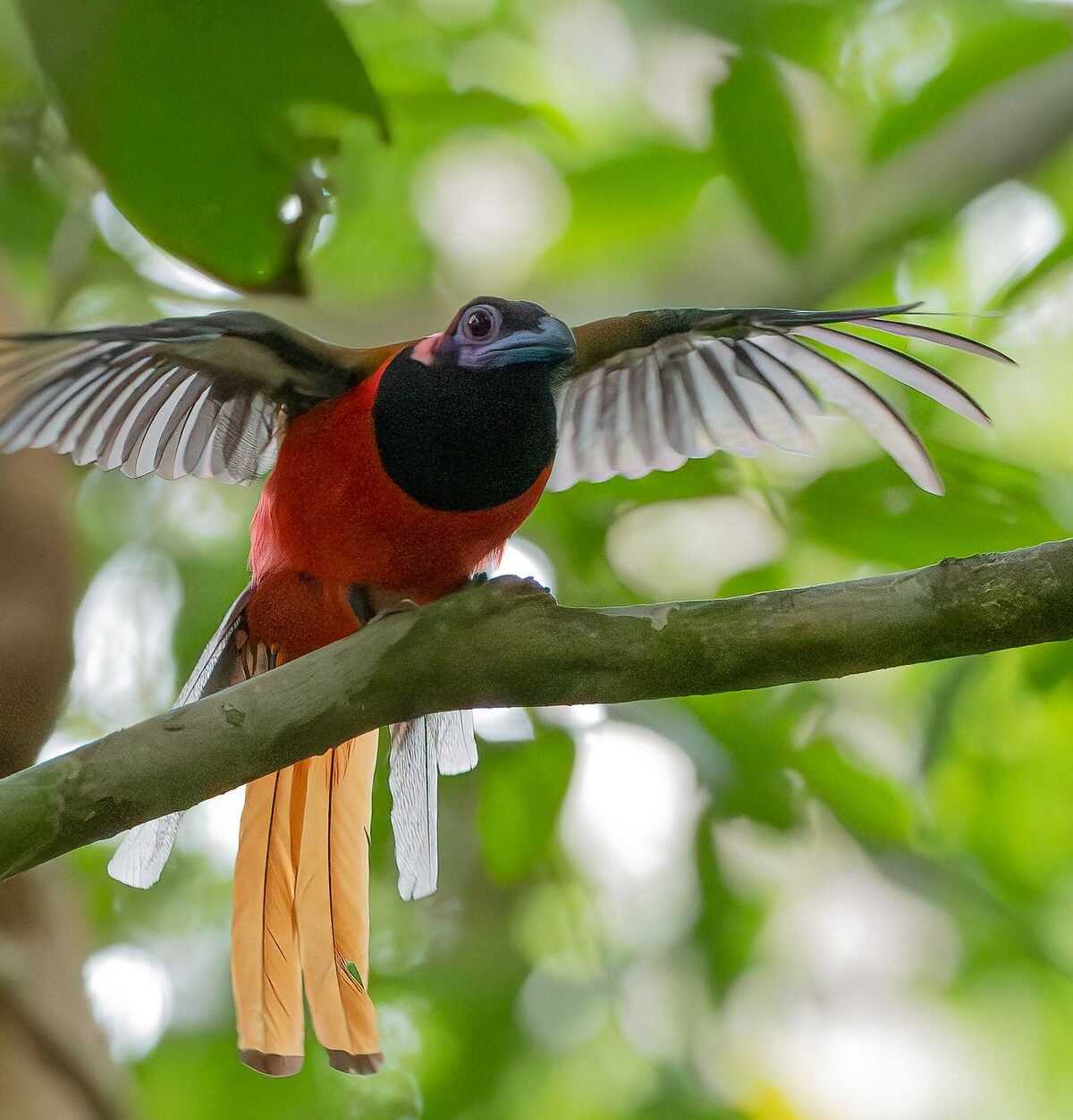
Tropical Bird, commonly known as Trogon, is a vibrant and colorful bird found in tropical forests. It exhibits a striking plumage with bright green, blue, and red colors, making it a favorite among birdwatchers. Trogons are known for their unique, soft calls and their ability to perch quietly on branches, often blending into their lush surroundings.
FUN FACTS
- Trogons have a unique nesting behavior, often using tree cavities or abandoned woodpecker holes to raise their young
- They are also known for their distinctive, soft calls that can be heard echoing through the forest, adding to the rich soundscape of their tropical habitats
QUICK INFO
Lifespan10-15 years in the wild
Average Weight100-200 g
Average Length25-30 cm
Diet TypeOmnivore
Social Structurepair, often seen in monogamous pairs during breeding season
Activity PatternDiurnal
Breeding SeasonSpring (March-May)
- Habitat
- Trogons inhabit dense tropical and subtropical forests, often favoring areas with abundant fruiting trees. They are typically found at various elevations, from lowland rainforests to mountainous regions.
- Biomes
- Tropical Rainforest, Subtropical Forest
- Native Range
- Trogons are native to Central and South America, with some species also found in parts of North America.
- Continent
- North America, South America
- Countries
- Mexico, Costa Rica, Brazil, Colombia, Ecuador
- Diet
- Trogons primarily feed on fruits, insects, and small vertebrates. They are known to forage in the canopy, using their strong beaks to extract food from foliage.
- Diet Type
- Omnivore
- Favorite Food
- fruits, insects
- Social Structure
- pair, often seen in monogamous pairs during breeding season
- Activity Pattern
- Diurnal
- Group Size
- 1-2
- Territorial
- 1
 LC
LC
 DD
DD
100-200 g
Weight
25-30 cm
Length
- Coloration
- vibrant green, blue, and red plumage
- Sexual Dimorphism
- males and females have similar coloration but may differ slightly in size
- Lifespan
- 10-15 years in the wild
- Offspring per Birth
- 2-4
- Sexual Maturity
- 1-2 years
- Breeding Season
- Spring (March-May)
LC
Least Concern
IUCN Red List Status
- Population Status
- Population status varies by species, with some being common while others are threatened.
- Wild Population Estimate
- unknown
- Population Trend
- Stable
- Endangered
- 0
- Threats
- Habitat loss due to deforestation and agricultural expansion poses significant threats to Trogon populations. Additionally, climate change may impact their habitat and food sources.
- Predators
- snakes, raptors, and larger birds of prey
- Defense Mechanisms
- Trogons rely on their camouflage and quiet behavior to avoid detection by predators.
- Found in Zoos
- Uncommon