


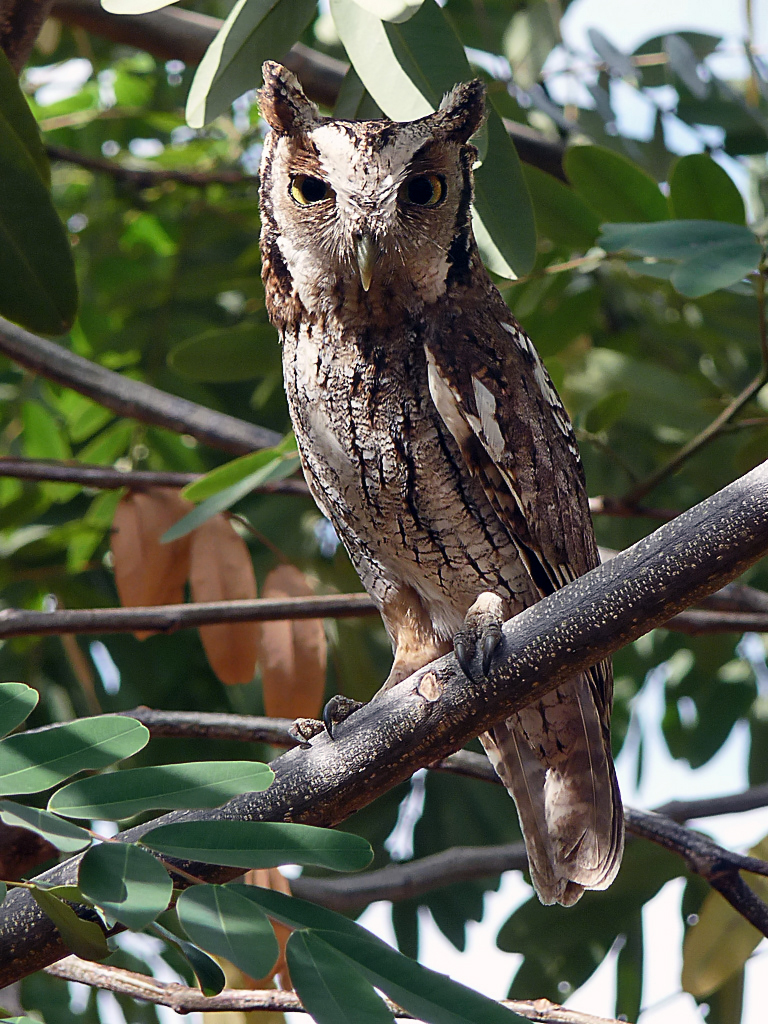
TROPICAL OWL
DESCRIPTION
Tropical Owl is a medium-sized owl known for its striking appearance and distinctive calls. It has a rounded head, large yellow eyes, and a mottled brown and white plumage that provides excellent camouflage in its forest habitat. This species is primarily nocturnal, hunting at night and roosting during the day in dense foliage.
FUN FACTS
- Tropical Owls have excellent night vision, allowing them to hunt effectively in low light conditions
- They can rotate their heads up to 270 degrees, which helps them spot prey without moving their bodies.|These owls are known for their unique vocalizations, which can vary significantly between individuals, making them easily identifiable by their calls
QUICK INFO
Lifespan10-15 years in the wild
Average Weight300-600 g
Average Length30-40 cm
Diet TypeCarnivore
Social Structuresolitary, pairs during breeding season
Activity PatternNocturnal
Breeding SeasonLate winter to early spring
- Habitat
- Tropical Owls inhabit dense tropical and subtropical forests, often near water sources. They prefer areas with ample cover for roosting and hunting.
- Biomes
- Tropical Rainforest, Subtropical Forest
- Native Range
- Tropical Owls are found in Central and South America, particularly in countries with extensive forested areas.
- Continent
- North America, South America
- Countries
- Costa Rica, Panama, Colombia, Ecuador, Brazil
- Diet
- Tropical Owls primarily feed on small mammals, birds, and insects. They are skilled hunters, using their keen eyesight and hearing to locate prey in the dark.
- Diet Type
- Carnivore
- Favorite Food
- small mammals, birds, insects
- Social Structure
- solitary, pairs during breeding season
- Activity Pattern
- Nocturnal
- Group Size
- 1-2
- Territorial
- 1
 LC
LC
300-600 g
Weight
30-40 cm
Length
- Coloration
- mottled brown and white plumage
- Sexual Dimorphism
- females are generally larger than males
- Lifespan
- 10-15 years in the wild
- Offspring per Birth
- 2-4
- Sexual Maturity
- 1-2 years
- Breeding Season
- Late winter to early spring
LC
Least Concern
IUCN Red List Status
- Population Status
- The population of Tropical Owls is currently stable, but habitat loss poses a potential threat.
- Wild Population Estimate
- unknown
- Population Trend
- Stable
- Endangered
- 0
- Threats
- Habitat destruction due to deforestation and urbanization is the main threat to Tropical Owls. Additionally, they may be affected by climate change, which alters their habitat.
- Predators
- larger birds of prey, snakes
- Defense Mechanisms
- Tropical Owls rely on their camouflage and silent flight to avoid detection by predators.
- Found in Zoos
- Uncommon