


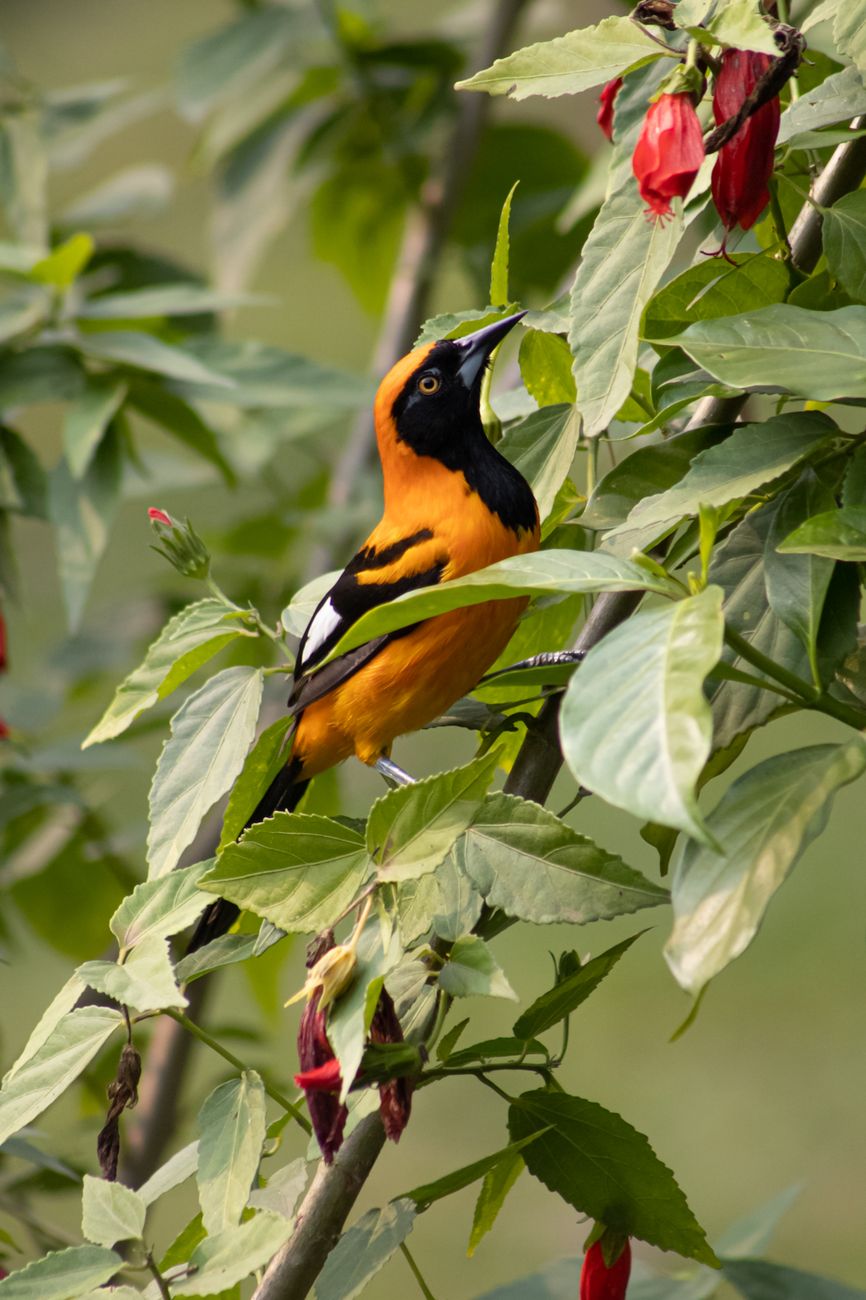
TROUPIAL
DESCRIPTION
Also called the Yellow Oriole, Troupial is a striking bird known for its vibrant orange and black plumage. This species exhibits a melodious song and is often found in open woodlands and urban areas, where it forages for food. Troupials are social birds, frequently seen in pairs or small groups, and are known for their intelligence and adaptability in various environments.
FUN FACTS
- Troupials are known for their impressive vocal abilities, often mimicking the calls of other birds and even human-made sounds
- They are also known to be quite intelligent, using tools to extract insects from crevices in trees.|In some cultures, Troupials are considered symbols of good luck and are often featured in local folklore
- Their striking appearance and melodious songs make them a favorite among birdwatchers and nature enthusiasts
QUICK INFO
Lifespan5-10 years in the wild
Average Weight70-100 g
Average Length25-28 cm
Diet TypeOmnivore
Social StructureTroupials are often found in pairs or small groups, displaying social behavior during foraging and nesting.
Activity PatternDiurnal
Breeding SeasonSpring to early summer
- Habitat
- Troupials inhabit a variety of environments, including open woodlands, savannas, and urban areas. They prefer areas with abundant trees for nesting and foraging.
- Biomes
- Tropical Rainforest, Savanna
- Native Range
- Troupials are native to parts of Central and South America, particularly in countries like Venezuela and Colombia.
- Continent
- South America
- Countries
- Venezuela, Colombia, Trinidad and Tobago
- Diet
- Troupials primarily feed on fruits, insects, and small invertebrates. They are known to be opportunistic feeders, often foraging in trees and on the ground.
- Diet Type
- Omnivore
- Favorite Food
- fruits, insects
- Social Structure
- Troupials are often found in pairs or small groups, displaying social behavior during foraging and nesting.
- Activity Pattern
- Diurnal
- Group Size
- 2-10
- Territorial
- 1
 LC
LC
 CR
CR
70-100 g
Weight
25-28 cm
Length
- Coloration
- vibrant orange body with black wings and head
- Sexual Dimorphism
- males are more brightly colored than females
- Lifespan
- 5-10 years in the wild
- Offspring per Birth
- 2-4
- Sexual Maturity
- 1 year
- Breeding Season
- Spring to early summer
LC
Least Concern
IUCN Red List Status
- Population Status
- The population of Troupials is currently stable, with no significant declines reported.
- Wild Population Estimate
- Not quantified
- Population Trend
- Stable
- Endangered
- 0
- Threats
- Habitat loss due to deforestation and urbanization poses a threat to Troupials. However, they are adaptable and can thrive in modified habitats.
- Predators
- Snakes, hawks, and larger birds of prey are known to prey on Troupials.
- Defense Mechanisms
- Troupials use their agility and vocalizations to evade predators, often taking flight to escape danger.
- Compatible Animals
- other small birds, parrots
- Found in Zoos
- Uncommon