


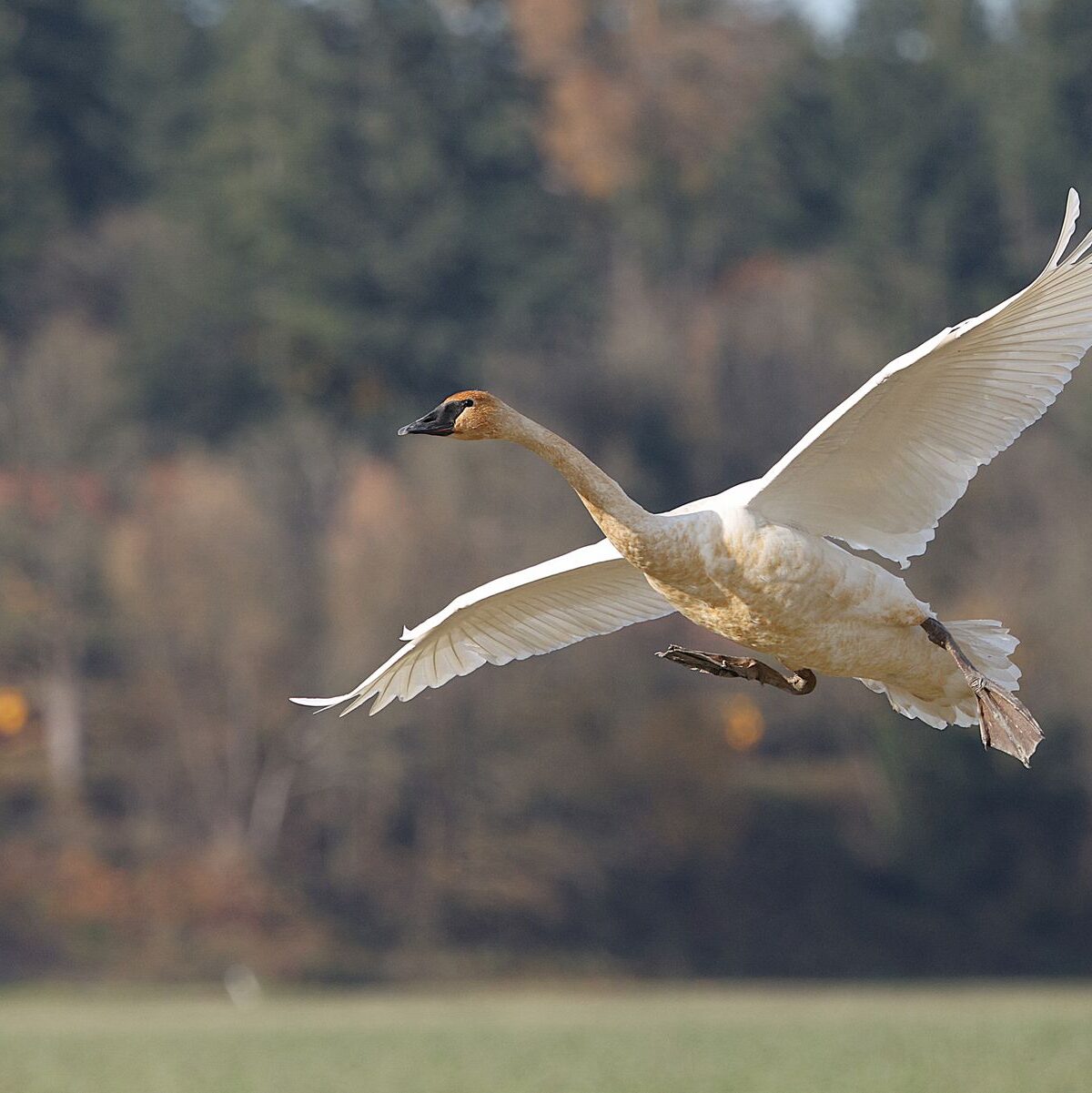
TRUMPETER SWAN
Cygnus buccinator
DESCRIPTION
Trumpeter Swan is a large waterfowl known for its striking white plumage and long neck. It is the heaviest swan species, with a wingspan that can exceed 2 meters. These swans are known for their loud, trumpeting calls, which can be heard over long distances, and they often form strong pair bonds, exhibiting social behaviors such as synchronized swimming.
FUN FACTS
- Trumpeter Swans are the largest swan species in the world, and their wings can span over 10 feet, making them impressive fliers
- They are also known for their unique vocalizations, which can be heard up to a mile away, and are often described as sounding like a trumpet, hence their name
QUICK INFO
Lifespan10-20 years in the wild, up to 30 years in captivi
Average Weight8-14 kg
Average Length1.2-1.5 m
Diet TypeHerbivore
Social Structurepair, often seen in family groups during breeding season
Activity PatternDiurnal
Breeding SeasonSpring (April-June)
- Habitat
- Trumpeter Swans inhabit wetlands, lakes, and rivers, often preferring areas with abundant vegetation. They require open water for feeding and nesting, as well as safe locations for raising their young.
- Biomes
- Wetlands, Freshwater
- Native Range
- Trumpeter Swans are native to North America, primarily found in the northern United States and Canada.
- Continent
- North America
- Countries
- United States, Canada
- Diet
- Trumpeter Swans primarily feed on aquatic vegetation, including roots, tubers, and leaves. They are known to forage in shallow waters, using their long necks to reach underwater plants.
- Diet Type
- Herbivore
- Favorite Food
- aquatic plants
- Social Structure
- pair, often seen in family groups during breeding season
- Activity Pattern
- Diurnal
- Group Size
- 2-30
- Territorial
- 1
 LC
LC

8-14 kg
Weight
1.2-1.5 m
Length
1.2 m at shoulder
Height (Shoulder)
- Coloration
- primarily white with black facial markings
- Sexual Dimorphism
- males and females are similar in appearance
- Lifespan
- 10-20 years in the wild, up to 30 years in captivi
- Gestation Period
- 35-40 days
- Offspring per Birth
- 3-8
- Sexual Maturity
- 3-4 years
- Breeding Season
- Spring (April-June)
LC
Least Concern
IUCN Red List Status
- Population Status
- The population of Trumpeter Swans has been recovering due to conservation efforts, but they are still considered vulnerable in some areas.
- Wild Population Estimate
- approximately 50,000
- Population Trend
- Increasing
- Endangered
- 0
- Threats
- Main threats include habitat loss due to wetland drainage and pollution. Additionally, they face risks from hunting and lead poisoning.
- Conservation Program
- Various conservation programs have been implemented to protect their habitats and promote population recovery.
- Predators
- eagles, foxes, and large carnivorous birds can prey on eggs and cygnets; adults have few natural predators.
- Defense Mechanisms
- Trumpeter Swans can be aggressive when defending their nests and will use their size and loud calls to deter potential threats.
- Compatible Animals
- none
- Found in Zoos
- Common