


TUFTED DUCK
Aythya fuligula
DESCRIPTION
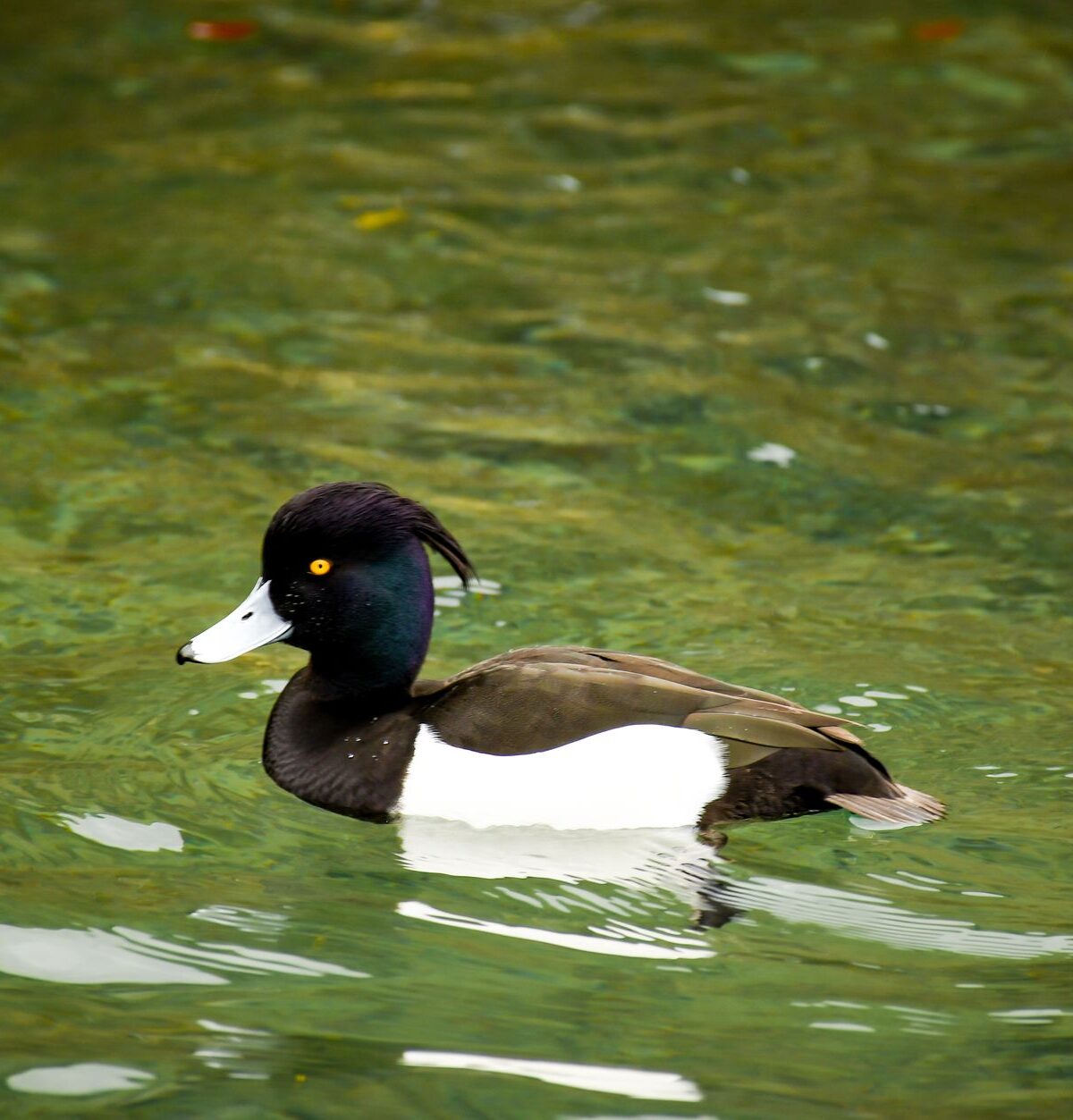
Tufted Duck (Aythya fuligula) is a medium-sized diving duck known for its distinctive tuft of feathers on the back of its head, particularly prominent in males. Males are characterized by their striking black and white plumage, while females are mottled brown, providing excellent camouflage. This species is often found in freshwater lakes and ponds, where it dives for food and can be seen in both solitary and group settings.
FUN FACTS
- Tufted Ducks are known for their unique courtship displays, where males perform elaborate swimming and diving maneuvers to attract females
- Additionally, they have a distinctive call that resembles a soft 'kak-kak' sound, which can be heard during the breeding season, adding to their charm in the wild
QUICK INFO
Lifespan10-15 years in the wild
Average Weight700-1,200 g
Average Length36-42 cm
Diet TypeOmnivore
Social StructureThey are often found in pairs or small groups, especially during the breeding season.
Activity PatternDiurnal
Breeding SeasonSpring (April-June)
- Habitat
- Tufted Ducks inhabit freshwater lakes, ponds, and marshes, often favoring areas with abundant vegetation. They are also found in brackish waters during migration.
- Biomes
- Wetlands, Freshwater
- Native Range
- Tufted Ducks are native to Europe and Asia, with some populations migrating to North Africa during winter.
- Continent
- Europe, Asia
- Countries
- United Kingdom, Sweden, Norway, Russia, China
- Diet
- Tufted Ducks primarily feed on aquatic plants, seeds, and invertebrates, often diving to forage underwater. They are known to consume a variety of food items depending on availability.
- Diet Type
- Omnivore
- Favorite Food
- aquatic plants, seeds, invertebrates
- Social Structure
- They are often found in pairs or small groups, especially during the breeding season.
- Activity Pattern
- Diurnal
- Group Size
- 5-50
- Territorial
- 0
 VU
VU
 LC
LC
700-1,200 g
Weight
36-42 cm
Length
- Coloration
- Males are black and white with a distinctive tuft, while females are brown and mottled.
- Sexual Dimorphism
- Males are more colorful with a tuft, while females are more subdued in color.
- Lifespan
- 10-15 years in the wild
- Offspring per Birth
- 6-12
- Sexual Maturity
- 1 year
- Breeding Season
- Spring (April-June)
LC
Least Concern
IUCN Red List Status
- Population Status
- The population of Tufted Ducks is generally stable, with some fluctuations in specific regions.
- Wild Population Estimate
- 1,000,000-1,500,000
- Population Trend
- Stable
- Endangered
- 0
- Threats
- Main threats include habitat loss due to wetland drainage and pollution. Climate change also poses a risk to their migratory patterns and breeding habitats.
- Predators
- Common predators include foxes, birds of prey, and large fish.
- Defense Mechanisms
- Tufted Ducks rely on their ability to dive quickly to escape predators.
- Compatible Animals
- Mallards, other diving ducks
- Found in Zoos
- Uncommon