


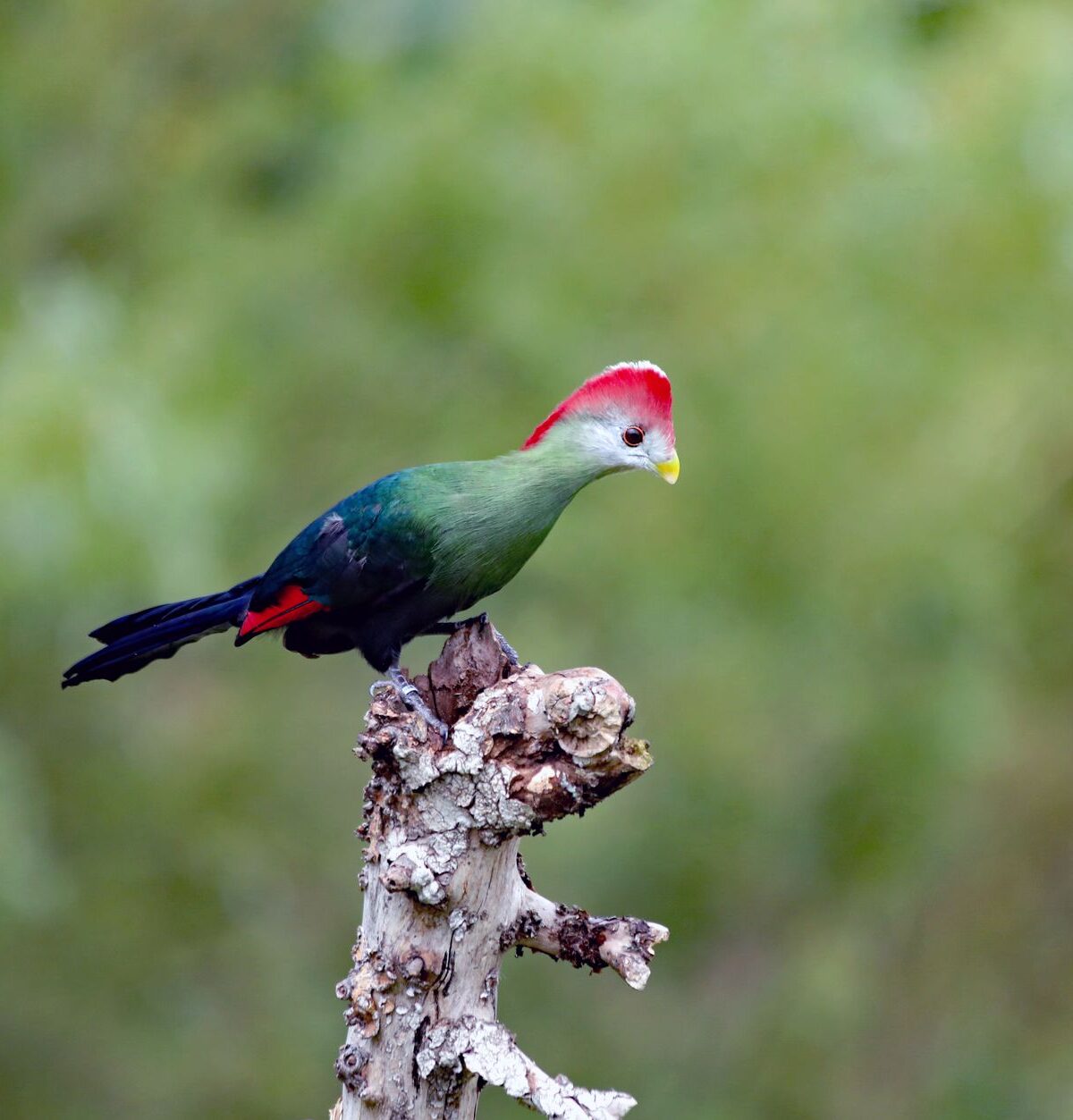
TURACO
DESCRIPTION
Also called Lourie, Turaco is a vibrant bird known for its striking plumage, which often features shades of green and red. These birds are primarily arboreal, spending much of their time in trees where they are adept at moving through the branches. Turacos are social creatures, often found in small groups, and are known for their loud, distinctive calls that echo through their forest habitats.
FUN FACTS
- Turacos are unique among birds because they possess a pigment called turacins, which gives them their vibrant green color
- This pigment is not found in any other bird species, making Turacos particularly special in the avian world
- | Another interesting fact is that Turacos are known for their strong flying abilities, often gliding gracefully between trees
- They can also be quite vocal, with some species having a repertoire of calls that can be heard from great distances
QUICK INFO
Lifespan10-15 years in the wild, up to 20 years in captivi
Average Weight150-300 g
Average Length30-50 cm
Diet TypeHerbivore
Social StructureTuracos are typically found in pairs or small groups, often consisting of family units. They exhibit social behaviors that strengthen bonds within their groups.
Activity PatternDiurnal
Breeding SeasonVaries by region, typically during the rainy season
- Habitat
- Turacos inhabit dense forests and woodlands, where they can find ample food and cover. They prefer areas with a rich canopy that provides both food sources and protection from predators.
- Biomes
- Tropical Rainforest, Temperate Forest
- Native Range
- Turacos are native to sub-Saharan Africa, with various species distributed across different regions of the continent.
- Continent
- Africa
- Countries
- Democratic Republic of the Congo, Uganda, Kenya, Tanzania, Zambia
- Diet
- Turacos primarily feed on fruits, leaves, and flowers, occasionally consuming insects. Their diet is largely herbivorous, reflecting their adaptation to a frugivorous lifestyle.
- Diet Type
- Herbivore
- Favorite Food
- Fruits, leaves
- Social Structure
- Turacos are typically found in pairs or small groups, often consisting of family units. They exhibit social behaviors that strengthen bonds within their groups.
- Activity Pattern
- Diurnal
- Group Size
- 2-10
- Territorial
- 0
 LC
LC
 VU
VU
150-300 g
Weight
30-50 cm
Length
- Coloration
- Bright green and red plumage, often with blue or purple accents.
- Sexual Dimorphism
- Males and females are similar in appearance, though males may be slightly larger.
- Lifespan
- 10-15 years in the wild, up to 20 years in captivi
- Offspring per Birth
- 1-3
- Sexual Maturity
- 1-2 years
- Breeding Season
- Varies by region, typically during the rainy season
LC
Least Concern
IUCN Red List Status
- Population Status
- Population status varies by species, with some being common while others are threatened.
- Wild Population Estimate
- Unknown
- Population Trend
- Stable
- Endangered
- 0
- Threats
- Habitat loss due to deforestation and agricultural expansion poses a significant threat to Turaco populations. Additionally, hunting in some regions can impact their numbers.
- Predators
- Snakes, birds of prey, and larger mammals may prey on Turacos, particularly when they are on the ground.
- Defense Mechanisms
- Turacos rely on their agility and ability to fly to escape predators, often taking refuge in dense foliage.
- Compatible Animals
- Other small birds, primates
- Found in Zoos
- Common