


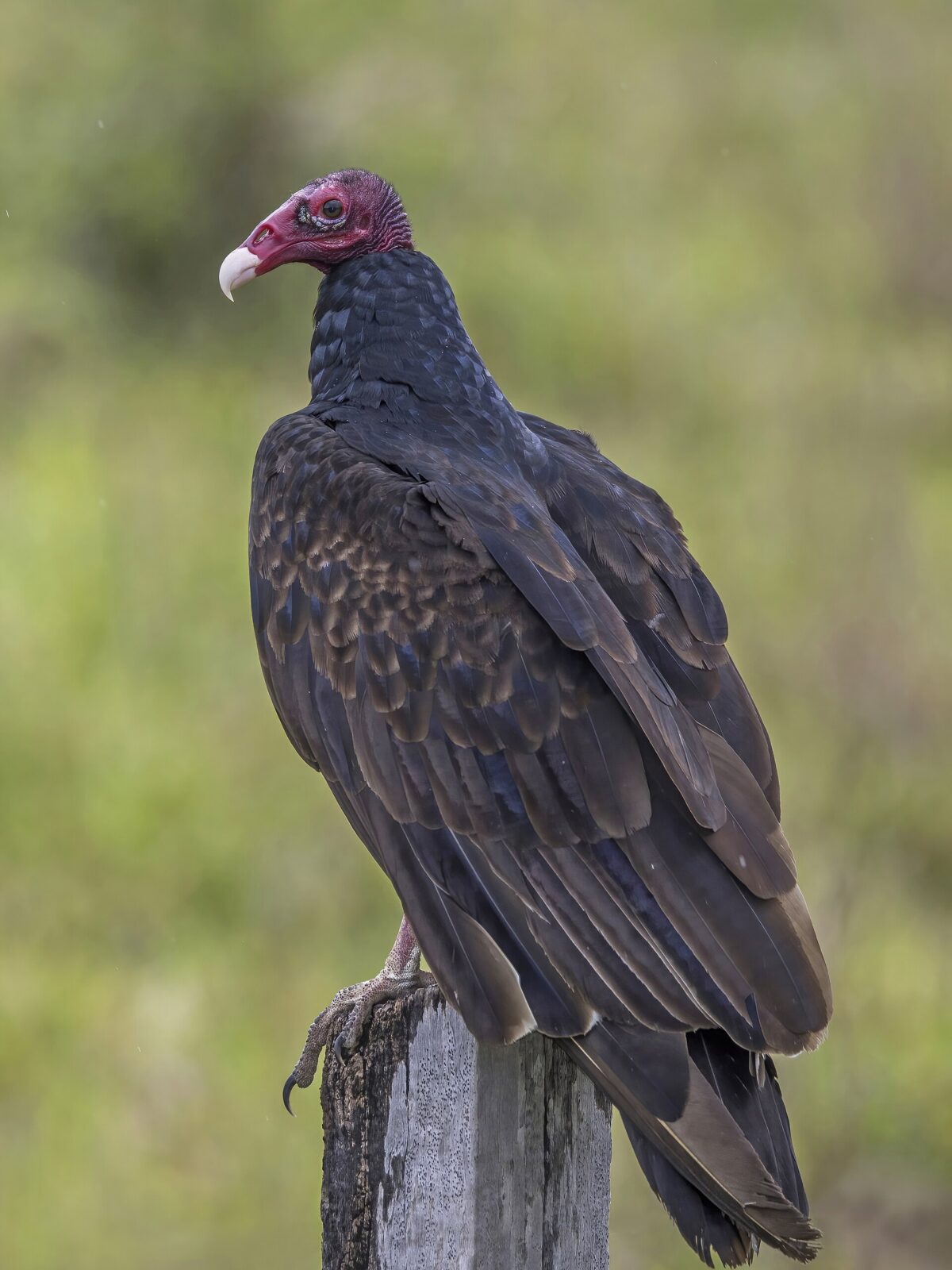
TURKEY VULTURE
Cathartes aura
DESCRIPTION
The Turkey Vulture is a large bird of prey known for its distinctive appearance, featuring a bald red head and dark brown to black plumage. It has a wingspan of about 1.8 to 2.1 meters, allowing it to soar gracefully in search of carrion. This scavenger plays a crucial role in the ecosystem by helping to dispose of dead animals, thus preventing the spread of disease.
FUN FACTS
- Turkey Vultures have an exceptional sense of smell, which is rare among birds, allowing them to detect carrion from several miles away
- They also have a unique method of cooling themselves; they urinate on their legs to regulate body temperature during hot weather.| Despite their somewhat unattractive appearance, Turkey Vultures play a vital role in the ecosystem by consuming dead animals, which helps to prevent the spread of disease and recycle nutrients back into the environment
QUICK INFO
Lifespan10-20 years in the wild, up to 30 years in captivi
Average Weight1.5-2.5 kg
Average Length60-81 cm
Diet TypeCarnivore
Social StructureThey are generally social birds, often seen in groups, especially when feeding.
Activity PatternDiurnal
Breeding SeasonSpring (March-May)
- Habitat
- Turkey Vultures are commonly found in open areas such as fields, forests, and near roadsides where they can easily spot food. They prefer habitats that provide thermal updrafts for soaring.
- Biomes
- Temperate Forest, Grassland, Desert
- Native Range
- Turkey Vultures are native to the Americas, ranging from southern Canada to the southern tip of South America.
- Continent
- North America, South America
- Countries
- United States, Canada, Mexico, Brazil, Argentina
- Diet
- Turkey Vultures primarily feed on carrion, which includes the remains of dead animals. They have an excellent sense of smell that helps them locate food from great distances.
- Diet Type
- Carnivore
- Favorite Food
- carrion
- Social Structure
- They are generally social birds, often seen in groups, especially when feeding.
- Activity Pattern
- Diurnal
- Group Size
- 5-50
- Territorial
- 0
 LC
LC
LC
LC
1.5-2.5 kg
Weight
60-81 cm
Length
- Coloration
- Dark brown to black with a distinctive bald red head.
- Sexual Dimorphism
- Males and females are similar in appearance, with no significant dimorphism.
- Lifespan
- 10-20 years in the wild, up to 30 years in captivi
- Offspring per Birth
- 1-3
- Sexual Maturity
- 5-6 years
- Breeding Season
- Spring (March-May)
LC
Least Concern
IUCN Red List Status
- Population Status
- The Turkey Vulture population is currently stable and widespread.
- Wild Population Estimate
- 1,000,000+
- Population Trend
- Stable
- Endangered
- 0
- Threats
- Main threats include habitat loss and poisoning from consuming carcasses contaminated with toxins. They are also vulnerable to collisions with vehicles.
- Predators
- Golden Eagles, Red-tailed Hawks, and other large birds of prey may occasionally prey on young or weak individuals.
- Defense Mechanisms
- Turkey Vultures have a unique defense mechanism where they may vomit on potential threats to deter them.
- Found in Zoos
- Uncommon