


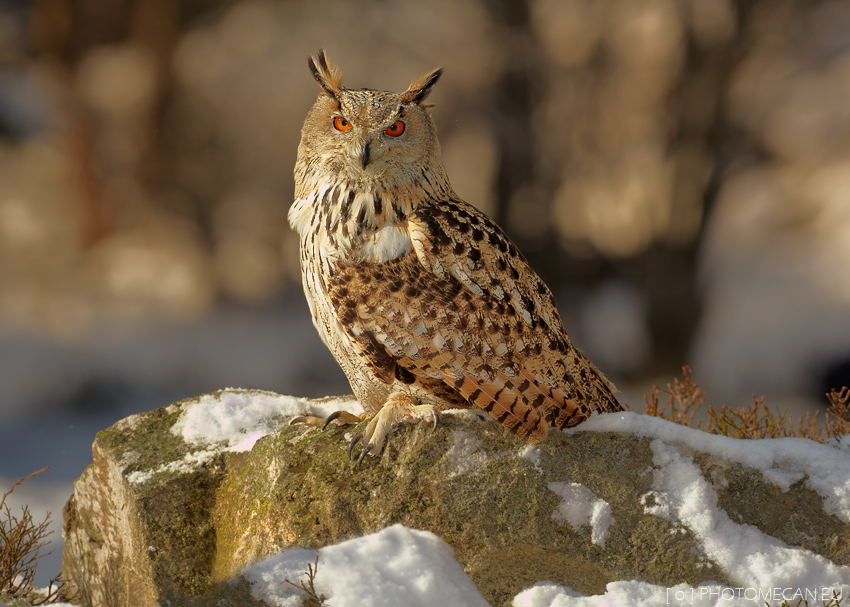
TURKMENIAN EAGLE OWL
Bubo bubo turcomanus
DESCRIPTION
Turkmenian Eagle Owl (Bubo bubo turcomanus) is a subspecies of the Eurasian Eagle Owl, characterized by its large size and distinctive ear tufts. This owl exhibits a robust body with a wingspan that can reach up to 1.8 meters, and its plumage is typically a mix of brown and orange with dark streaks, providing excellent camouflage in its natural habitat. Known for its solitary and nocturnal behavior, it primarily hunts at night, using its keen eyesight and hearing to locate prey in the dark.
FUN FACTS
- The Turkmenian Eagle Owl is known for its impressive hunting skills, capable of catching prey much larger than itself, thanks to its powerful talons and strong flight
- | These owls have a unique vocalization that can be heard over long distances, often described as a deep, resonant hoot that serves to establish territory and attract mates
QUICK INFO
LifespanUp to 20 years in the wild, longer in captivity.
Average Weight1.5-3.5 kg
Average Length60-75 cm
Diet TypeCarnivore
Social StructureSolitary, with pairs forming during the breeding season.
Activity PatternNocturnal
Breeding SeasonSpring (March-May)
- Habitat
- This owl prefers rocky terrains, mountainous regions, and open woodlands where it can find suitable nesting sites and hunting grounds. It often roosts in cliffs or large trees, providing a vantage point for spotting prey.
- Biomes
- Temperate Forest, Mountain
- Native Range
- The native range of the Turkmenian Eagle Owl includes parts of Central Asia, particularly in Turkmenistan and surrounding regions.
- Continent
- Asia
- Countries
- Turkmenistan, Iran, Afghanistan
- Diet
- The Turkmenian Eagle Owl primarily feeds on small to medium-sized mammals and birds, utilizing its powerful talons to capture prey. It is known to hunt rabbits, rodents, and occasionally larger birds.
- Diet Type
- Carnivore
- Favorite Food
- Rabbits, rodents
- Social Structure
- Solitary, with pairs forming during the breeding season.
- Activity Pattern
- Nocturnal
- Group Size
- 1-2
- Territorial
- 1
1.5-3.5 kg
Weight
60-75 cm
Length
- Coloration
- Brown and orange plumage with dark streaks and spots.
- Sexual Dimorphism
- Females are generally larger than males.
- Lifespan
- Up to 20 years in the wild, longer in captivity.
- Offspring per Birth
- 1-4
- Sexual Maturity
- 2-3 years
- Breeding Season
- Spring (March-May)
LC
Least Concern
IUCN Red List Status
- Population Status
- The population of Turkmenian Eagle Owls is not well-documented, but they are considered to be relatively stable in their native range.
- Wild Population Estimate
- Unknown
- Population Trend
- Stable
- Endangered
- 0
- Threats
- Main threats include habitat loss due to human encroachment and hunting. Additionally, they face competition for food from other predatory birds.
- Predators
- Larger birds of prey may pose a threat to juvenile owls, but adults have few natural predators.
- Defense Mechanisms
- Turkmenian Eagle Owls rely on their camouflage and nocturnal habits to avoid detection, and they can also be aggressive when threatened.
- Found in Zoos
- Uncommon