


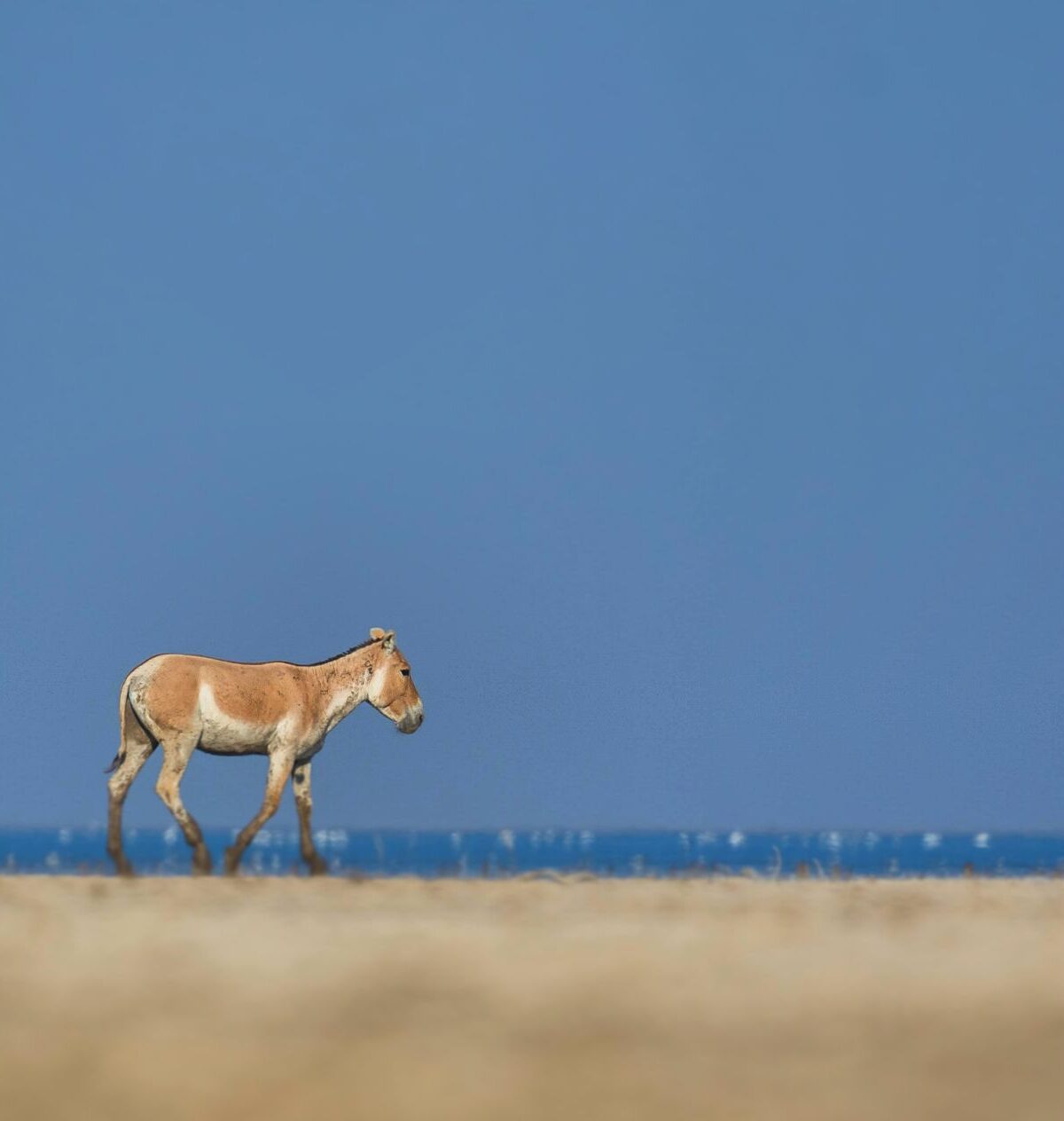
TURKMENIAN WILD ASS/KULAN
Equus hemionus kulan
DESCRIPTION
Turkmenian wild ass/kulan (Equus hemionus kulan) is commonly known as the kulan. This species is characterized by its sturdy build, long legs, and a distinctive dorsal stripe running along its back. Kulan are social animals that typically inhabit arid and semi-arid regions, displaying a range of behaviors including foraging in groups and exhibiting strong flight responses to threats.
FUN FACTS
- Kulan are known for their incredible speed, capable of running up to 70 km/h, which helps them evade predators in the wild
- Additionally, they have a unique social structure that allows them to communicate effectively with one another, using a variety of vocalizations and body language to convey information about threats and food sources
QUICK INFO
Lifespan15-20 years in the wild, up to 30 in captivity
Average Weight200-250 kg
Average Length2-2.5 m
Diet TypeHerbivore
Social StructureKulan typically live in small groups, often consisting of a few females and their young, with males being more solitary or forming bachelor groups.
Activity PatternDiurnal
Breeding SeasonSpring (April-June)
- Habitat
- Kulan inhabit dry steppes, deserts, and semi-desert regions. They prefer open areas where they can easily spot predators and find food.
- Biomes
- Desert, Grassland
- Native Range
- The native range of the kulan includes the Central Asian steppes, particularly in Turkmenistan, Kazakhstan, and Uzbekistan.
- Continent
- Asia
- Countries
- Turkmenistan, Kazakhstan, Uzbekistan
- Diet
- Kulan primarily graze on grasses, shrubs, and other vegetation found in their habitat. They are adapted to survive in harsh environments with limited food resources.
- Diet Type
- Herbivore
- Favorite Food
- grasses, shrubs
- Social Structure
- Kulan typically live in small groups, often consisting of a few females and their young, with males being more solitary or forming bachelor groups.
- Activity Pattern
- Diurnal
- Group Size
- 5-15
- Territorial
- 0
 LC
LC
 VU
VU
200-250 kg
Weight
2-2.5 m
Length
1.2 m at shoulder
Height (Shoulder)
- Coloration
- Kulan have a sandy or light brown coat with a darker stripe along the back.
- Sexual Dimorphism
- Males are generally larger than females.
- Lifespan
- 15-20 years in the wild, up to 30 in captivity
- Gestation Period
- 12 months
- Offspring per Birth
- 1
- Sexual Maturity
- 3-4 years
- Breeding Season
- Spring (April-June)
EN
Endangered
IUCN Red List Status
- Population Status
- The population of kulan has been declining due to habitat loss and hunting.
- Wild Population Estimate
- 5,000-10,000
- Population Trend
- Decreasing
- Endangered
- 1
- Threats
- Main threats to the kulan include habitat destruction due to agriculture and urban development, as well as poaching. These factors have significantly impacted their population numbers.
- Conservation Program
- Conservation efforts are underway in several countries to protect the kulan and its habitat.
- Predators
- Wolves, leopards, and humans are known predators of the kulan.
- Defense Mechanisms
- Kulan rely on their speed and agility to escape from predators, often fleeing in groups to confuse attackers.
- Found in Zoos
- Uncommon