


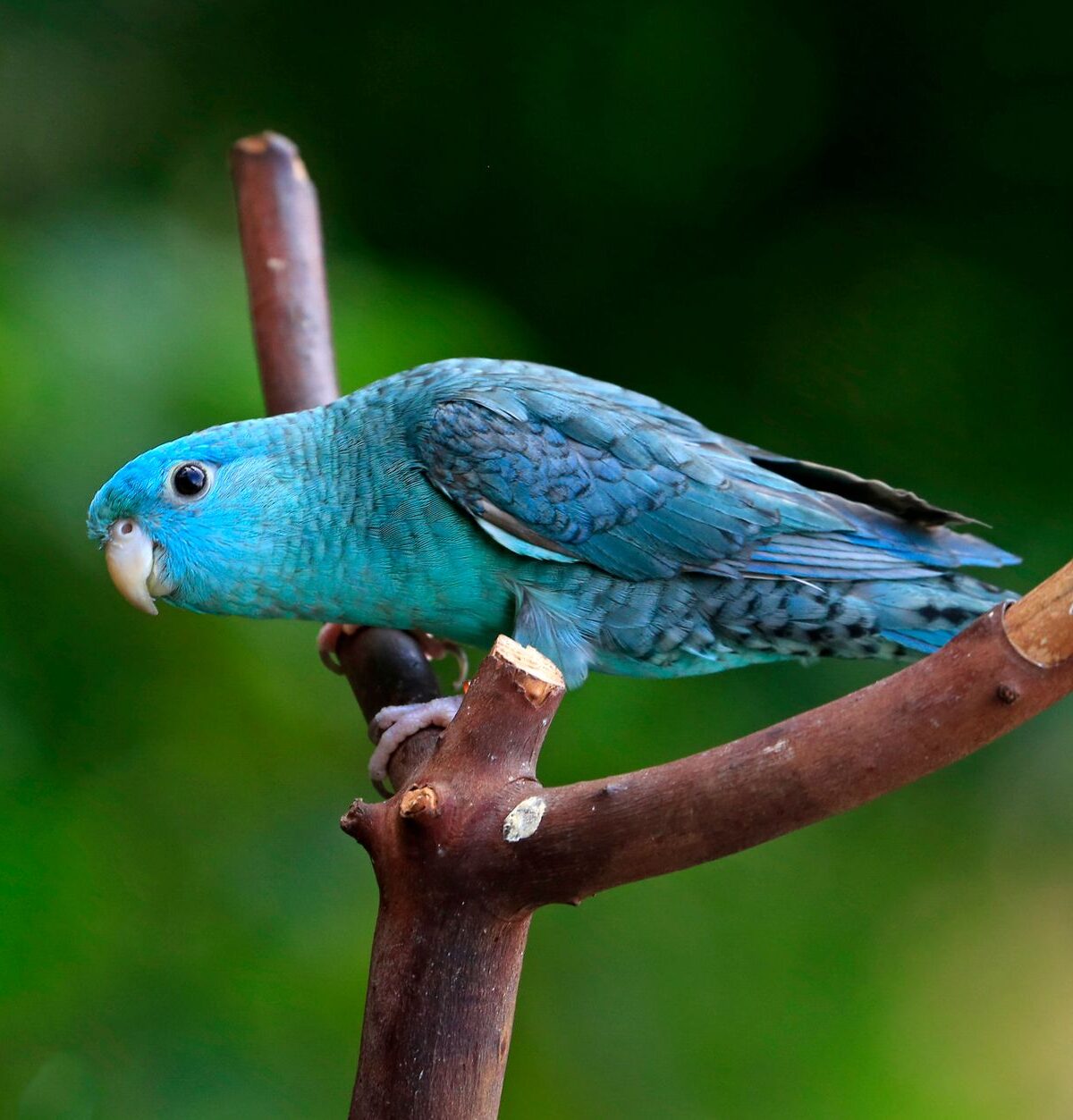
TURQUOISE PARROT
Psephotus caeruleus
DESCRIPTION
Turquoise Parrot (Psephotus caeruleus) is commonly known as the Blue-winged Parrot and Blue Parrot. This small to medium-sized parrot is characterized by its vibrant turquoise plumage, with striking blue wings and a yellow underbelly. They are social birds often found in pairs or small groups, inhabiting open woodlands and grasslands, where they can be seen foraging for seeds and fruits.
FUN FACTS
- Turquoise Parrots are known for their acrobatic flying skills, often performing aerial displays during courtship
- They are also popular in aviculture due to their striking colors and engaging personalities
QUICK INFO
Lifespan10-15 years in the wild, up to 20 years in captivi
Average Weight80-100 g
Average Length25-30 cm
Diet TypeHerbivore
Social StructureThey are typically found in pairs or small groups, showcasing a social structure that allows for cooperative foraging and protection.
Activity PatternDiurnal
Breeding SeasonSpring (September-November)
- Habitat
- They inhabit open forests, woodlands, and grasslands, often near water sources. These environments provide ample food and nesting opportunities.
- Biomes
- Temperate Forest, Grassland
- Native Range
- The native range of the Turquoise Parrot includes eastern and northern Australia.
- Continent
- Australia
- Countries
- Australia
- Diet
- Turquoise Parrots primarily feed on seeds, fruits, and occasionally flowers. They are known to forage on the ground as well as in trees.
- Diet Type
- Herbivore
- Favorite Food
- seeds, fruits
- Social Structure
- They are typically found in pairs or small groups, showcasing a social structure that allows for cooperative foraging and protection.
- Activity Pattern
- Diurnal
- Group Size
- 2-10
- Territorial
- 0

80-100 g
Weight
25-30 cm
Length
- Coloration
- Vibrant turquoise body with blue wings and a yellow underbelly.
- Sexual Dimorphism
- Males are generally more brightly colored than females.
- Lifespan
- 10-15 years in the wild, up to 20 years in captivi
- Offspring per Birth
- 3-6
- Sexual Maturity
- 1-2 years
- Breeding Season
- Spring (September-November)
LC
Least Concern
IUCN Red List Status
- Population Status
- The population of Turquoise Parrots is currently stable, but they face habitat loss in some areas.
- Wild Population Estimate
- Unknown
- Population Trend
- Stable
- Endangered
- 0
- Threats
- Main threats include habitat destruction due to agriculture and urban development. Additionally, they may be affected by predation from introduced species.
- Predators
- Cats, foxes, and birds of prey are known predators of the Turquoise Parrot.
- Defense Mechanisms
- They rely on their ability to fly quickly and their camouflage to evade predators.
- Compatible Animals
- Other small parrots, finches
- Found in Zoos
- Common