


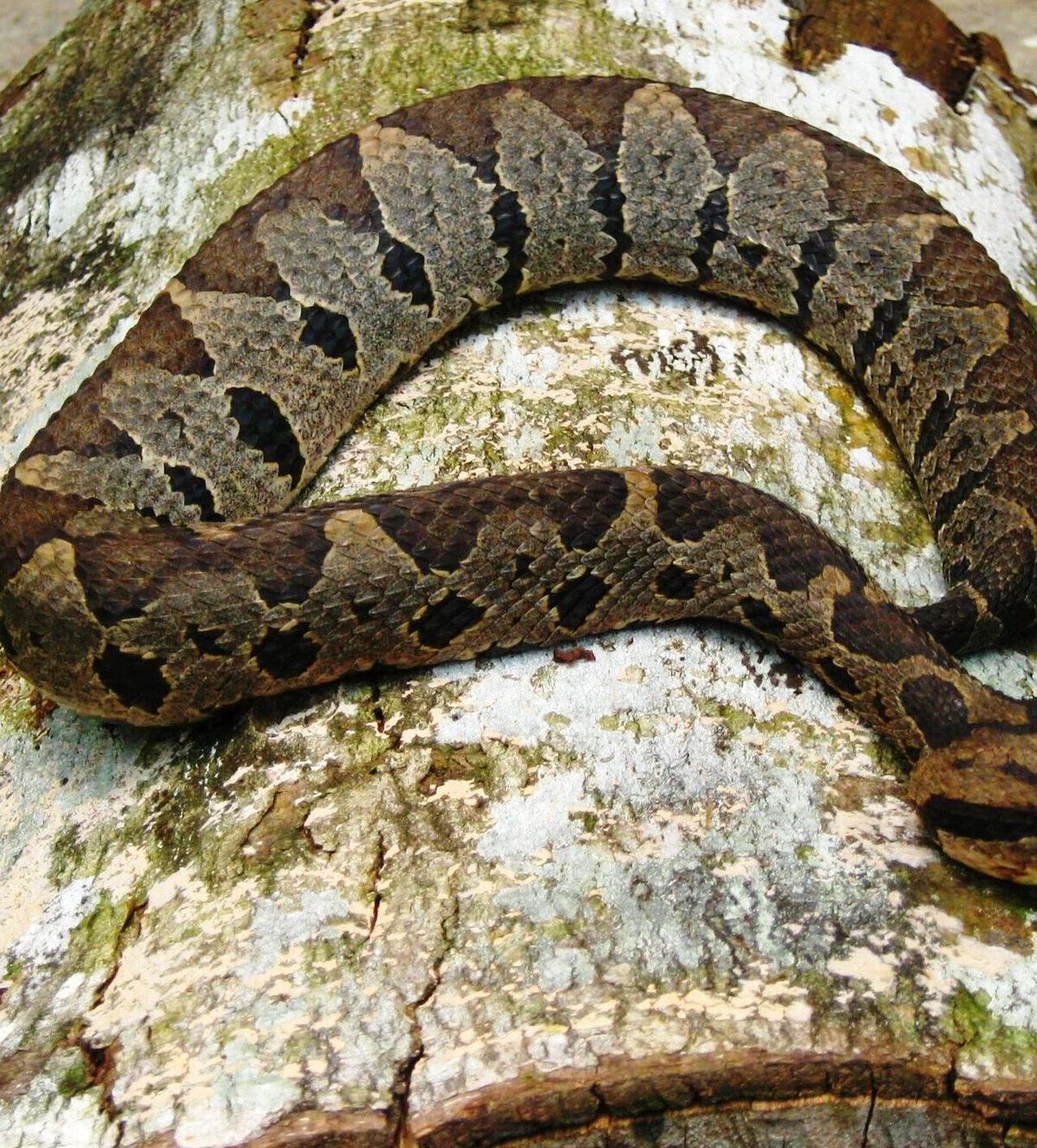
TUXTLAN JUMPING PITVIPER
Ophryacus tuxtlae
DESCRIPTION
The Tuxtlan Jumping Pitviper (Ophryacus tuxtlae) is a strikingly colored snake, typically exhibiting vibrant green or yellow hues with dark bands. This species is known for its unique ability to leap short distances when threatened, a behavior that aids in its defense against predators. It primarily inhabits the humid tropical forests of its native range, where it plays a crucial role in the local ecosystem as both predator and prey.
FUN FACTS
- The Tuxtlan Jumping Pitviper is known for its remarkable jumping ability, which can be quite surprising for those who encounter it in the wild
- This unique behavior is not only a defense mechanism but also aids in capturing prey
- | Despite its venomous nature, the Tuxtlan Jumping Pitviper plays a vital role in controlling the populations of small mammals and birds in its ecosystem, showcasing the importance of even the most dangerous species in maintaining ecological balance
QUICK INFO
Lifespan10-15 years in the wild, up to 20 in captivity
Average Length0.6-1.2 m
Diet TypeCarnivore
Social Structuresolitary, typically found alone except during mating season
Activity PatternNocturnal
Breeding SeasonSpring (March-May)
- Habitat
- This species thrives in humid tropical forests, often found in areas with dense vegetation that provides ample cover for hunting and ambushing prey. It prefers elevations ranging from 800 to 1,500 meters.
- Biomes
- Tropical Rainforest
- Native Range
- Endemic to the Tuxtla Mountains in southern Mexico.
- Continent
- North America
- Countries
- Mexico
- Diet
- The Tuxtlan Jumping Pitviper primarily feeds on small mammals, birds, and lizards. Its hunting strategy involves ambushing prey from a concealed position.
- Diet Type
- Carnivore
- Favorite Food
- small mammals, birds, lizards
- Social Structure
- solitary, typically found alone except during mating season
- Activity Pattern
- Nocturnal
- Group Size
- 1
- Territorial
- 0
 VU
VU
0.6-1.2 m
Length
- Coloration
- vibrant green or yellow with dark bands
- Sexual Dimorphism
- females are generally larger than males
- Lifespan
- 10-15 years in the wild, up to 20 in captivity
- Offspring per Birth
- 3-10
- Sexual Maturity
- 2-3 years
- Breeding Season
- Spring (March-May)
EN
Endangered
IUCN Red List Status
- Population Status
- The population is currently considered to be decreasing due to habitat loss and fragmentation.
- Wild Population Estimate
- unknown
- Population Trend
- Decreasing
- Endangered
- 1
- Threats
- Main threats include habitat destruction due to deforestation and agricultural expansion. Additionally, they face risks from illegal pet trade.
- Predators
- birds of prey, larger snakes, and mammals such as raccoons
- Defense Mechanisms
- The Tuxtlan Jumping Pitviper uses its ability to jump and its cryptic coloration to evade predators.
- Found in Zoos
- Rare