


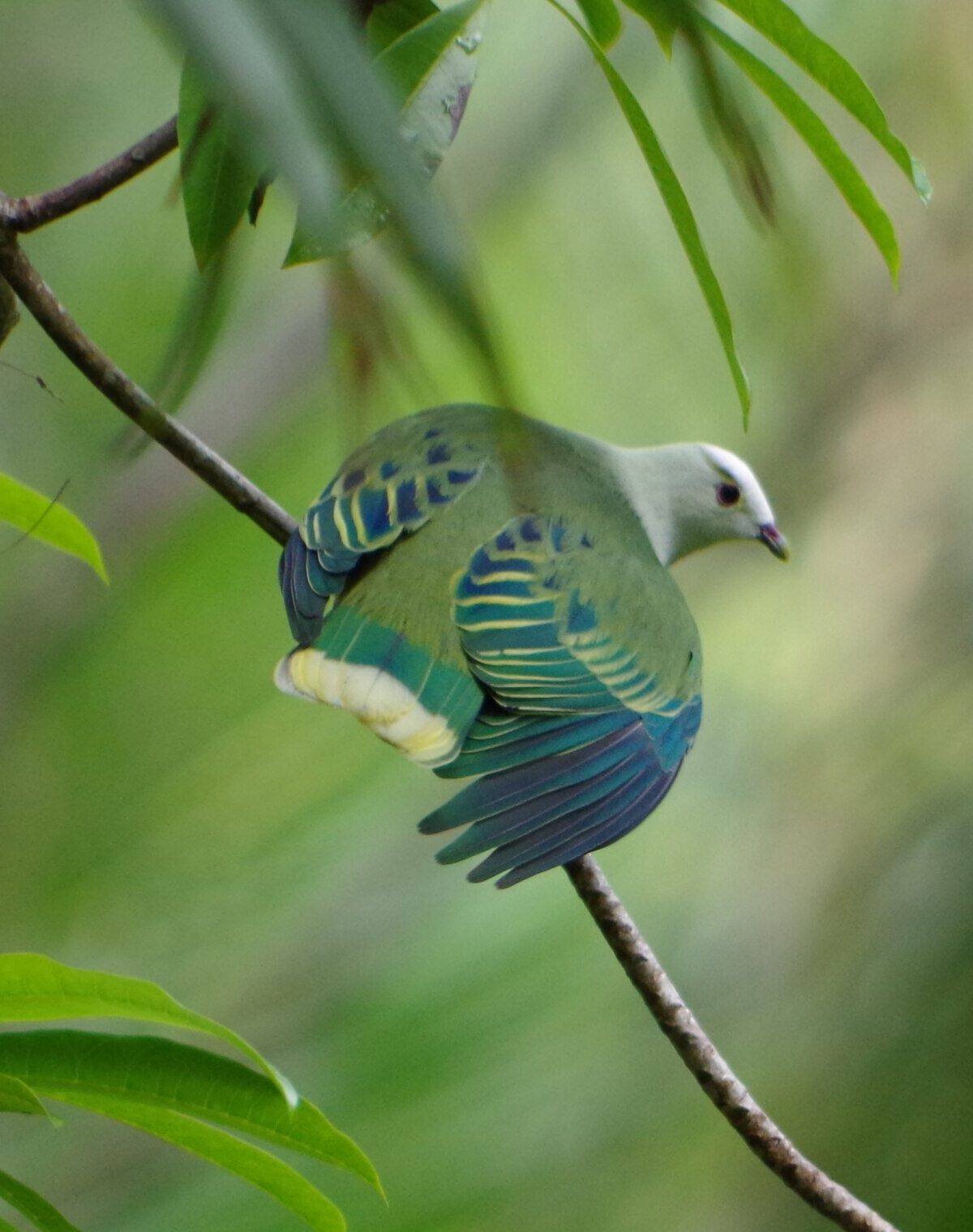
TWO-COLORED FRUIT DOVE
Ptilinopus dupetithouarsii
DESCRIPTION
Two-colored Fruit Dove (Ptilinopus dupetithouarsii) is also known as Dupetit-Thouars's Fruit Dove. This species is characterized by its vibrant plumage, featuring a striking combination of green and yellow hues, with a distinctive red patch on its forehead. It is a shy and elusive bird, often found in the dense canopies of tropical forests, where it feeds primarily on fruits and berries.
FUN FACTS
- The Two-colored Fruit Dove is known for its unique cooing calls, which can be heard echoing through the forest
- These calls play a crucial role in communication, especially during the breeding season, when males attract females with their melodic sounds.| This species has a specialized diet that allows it to thrive in its forest environment, primarily feeding on fruits that are often overlooked by other birds
- Their role as seed dispersers is vital for the health of their ecosystem, helping to maintain the diversity of plant life in their habitat
QUICK INFO
LifespanUp to 15 years in the wild.
Average Weight150-200 g
Average Length25-30 cm
Diet TypeHerbivore
Social StructureTypically solitary or in pairs, they are not known to form large flocks.
Activity PatternDiurnal
Breeding SeasonYear-round, with peaks depending on food availability.
- Habitat
- This species inhabits tropical rainforests, favoring areas with dense foliage that provide ample food sources and cover from predators.
- Biomes
- Tropical Rainforest
- Native Range
- The Two-colored Fruit Dove is native to the islands of Madagascar and the Comoros.
- Continent
- Africa
- Countries
- Madagascar, Comoros
- Diet
- The Two-colored Fruit Dove primarily consumes fruits, particularly figs and berries, which are abundant in its forest habitat.
- Diet Type
- Herbivore
- Favorite Food
- Fruits, especially figs
- Social Structure
- Typically solitary or in pairs, they are not known to form large flocks.
- Activity Pattern
- Diurnal
- Group Size
- 1-2
- Territorial
- 0
 LC
LC
 LC
LC
150-200 g
Weight
25-30 cm
Length
- Coloration
- Vibrant green body with yellow underparts and a red forehead patch.
- Sexual Dimorphism
- Males and females are similar in appearance, with no significant differences in coloration.
- Lifespan
- Up to 15 years in the wild.
- Offspring per Birth
- 1-2
- Sexual Maturity
- 1 year
- Breeding Season
- Year-round, with peaks depending on food availability.
LC
Least Concern
IUCN Red List Status
- Population Status
- The population of Two-colored Fruit Doves is currently stable, but habitat loss poses a potential threat.
- Wild Population Estimate
- Unknown
- Population Trend
- Stable
- Endangered
- 0
- Threats
- Main threats include habitat destruction due to deforestation and agricultural expansion, which reduce their natural habitat and food sources.
- Predators
- Predators include larger birds of prey and snakes, which may prey on eggs and young doves.
- Defense Mechanisms
- They rely on their camouflage and the dense foliage of their habitat to avoid detection by predators.
- Found in Zoos
- Uncommon