


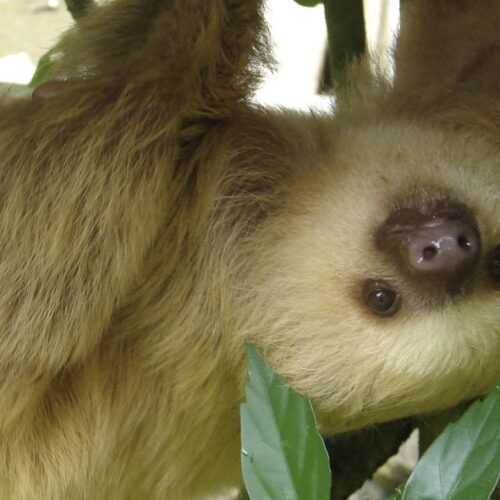
TWO-TOED SLOTH
Choloepus spp.
DESCRIPTION
Two-toed sloths are medium-sized mammals known for their slow movement and unique adaptations for a tree-dwelling lifestyle. They have long limbs and a distinctive two-toed foot structure that aids in hanging from branches.
FUN FACTS
- Two-toed sloths can hold their breath for up to 40 minutes underwater | They have a very slow metabolism, taking weeks to digest food | Sloths are known to host algae in their fur, which provides camouflage
QUICK INFO
Lifespan20-30 years in the wild, up to 40 in captivity
Average Weight4-8 kg
Average Length60-75 cm
Diet TypeHerbivore
Social Structuresolitary, occasionally seen in pairs during mating season
Activity PatternNocturnal
Breeding SeasonYear-round, with peaks depending on the region
- Habitat
- Two-toed sloths inhabit tropical rainforests and cloud forests, where they spend most of their lives in trees. They prefer areas with abundant foliage for feeding and shelter.
- Biomes
- Tropical Rainforest, Cloud Forest
- Native Range
- They are native to Central and South America, ranging from Honduras to northern Argentina.
- Continent
- North America, South America
- Countries
- Honduras, Nicaragua, Costa Rica, Panama, Colombia, Venezuela, Ecuador, Brazil, Bolivia, Paraguay, Argentina
- Diet
- They primarily feed on leaves, fruits, and flowers, which are low in nutrients. Their slow metabolism allows them to survive on this diet.
- Diet Type
- Herbivore
- Favorite Food
- leaves, fruits, flowers
- Social Structure
- solitary, occasionally seen in pairs during mating season
- Activity Pattern
- Nocturnal
- Group Size
- 1-2
- Territorial
- 0
 NT
NT
 VU
VU
4-8 kg
Weight
60-75 cm
Length
- Coloration
- brown to gray fur with greenish algae growth
- Sexual Dimorphism
- males are slightly larger than females
- Lifespan
- 20-30 years in the wild, up to 40 in captivity
- Gestation Period
- 11 months
- Offspring per Birth
- 1
- Sexual Maturity
- 3-4 years
- Breeding Season
- Year-round, with peaks depending on the region
LC
Least Concern
IUCN Red List Status
- Population Status
- Population status is currently stable, but habitat loss poses a threat.
- Wild Population Estimate
- Unknown
- Population Trend
- Stable
- Endangered
- 0
- Threats
- Main threats include habitat destruction due to deforestation and climate change. They are also vulnerable to predation by large birds and jaguars.
- Predators
- jaguars, harpy eagles
- Defense Mechanisms
- Their slow movement and camouflage help them avoid detection by predators.
- Found in Zoos
- Common