



URAL OWL
Strix uralensis
DESCRIPTION
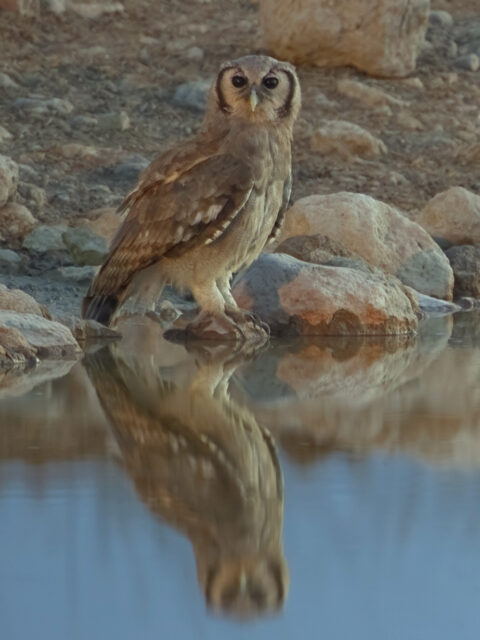
The Ural Owl is a large, robust owl characterized by its round head, yellow eyes, and a distinctive facial disc. Its plumage is predominantly grayish-brown with lighter streaks, providing excellent camouflage in its forested habitat. This species is known for its hooting calls and is primarily nocturnal, hunting at night while roosting during the day in tree cavities or dense foliage.
FUN FACTS
- Ural Owls are known for their unique vocalizations, which can vary significantly between individuals, making them a subject of interest for ornithologists studying communication in birds
- | These owls have excellent hearing, allowing them to detect prey even under a layer of snow, which is crucial for their survival in colder climates
QUICK INFO
Lifespan10-15 years in the wild, up to 20 in captivity
Average Weight600-1,200 g
Average Length40-60 cm
Diet TypeCarnivore
Social Structuresolitary, pairs during breeding season
Activity PatternNocturnal
Breeding SeasonSpring (March-May)
- Habitat
- Ural Owls inhabit mature forests, particularly those with a mix of coniferous and deciduous trees. They prefer areas with dense undergrowth for nesting and hunting.
- Biomes
- Temperate Forest, Boreal Forest
- Native Range
- The Ural Owl is native to parts of Europe and Asia, ranging from Finland and Sweden in the north to the Caucasus and parts of Central Asia in the south.
- Continent
- Europe, Asia
- Countries
- Finland, Sweden, Russia, Estonia, Latvia, Lithuania, Poland, Ukraine, Kazakhstan
- Diet
- The Ural Owl primarily feeds on small mammals, birds, and insects. It is known to hunt voles, mice, and shrews, making it an effective predator in its ecosystem.
- Diet Type
- Carnivore
- Favorite Food
- small mammals, birds
- Social Structure
- solitary, pairs during breeding season
- Activity Pattern
- Nocturnal
- Group Size
- 1-2
- Territorial
- 1
 LC
LC
600-1,200 g
Weight
40-60 cm
Length
- Coloration
- grayish-brown with lighter streaks
- Sexual Dimorphism
- females are generally larger than males
- Lifespan
- 10-15 years in the wild, up to 20 in captivity
- Offspring per Birth
- 2-5
- Sexual Maturity
- 1-2 years
- Breeding Season
- Spring (March-May)
LC
Least Concern
IUCN Red List Status
- Population Status
- The Ural Owl population is considered stable in many areas, although habitat loss poses a threat in some regions.
- Wild Population Estimate
- 50,000-100,000
- Population Trend
- Stable
- Endangered
- 0
- Threats
- Main threats include habitat destruction due to logging and land conversion for agriculture. Additionally, they face risks from climate change and human disturbance.
- Predators
- Eagles, larger owls, and humans can pose threats to Ural Owls, particularly to their eggs and young.
- Defense Mechanisms
- Ural Owls rely on their camouflage and silent flight to avoid detection by predators.
- Found in Zoos
- Uncommon