


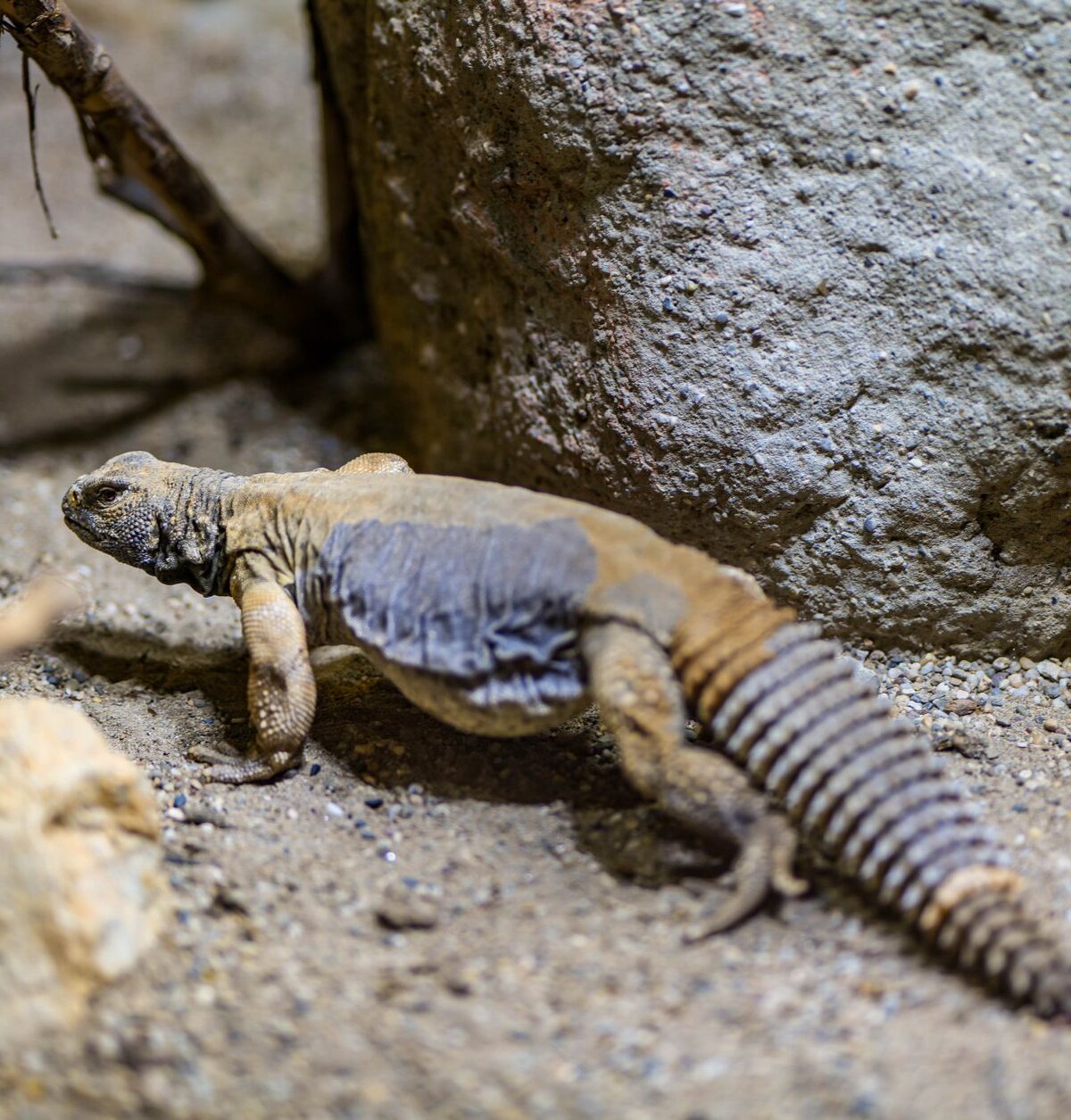
UROMASTYX
DESCRIPTION
Also called the Spiny-tailed lizard, Uromastyx is a genus of lizards known for their distinctive spiny tails and robust bodies. They are primarily found in arid regions and are well adapted to their hot environments, often basking in the sun to regulate their body temperature. Uromastyx lizards are herbivorous, feeding on a variety of plant materials, and they exhibit unique burrowing behaviors to escape the heat and avoid predators.
FUN FACTS
- Uromastyx lizards are known for their unique ability to tolerate high temperatures, often found basking in temperatures exceeding 50°C
- They also have a fascinating social behavior where males will engage in head-bobbing displays to establish dominance during the breeding season.|These lizards can live for several decades in captivity, making them a long-term commitment for pet owners
- Their diet is primarily herbivorous, which is quite unique among lizards, and they require a specialized diet to thrive
QUICK INFO
Lifespan10-20 years in the wild, up to 30 years in captivi
Average Weight0.5-1.5 kg
Average Length30-60 cm
Diet TypeHerbivore
Social Structuresolitary, occasionally seen in pairs during mating
Activity PatternDiurnal
Breeding SeasonSpring (March-May)
- Habitat
- Uromastyx lizards inhabit rocky deserts and dry grasslands, where they can find shelter in crevices and burrows. They prefer areas with abundant vegetation to support their herbivorous diet.
- Biomes
- Desert, Grassland
- Native Range
- Uromastyx species are native to North Africa, the Middle East, and parts of South Asia.
- Continent
- Africa, Asia
- Countries
- Egypt, Sudan, Saudi Arabia, Iran, Pakistan
- Diet
- Uromastyx primarily feeds on leaves, flowers, and fruits, making them strict herbivores.
- Diet Type
- Herbivore
- Favorite Food
- leaves, flowers, fruits
- Social Structure
- solitary, occasionally seen in pairs during mating
- Activity Pattern
- Diurnal
- Group Size
- 1-2
- Territorial
- 1
 VU
VU
 LC
LC
0.5-1.5 kg
Weight
30-60 cm
Length
- Coloration
- Typically, they have a gray or brown base color with lighter or darker patterns, which helps them blend into their rocky surroundings.
- Sexual Dimorphism
- Males are generally larger and have more pronounced coloration than females.
- Lifespan
- 10-20 years in the wild, up to 30 years in captivi
- Gestation Period
- 60-90 days
- Offspring per Birth
- 5-20
- Sexual Maturity
- 2-3 years
- Breeding Season
- Spring (March-May)
LC
Least Concern
IUCN Red List Status
- Population Status
- Population status varies by species, with some being common while others are threatened due to habitat loss.
- Wild Population Estimate
- Unknown
- Population Trend
- Decreasing
- Endangered
- 0
- Threats
- Main threats include habitat destruction due to urbanization and agriculture, as well as collection for the pet trade. These factors have led to declining populations in certain areas.
- Predators
- Birds of prey, snakes, and larger mammals can prey on Uromastyx lizards.
- Defense Mechanisms
- Uromastyx can use their spiny tails as a defense mechanism against predators, and they often retreat into burrows when threatened.
- Found in Zoos
- Uncommon