


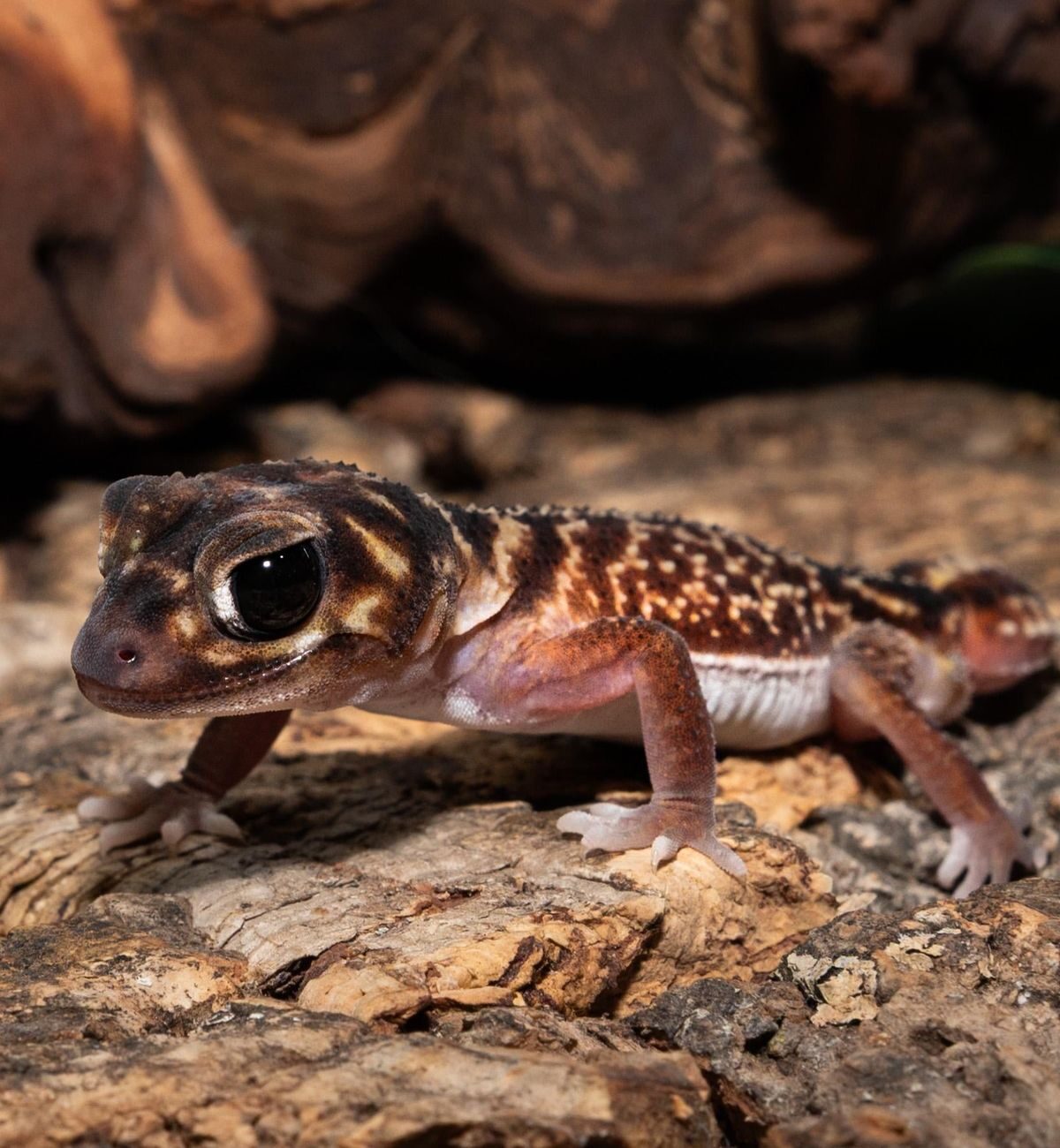
VELVET GECKO
Oedura lesueurii
DESCRIPTION
Velvet Gecko (Oedura lesueurii) is commonly known as Lesueur's Velvet Gecko, a species characterized by its smooth, velvety skin and striking coloration that ranges from brown to gray with darker patterns. This gecko is primarily nocturnal, exhibiting a range of behaviors including climbing and hiding in crevices during the day. Ecologically, it plays a role in controlling insect populations and is often found in rocky outcrops and woodlands, where it can easily blend into its surroundings.
FUN FACTS
- Velvet Geckos have a unique ability to change their color slightly to blend in with their surroundings, which helps them avoid predators
- Additionally, they are known for their vocalizations, which can include hissing and chirping sounds, especially during mating season.|These geckos are also popular in the pet trade due to their striking appearance and relatively easy care requirements
- They thrive in terrarium environments that mimic their natural habitat, including hiding spots and climbing structures
QUICK INFO
Lifespan5-10 years in the wild, up to 15 in captivity
Average Length15-20 cm
Diet TypeInsectivore
Social Structuresolitary, with individuals maintaining their own territories
Activity PatternNocturnal
Breeding SeasonSpring (September-November)
- Habitat
- This species inhabits rocky areas, woodlands, and shrublands, often favoring environments with plenty of hiding spots. They are adept climbers and can often be found on trees and rocks.
- Biomes
- Temperate Forest, Grassland
- Native Range
- Oedura lesueurii is native to southeastern Australia, particularly in regions such as New South Wales and Victoria.
- Continent
- Australia
- Countries
- Australia
- Diet
- Velvet Geckos primarily feed on insects and other small invertebrates, utilizing their keen eyesight to hunt at night. They are known to consume a variety of prey, including crickets and moths.
- Diet Type
- Insectivore
- Favorite Food
- crickets, moths
- Social Structure
- solitary, with individuals maintaining their own territories
- Activity Pattern
- Nocturnal
- Group Size
- 1
- Territorial
- 1
 VU
VU
 LC
LC

15-20 cm
Length
- Coloration
- brown to gray with darker patterns
- Sexual Dimorphism
- males tend to be slightly larger than females
- Lifespan
- 5-10 years in the wild, up to 15 in captivity
- Offspring per Birth
- 1-2
- Sexual Maturity
- 1-2 years
- Breeding Season
- Spring (September-November)
LC
Least Concern
IUCN Red List Status
- Population Status
- The population is currently stable, with no major declines reported.
- Wild Population Estimate
- unknown
- Population Trend
- Stable
- Endangered
- 0
- Threats
- Main threats include habitat loss due to urban development and agriculture. Additionally, predation by introduced species such as cats and foxes poses a risk to their populations.
- Predators
- birds of prey, snakes, introduced mammals such as cats and foxes
- Defense Mechanisms
- They can drop their tails when threatened, allowing them to escape while the predator is distracted.
- Found in Zoos
- Uncommon