


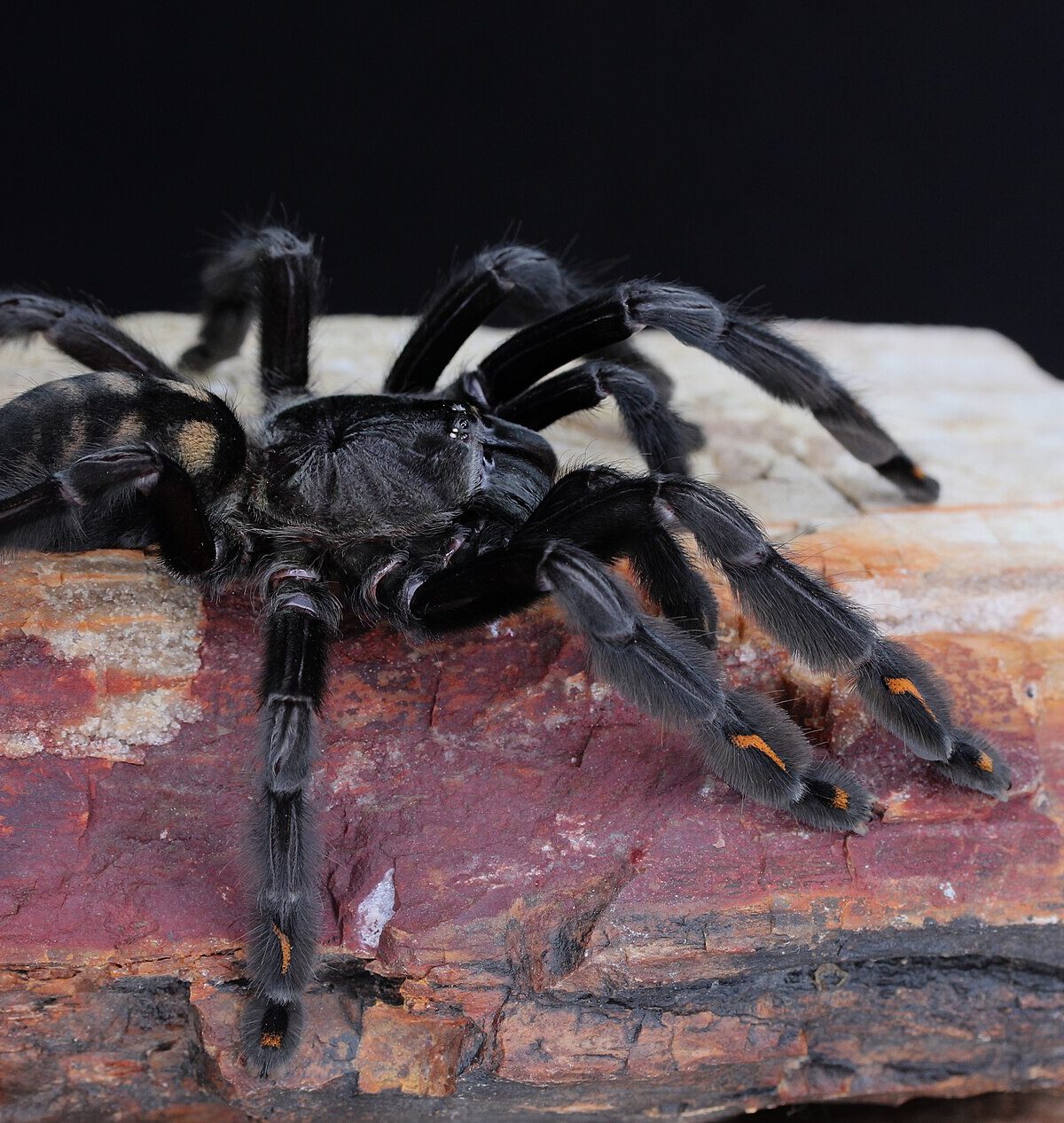
VENEZUELAN SUNTIGER TARANTULA
DESCRIPTION
Also called the Venezuelan Tiger Tarantula, this species is known for its striking coloration, featuring a vibrant orange and black pattern that makes it one of the most visually appealing tarantulas. They are medium to large-sized spiders, with a leg span that can reach up to 6 inches. Venezuelan Suntiger Tarantulas are primarily terrestrial and are known for their fast and agile movements, often displaying a defensive posture when threatened.
FUN FACTS
- Venezuelan Suntiger Tarantulas are known for their impressive speed and agility, making them one of the fastest tarantula species
- They are also capable of producing a loud hissing sound by rubbing their legs together, a behavior known as stridulation, which can serve as a warning to potential threats.| These tarantulas are often kept as exotic pets due to their striking appearance and relatively manageable care requirements
- However, they require specific humidity and temperature conditions to thrive, making them suitable for experienced keepers
QUICK INFO
Lifespan10-15 years in the wild, up to 20 years in captivi
Average Length6 inches
Diet TypeCarnivore
Social Structuresolitary, they typically live alone except during mating.
Activity PatternNocturnal
Breeding SeasonLate summer to early fall
- Habitat
- Venezuelan Suntiger Tarantulas inhabit tropical rainforests and humid environments, often found under leaf litter or in burrows. They prefer areas with plenty of cover to hide from predators.
- Biomes
- Tropical Rainforest
- Native Range
- This species is native to the tropical regions of Venezuela.
- Continent
- South America
- Countries
- Venezuela
- Diet
- They primarily feed on insects and other small invertebrates, using their venom to subdue prey. In captivity, they can also be fed on crickets and mealworms.
- Diet Type
- Carnivore
- Favorite Food
- insects
- Social Structure
- solitary, they typically live alone except during mating.
- Activity Pattern
- Nocturnal
- Group Size
- 1
- Territorial
- 1
 VU
VU
6 inches
Length
- Coloration
- vibrant orange and black
- Sexual Dimorphism
- males are generally smaller than females and have longer legs.
- Lifespan
- 10-15 years in the wild, up to 20 years in captivi
- Offspring per Birth
- 100-200
- Sexual Maturity
- 2-3 years
- Breeding Season
- Late summer to early fall
LC
Least Concern
IUCN Red List Status
- Population Status
- The population status is currently stable, but habitat loss poses a potential threat.
- Population Trend
- Stable
- Endangered
- 0
- Threats
- Main threats include habitat destruction due to deforestation and the pet trade. These factors can lead to localized declines in their populations.
- Predators
- Birds, larger mammals, and other predatory arthropods.
- Defense Mechanisms
- They can display a defensive posture, and some individuals may also use urticating hairs to deter predators.
- Found in Zoos
- Uncommon