


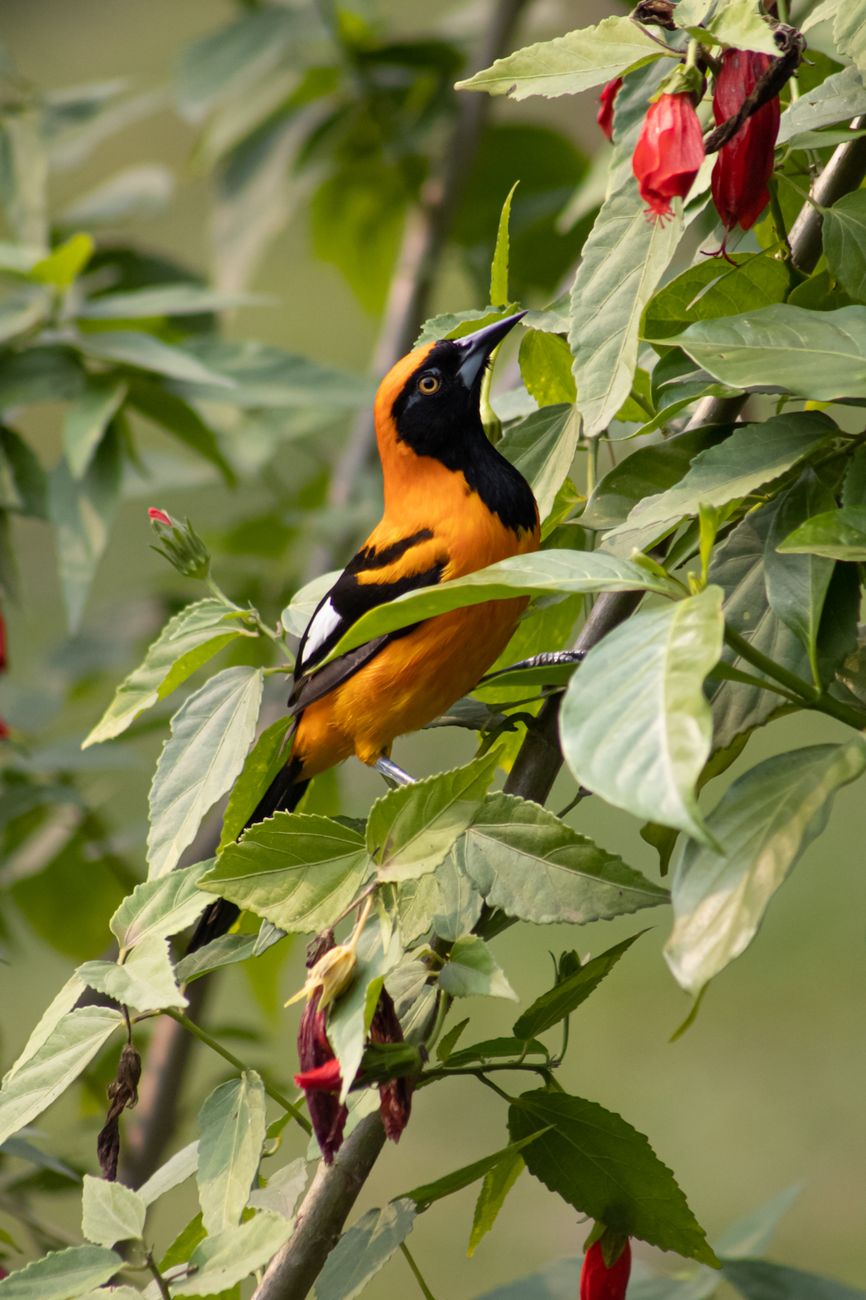
VENEZUELAN TROUPIAL
Icterus icterus
DESCRIPTION
Venezuelan Troupial (Icterus icterus) is a striking bird known for its vibrant yellow and black plumage, which makes it easily recognizable. This species exhibits a melodious song and is often seen foraging in trees and open areas, showcasing its playful and social behavior. It plays a significant role in its ecosystem by helping to disperse seeds and control insect populations.
FUN FACTS
- Venezuelan Troupials are known for their impressive vocal abilities, often mimicking the sounds of other birds and even human-made noises
- They are also highly adaptable, thriving in both natural and urban environments, which allows them to coexist with human populations
QUICK INFO
Lifespan5-10 years in the wild
Average Weight50-70 g
Average Length23-25 cm
Diet TypeOmnivore
Social StructureThey are often found in pairs or small groups, especially during the breeding season.
Activity PatternDiurnal
Breeding SeasonSpring to early summer
- Habitat
- This species thrives in open woodlands, savannas, and urban areas where there are plenty of trees for nesting and foraging. They prefer habitats that provide a mix of open space and cover.
- Biomes
- Tropical Rainforest, Savanna
- Native Range
- The Venezuelan Troupial is native to northern South America, particularly in Venezuela and parts of Colombia.
- Continent
- South America
- Countries
- Venezuela, Colombia
- Diet
- Venezuelan Troupials primarily feed on fruits, insects, and nectar. They are known to forage in trees and shrubs, often hanging upside down to reach food.
- Diet Type
- Omnivore
- Favorite Food
- fruits, insects, nectar
- Social Structure
- They are often found in pairs or small groups, especially during the breeding season.
- Activity Pattern
- Diurnal
- Group Size
- 2-10
- Territorial
- 1
 LC
LC
 CR
CR
50-70 g
Weight
23-25 cm
Length
- Coloration
- Bright yellow body with black wings and head
- Sexual Dimorphism
- Males are more brightly colored than females, who are generally duller in appearance.
- Lifespan
- 5-10 years in the wild
- Offspring per Birth
- 2-4
- Sexual Maturity
- 1 year
- Breeding Season
- Spring to early summer
LC
Least Concern
IUCN Red List Status
- Population Status
- The population of Venezuelan Troupials is currently stable, with no significant declines reported.
- Wild Population Estimate
- Unknown
- Population Trend
- Stable
- Endangered
- 0
- Threats
- Habitat loss due to deforestation and urbanization poses a threat to their populations. Additionally, they may face competition for food and nesting sites from other bird species.
- Predators
- Snakes, hawks, and larger birds of prey are known to prey on Venezuelan Troupials.
- Defense Mechanisms
- They often use their bright coloration to startle predators and may also engage in mobbing behavior to drive them away.
- Found in Zoos
- Uncommon