


VIETNAMESE LEAF-NOSED SNAKE
Langaha nasuta
DESCRIPTION
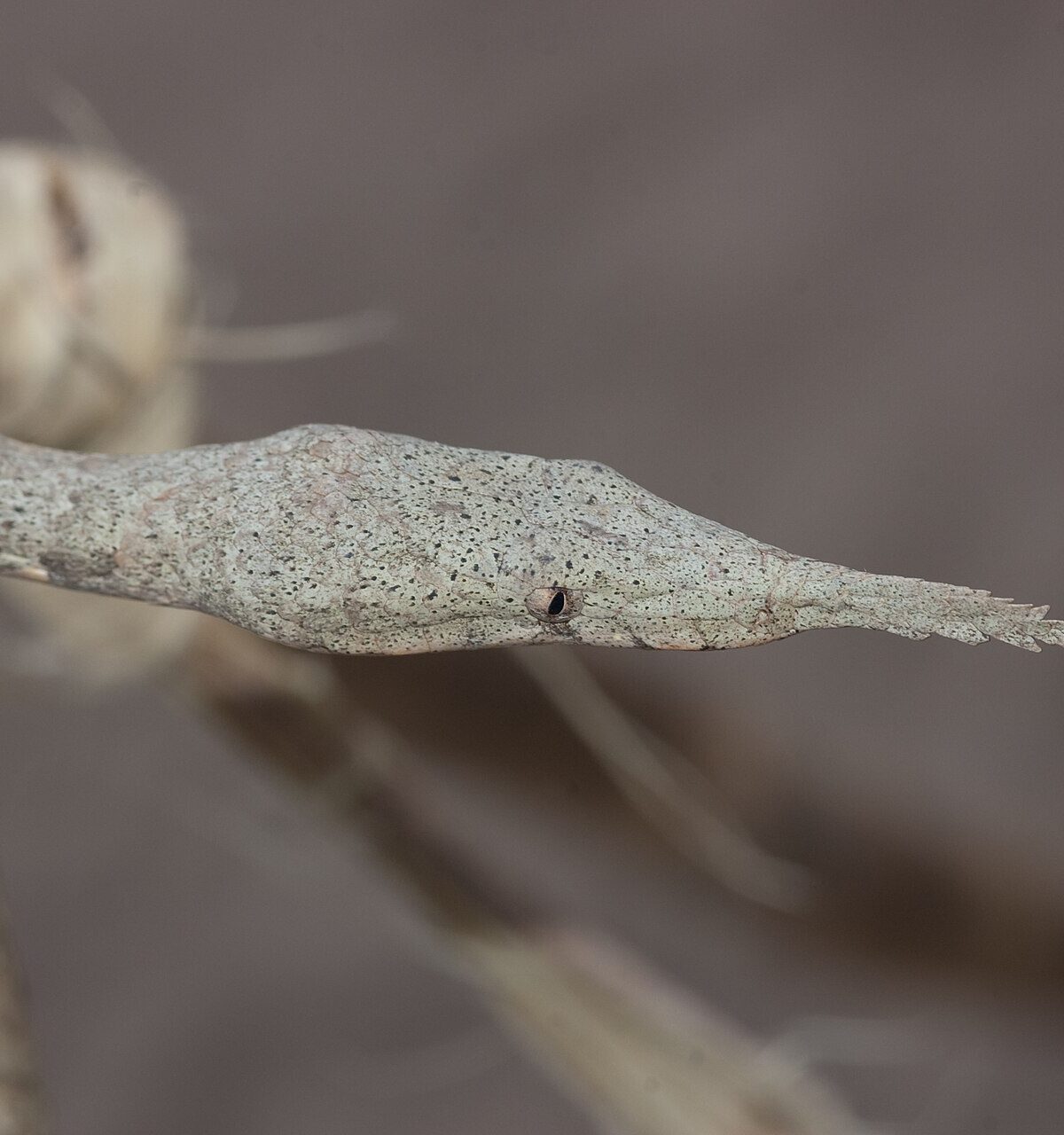
Vietnamese Leaf-Nosed Snake (Langaha nasuta) is a unique species known for its distinctive leaf-shaped snout, which aids in camouflage among foliage. This snake exhibits a slender body with a coloration that ranges from brown to green, allowing it to blend seamlessly into its forest habitat. Primarily arboreal, it is often found resting on branches, where it uses its cryptic appearance to ambush prey and avoid predators.
FUN FACTS
- The Vietnamese Leaf-Nosed Snake is often mistaken for a twig or leaf due to its remarkable camouflage, which is a crucial adaptation for both hunting and avoiding predators
- | This species has a unique reproductive strategy, as it is oviparous, laying eggs rather than giving live birth, which is less common among snakes in its family
QUICK INFO
Lifespan10-15 years in the wild
Average Length1.2-1.5 m
Diet TypeCarnivore
Social Structuresolitary, typically found alone except during mating season
Activity PatternDiurnal
Breeding SeasonSpring (March-May)
- Habitat
- This species inhabits tropical and subtropical forests, often in areas with dense vegetation. It prefers humid environments where it can easily find cover and hunt for prey.
- Biomes
- Tropical Rainforest, Subtropical Forest
- Native Range
- The Vietnamese Leaf-Nosed Snake is native to Southeast Asia, particularly found in Vietnam and parts of Laos.
- Continent
- Asia
- Countries
- Vietnam, Laos
- Diet
- It primarily feeds on small lizards and other reptiles, using its keen eyesight to spot them from a distance. The snake employs a sit-and-wait strategy to capture its prey.
- Diet Type
- Carnivore
- Favorite Food
- small lizards
- Social Structure
- solitary, typically found alone except during mating season
- Activity Pattern
- Diurnal
- Group Size
- 1
- Territorial
- 0
 VU
VU
1.2-1.5 m
Length
- Coloration
- The coloration varies from light brown to green, often with darker markings that help it blend into its surroundings.
- Sexual Dimorphism
- males are generally smaller than females
- Lifespan
- 10-15 years in the wild
- Sexual Maturity
- 2-3 years
- Breeding Season
- Spring (March-May)
LC
Least Concern
IUCN Red List Status
- Population Status
- The population status is not well-documented, but habitat loss poses a potential threat.
- Wild Population Estimate
- unknown
- Population Trend
- Unknown
- Endangered
- 0
- Threats
- Main threats include habitat destruction due to deforestation and agricultural expansion. Additionally, they may be affected by the illegal pet trade.
- Predators
- Birds of prey, larger snakes, and mammals may prey on this species.
- Defense Mechanisms
- When threatened, it may remain motionless to avoid detection or mimic the appearance of a twig.
- Found in Zoos
- Uncommon