


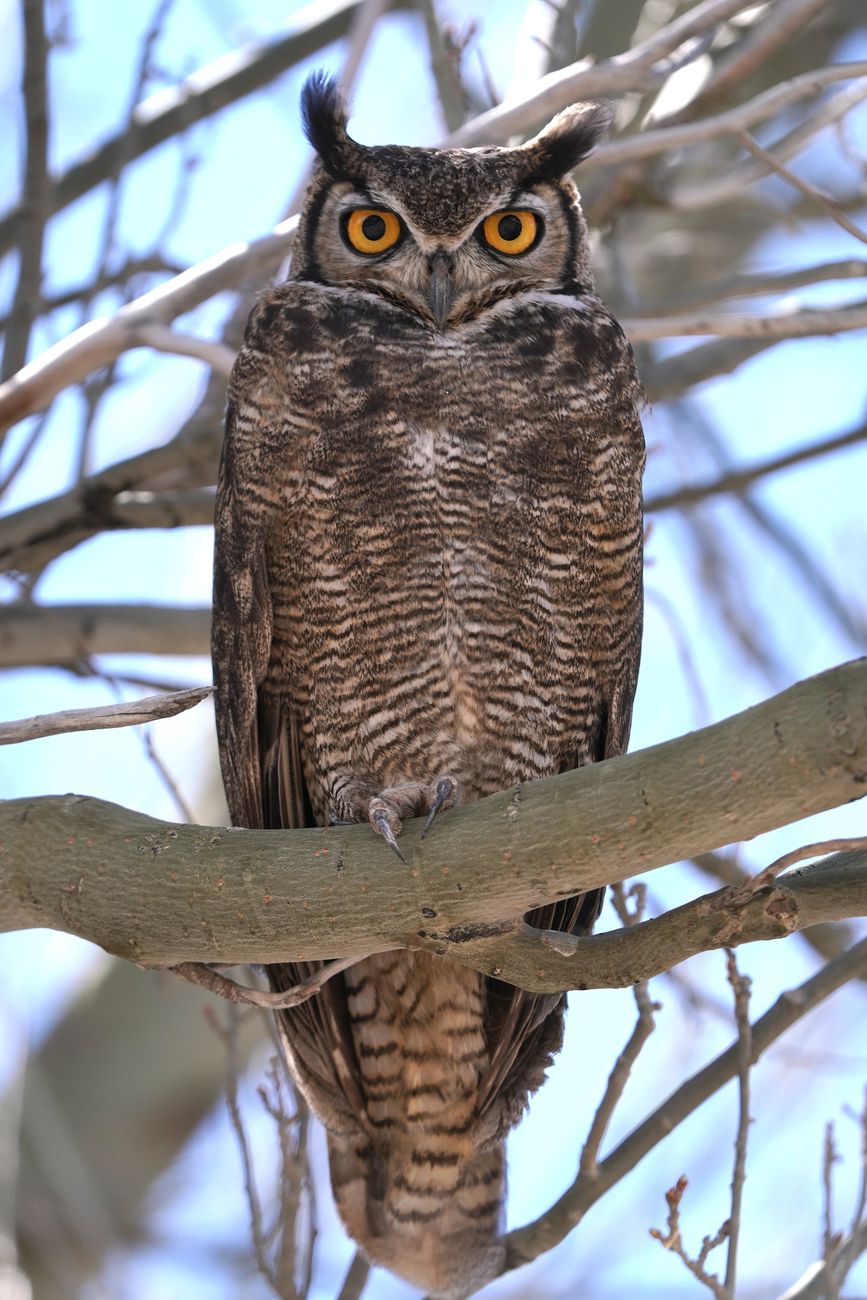
VIRGINIA EAGLE-OWL
DESCRIPTION
Also called the Great Horned Owl and Tiger Owl, the Virginia Eagle-Owl is a large and powerful bird of prey known for its distinctive tufted ears and striking yellow eyes. This owl exhibits a mottled brown and gray plumage that provides excellent camouflage in its natural habitat. It is primarily nocturnal, hunting at night and roosting during the day, showcasing a range of vocalizations that include deep hoots and screeches.
FUN FACTS
- Virginia Eagle-Owls have exceptional hearing, allowing them to detect prey even in complete darkness, which is crucial for their nocturnal hunting lifestyle
- They are also known for their impressive wingspan, which can reach up to 1.5 meters, enabling them to glide silently through the night sky.|These owls have a unique hunting technique where they can rotate their heads up to 270 degrees, giving them a wide field of vision without moving their bodies
- This adaptation helps them spot potential prey and predators alike while remaining hidden
QUICK INFO
Lifespan10-15 years in the wild, up to 30 years in captivi
Average Weight1.4-2.5 kg
Average Length45-65 cm
Diet TypeCarnivore
Social Structuresolitary, pairs during breeding season
Activity PatternNocturnal
Breeding SeasonWinter (December-February)
- Habitat
- This species typically inhabits a variety of environments, including forests, woodlands, and open areas near water sources. It prefers habitats that provide ample nesting sites and hunting grounds.
- Biomes
- Temperate Forest, Grassland, Wetland
- Native Range
- The Virginia Eagle-Owl is native to North America, particularly found in the eastern and central regions of the United States.
- Continent
- North America
- Countries
- United States, Canada
- Diet
- The Virginia Eagle-Owl primarily feeds on small to medium-sized mammals and birds, utilizing its keen eyesight and silent flight to ambush prey. It may also consume reptiles and insects when other food sources are scarce.
- Diet Type
- Carnivore
- Favorite Food
- rodents, rabbits, birds
- Social Structure
- solitary, pairs during breeding season
- Activity Pattern
- Nocturnal
- Group Size
- 1-2
- Territorial
- 1
1.4-2.5 kg
Weight
45-65 cm
Length
- Coloration
- mottled brown and gray with distinctive ear tufts
- Sexual Dimorphism
- females are generally larger than males
- Lifespan
- 10-15 years in the wild, up to 30 years in captivi
- Offspring per Birth
- 1-4
- Sexual Maturity
- 2-3 years
- Breeding Season
- Winter (December-February)
LC
Least Concern
IUCN Red List Status
- Population Status
- The population of Virginia Eagle-Owls is currently stable, though local declines may occur due to habitat loss.
- Wild Population Estimate
- 50,000-100,000
- Population Trend
- Stable
- Endangered
- 0
- Threats
- Main threats include habitat destruction due to urbanization and agriculture, as well as collisions with vehicles. Additionally, they face competition for food and nesting sites from other raptors.
- Predators
- larger raptors, humans
- Defense Mechanisms
- Virginia Eagle-Owls rely on their camouflage and silent flight to avoid detection, and they can also exhibit aggressive behavior when threatened.
- Compatible Animals
- none
- Found in Zoos
- Uncommon