


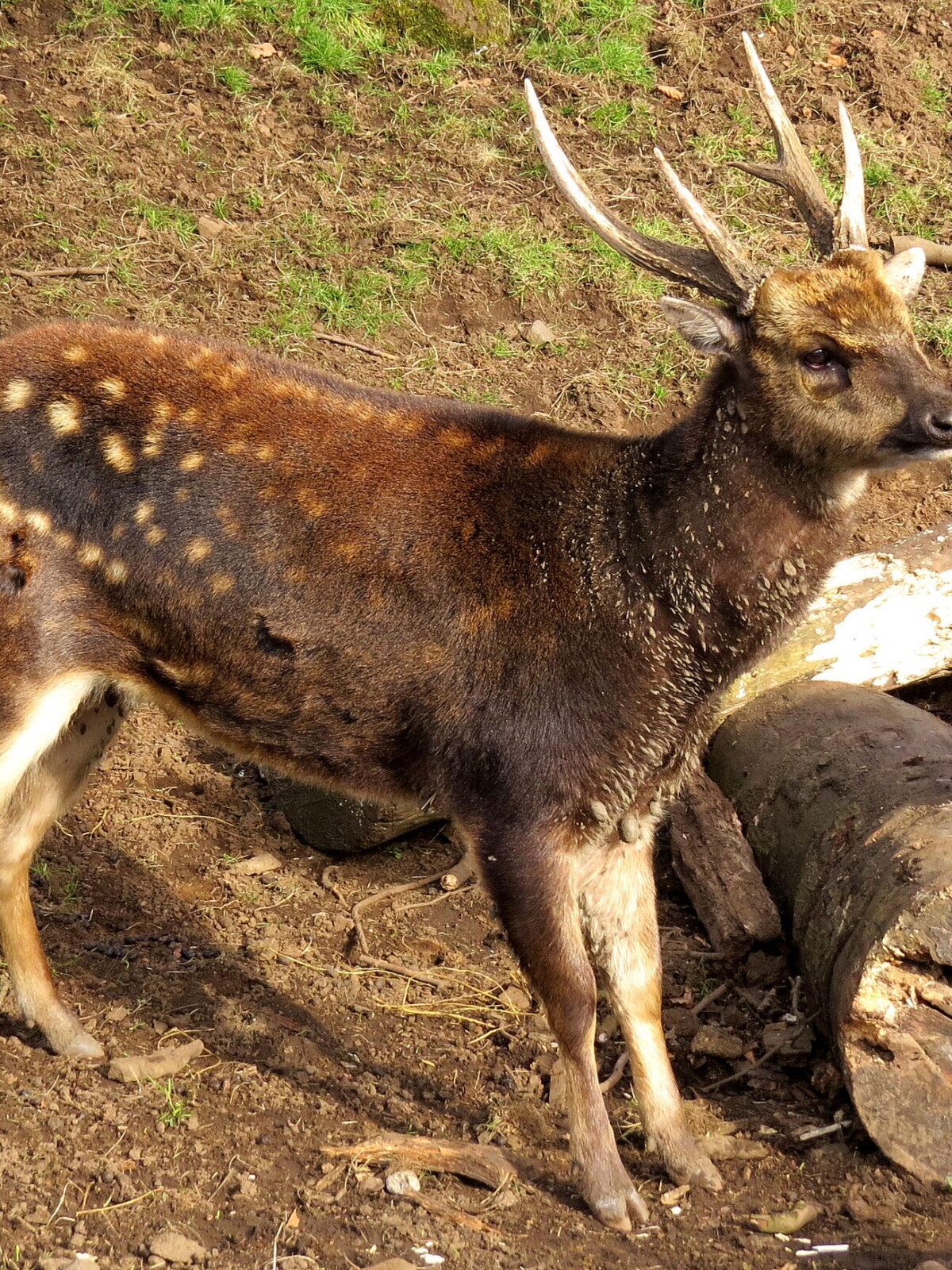
VISAYAN SPOTTED DEER
Rusa alfredi
DESCRIPTION
Visayan Spotted Deer (Rusa alfredi), also known as Alfred's Deer, is a medium-sized deer species native to the Visayan Islands in the Philippines. This deer is characterized by its distinctive spotted coat, which provides excellent camouflage in its forested habitat. They are primarily crepuscular, being most active during dawn and dusk, and are known for their shy and elusive behavior.
FUN FACTS
- The Visayan Spotted Deer is one of the most endangered deer species in the world, primarily due to its limited range and habitat loss
- Conservationists are working hard to protect this unique species and its habitat, emphasizing the importance of preserving biodiversity in the Philippines
- | Unlike many deer species, the Visayan Spotted Deer has a unique social structure, often being solitary or found in small family groups, which is quite different from the larger herds seen in other deer species
- This behavior is thought to be an adaptation to their dense forest habitat, where space and resources are limited
QUICK INFO
Lifespan10-15 years in the wild, up to 20 years in captivi
Average Weight50-90 kg
Average Length1.2-1.5 m
Diet TypeHerbivore
Social StructureThey are typically solitary or found in small groups, with males often being more solitary than females.
Activity PatternCrepuscular
Breeding SeasonYear-round, with peaks during the rainy season
- Habitat
- Visayan Spotted Deer inhabit tropical and subtropical forests, often in hilly or mountainous regions. They prefer dense vegetation that provides cover and food sources.
- Biomes
- Tropical Rainforest, Subtropical Forest
- Native Range
- Endemic to the Visayan Islands, particularly Negros and Panay.
- Continent
- Asia
- Countries
- Philippines
- Diet
- They primarily feed on leaves, fruits, and grasses, foraging in the underbrush of their forest habitat.
- Diet Type
- Herbivore
- Favorite Food
- leaves, fruits, grasses
- Social Structure
- They are typically solitary or found in small groups, with males often being more solitary than females.
- Activity Pattern
- Crepuscular
- Group Size
- 1-5
- Territorial
- 1
50-90 kg
Weight
1.2-1.5 m
Length
0.8-1.0 m at shoulder
Height (Shoulder)
- Coloration
- Their coat is reddish-brown with white spots, which helps them blend into their forest environment.
- Sexual Dimorphism
- Males are larger and have antlers, while females are smaller and do not have antlers.
- Lifespan
- 10-15 years in the wild, up to 20 years in captivi
- Gestation Period
- 210 days
- Offspring per Birth
- 1
- Sexual Maturity
- 1-2 years
- Breeding Season
- Year-round, with peaks during the rainy season
EN
Endangered
IUCN Red List Status
- Population Status
- The population is currently declining due to habitat loss and hunting pressures.
- Wild Population Estimate
- Less than 2,500 individuals
- Population Trend
- Decreasing
- Endangered
- 1
- Threats
- Main threats include habitat destruction due to logging and agriculture, as well as hunting for bushmeat. These factors have significantly reduced their population in the wild.
- Conservation Program
- Conservation efforts are underway, including habitat protection and anti-poaching initiatives.
- Predators
- Main predators include large birds of prey and possibly feral dogs; however, they have few natural predators due to their elusive nature.
- Defense Mechanisms
- They rely on their camouflage and agility to escape from threats, often freezing in place when they sense danger.
- Found in Zoos
- Uncommon