


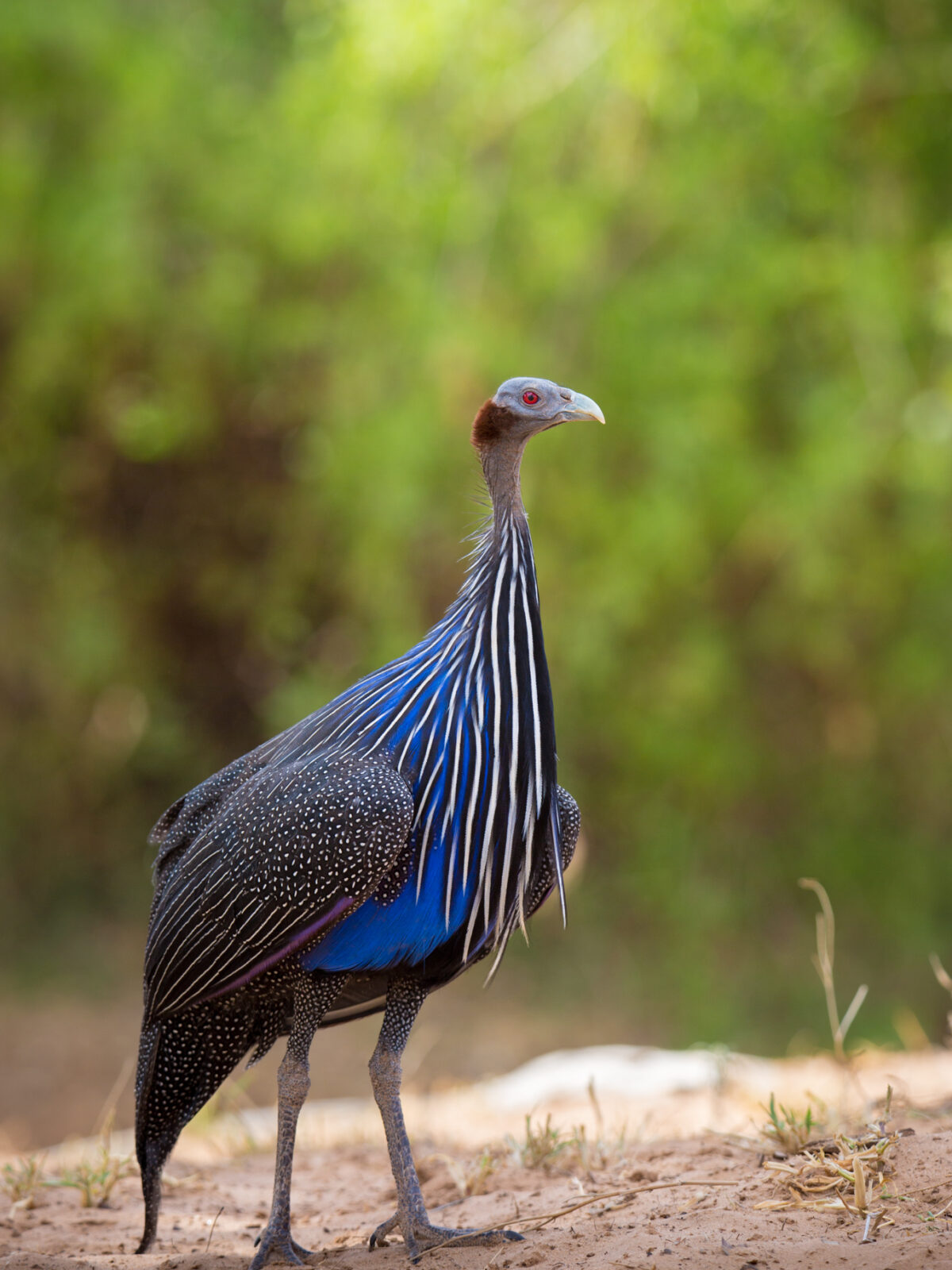
VULTURINE GUINEA FOWL
Acryllium vulturinum
DESCRIPTION
Vulturine Guinea Fowl (Acryllium vulturinum) is a striking bird known for its unique appearance, characterized by a long neck and a bare, vulture-like head. This species exhibits a vibrant plumage with a combination of blue, black, and white spots, making it one of the most visually appealing guinea fowl. They are social birds, often found in groups, and are known for their loud calls and active foraging behavior in the grasslands and savannas of East Africa.
FUN FACTS
- Vulturine Guinea Fowl are known for their unique vocalizations, which can include a variety of calls that serve different purposes, such as alerting the flock to danger or communicating with mates
- | These birds have a fascinating courtship display, where males perform elaborate dances and vocalizations to attract females, showcasing their vibrant plumage and physical fitness
QUICK INFO
Lifespan10-15 years in the wild, up to 20 years in captivi
Average Weight1.5-2.0 kg
Average Length50-60 cm
Diet TypeOmnivore
Social Structuregroup — they are highly social and often found in flocks, which helps in foraging and protection from predators.
Activity PatternDiurnal
Breeding SeasonSpring to early summer
- Habitat
- This species inhabits open grasslands, savannas, and scrublands, often favoring areas with scattered bushes and trees. They require access to water sources for drinking.
- Biomes
- Savanna, Grassland
- Native Range
- Vulturine Guinea Fowl is native to the dry regions of East Africa, particularly found in countries like Kenya and Tanzania.
- Continent
- Africa
- Countries
- Kenya, Tanzania, Ethiopia, Somalia
- Diet
- Vulturine Guinea Fowl primarily feeds on seeds, fruits, and insects, foraging on the ground for food. They are known to consume a variety of plant materials and small invertebrates.
- Diet Type
- Omnivore
- Favorite Food
- seeds, fruits, insects
- Social Structure
- group — they are highly social and often found in flocks, which helps in foraging and protection from predators.
- Activity Pattern
- Diurnal
- Group Size
- 5-30
- Territorial
- 0

 LC
LC
1.5-2.0 kg
Weight
50-60 cm
Length
- Coloration
- Vibrant blue and black plumage with white spots and a bare, red head.
- Sexual Dimorphism
- Males and females are similar in appearance, but males tend to be slightly larger.
- Lifespan
- 10-15 years in the wild, up to 20 years in captivi
- Offspring per Birth
- 6-12 eggs
- Sexual Maturity
- 6-12 months
- Breeding Season
- Spring to early summer
LC
Least Concern
IUCN Red List Status
- Population Status
- The population of Vulturine Guinea Fowl is currently stable, but habitat loss poses a potential threat.
- Wild Population Estimate
- Unknown
- Population Trend
- Stable
- Endangered
- 0
- Threats
- Main threats include habitat destruction due to agriculture and human encroachment. They are also vulnerable to predation by larger birds of prey and mammals.
- Predators
- African hawks, jackals, and various large birds of prey.
- Defense Mechanisms
- They rely on their social structure for protection, using alarm calls to warn others of danger.
- Compatible Animals
- none
- Found in Zoos
- Uncommon