


WANDERING WHISTLING DUCK
Dendrocygna arcuata
DESCRIPTION
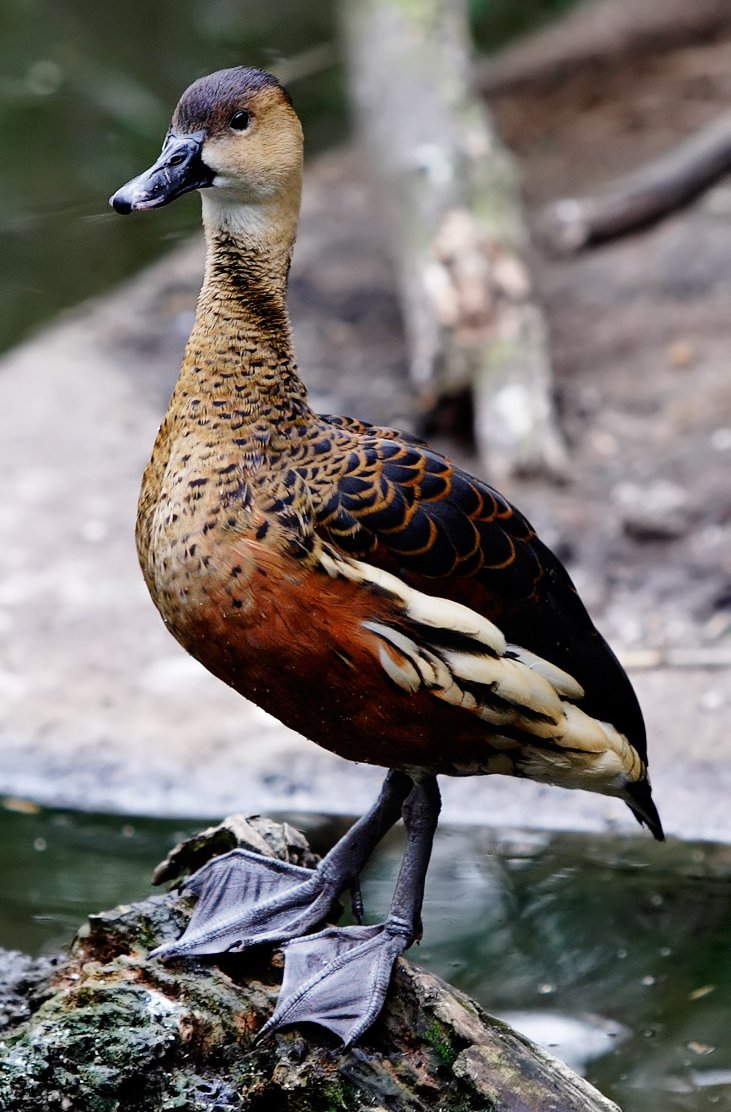
Wandering Whistling Duck (Dendrocygna arcuata) is a medium-sized waterfowl known for its distinctive whistling calls. It has a long neck, a relatively small head, and a slender body, with a coloration that includes a mix of brown, black, and white. This species is often found in wetlands and is known for its social behavior, often seen in groups foraging in shallow waters.
FUN FACTS
- Wandering Whistling Ducks are known for their unique whistling calls, which can be heard during their social interactions and courtship displays
- They are also highly adaptable birds, able to thrive in a variety of wetland habitats, including man-made environments like rice paddies
QUICK INFO
Lifespan10-15 years in the wild
Average Weight0.8-1.2 kg
Average Length50-60 cm
Diet TypeHerbivore
Social StructureThey are typically found in groups, often in pairs or small family units.
Activity PatternDiurnal
Breeding SeasonSpring to early summer
- Habitat
- These ducks inhabit freshwater wetlands, marshes, and rice fields. They prefer areas with abundant vegetation for foraging and nesting.
- Biomes
- Wetlands, Grasslands
- Native Range
- The native range of the Wandering Whistling Duck includes parts of Australia, New Guinea, and various islands in the Pacific.
- Continent
- Australia, Oceania
- Countries
- Australia, Papua New Guinea, Indonesia, Solomon Islands, Vanuatu
- Diet
- Wandering Whistling Ducks primarily feed on seeds, grasses, and aquatic plants. They forage in water and on land, using their long necks to reach food.
- Diet Type
- Herbivore
- Favorite Food
- seeds, grasses, aquatic plants
- Social Structure
- They are typically found in groups, often in pairs or small family units.
- Activity Pattern
- Diurnal
- Group Size
- 5-30
- Territorial
- 0

 VU
VU
0.8-1.2 kg
Weight
50-60 cm
Length
- Coloration
- The plumage is predominantly brown with lighter underparts and distinctive white markings on the face and wings.
- Sexual Dimorphism
- Males and females are similar in appearance, making it difficult to distinguish between the sexes.
- Lifespan
- 10-15 years in the wild
- Offspring per Birth
- 6-12
- Sexual Maturity
- 1-2 years
- Breeding Season
- Spring to early summer
LC
Least Concern
IUCN Red List Status
- Population Status
- The population of Wandering Whistling Ducks is currently stable, with no major declines reported.
- Wild Population Estimate
- 50,000-100,000
- Population Trend
- Stable
- Endangered
- 0
- Threats
- Main threats include habitat loss due to wetland drainage and agricultural expansion. Climate change also poses a risk to their wetland habitats.
- Predators
- Foxes, birds of prey, and large reptiles are known to prey on Wandering Whistling Ducks.
- Defense Mechanisms
- They rely on their ability to fly and their social behavior to evade predators.
- Compatible Animals
- Other waterfowl, such as ducks and geese, can be kept with them in zoos.
- Found in Zoos
- Uncommon