


WATTLED CURASSOW
Crax globulosa
DESCRIPTION
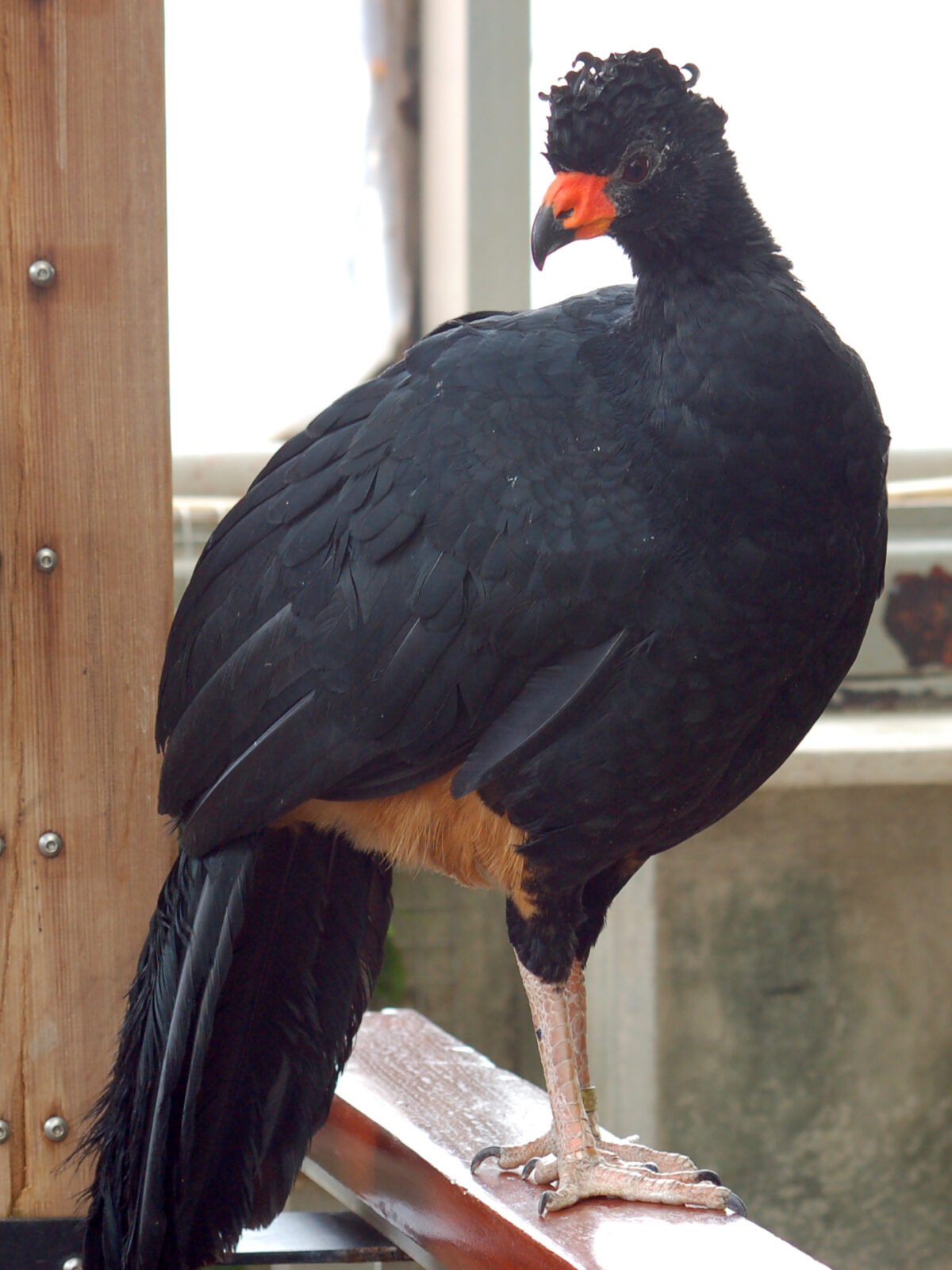
Wattled Curassow (Crax globulosa) is a large, striking bird known for its distinctive wattle and overall dark plumage. This species exhibits a unique combination of black and white coloration, with a prominent yellow wattle that hangs from its throat, making it easily recognizable. Wattled Curassows are primarily ground-dwelling birds that inhabit tropical rainforests, where they are often seen foraging for food among the underbrush.
FUN FACTS
- Wattled Curassows are known for their unique courtship displays, where males perform elaborate dances to attract females
- These displays often involve puffing out their wattles and making distinctive calls to showcase their fitness
- | Despite their size, Wattled Curassows are excellent at navigating through the dense underbrush of their rainforest habitat, using their strong legs to move swiftly and quietly
QUICK INFO
Lifespan10-15 years in the wild, up to 20 years in captivi
Average Weight2.5-3.5 kg
Average Length70-80 cm
Diet TypeHerbivore
Social StructureThese birds are typically solitary or found in pairs, especially during the breeding season.
Activity PatternDiurnal
Breeding SeasonSpring (March-May)
- Habitat
- These birds thrive in dense tropical rainforests, often near water sources such as rivers and streams. They prefer areas with abundant vegetation for cover and foraging.
- Biomes
- Tropical Rainforest
- Native Range
- Wattled Curassow is native to the lowland rainforests of the Amazon Basin, primarily found in parts of Colombia and Brazil.
- Continent
- South America
- Countries
- Colombia, Brazil
- Diet
- Wattled Curassows primarily feed on fruits, seeds, and leaves, foraging on the forest floor. They may also consume small invertebrates occasionally.
- Diet Type
- Herbivore
- Favorite Food
- fruits, seeds, leaves
- Social Structure
- These birds are typically solitary or found in pairs, especially during the breeding season.
- Activity Pattern
- Diurnal
- Group Size
- 1-2
- Territorial
- 1
 VU
VU
 LC
LC
2.5-3.5 kg
Weight
70-80 cm
Length
- Coloration
- primarily black with white wing tips and a yellow wattle
- Sexual Dimorphism
- males are larger and have more pronounced wattles than females
- Lifespan
- 10-15 years in the wild, up to 20 years in captivi
- Offspring per Birth
- 2-4
- Sexual Maturity
- 2-3 years
- Breeding Season
- Spring (March-May)
EN
Endangered
IUCN Red List Status
- Population Status
- The population of Wattled Curassow is currently declining due to habitat loss and hunting.
- Wild Population Estimate
- unknown
- Population Trend
- Decreasing
- Endangered
- 1
- Threats
- Main threats include deforestation for agriculture and logging, as well as hunting for bushmeat. These pressures have significantly impacted their populations in the wild.
- Conservation Program
- Conservation efforts are underway in some regions, focusing on habitat protection and sustainable land use.
- Predators
- Large birds of prey, such as hawks and eagles, as well as mammals like jaguars and pumas may prey on Wattled Curassows.
- Defense Mechanisms
- They rely on their camouflage and the dense forest cover to avoid detection by predators.
- Found in Zoos
- Uncommon