


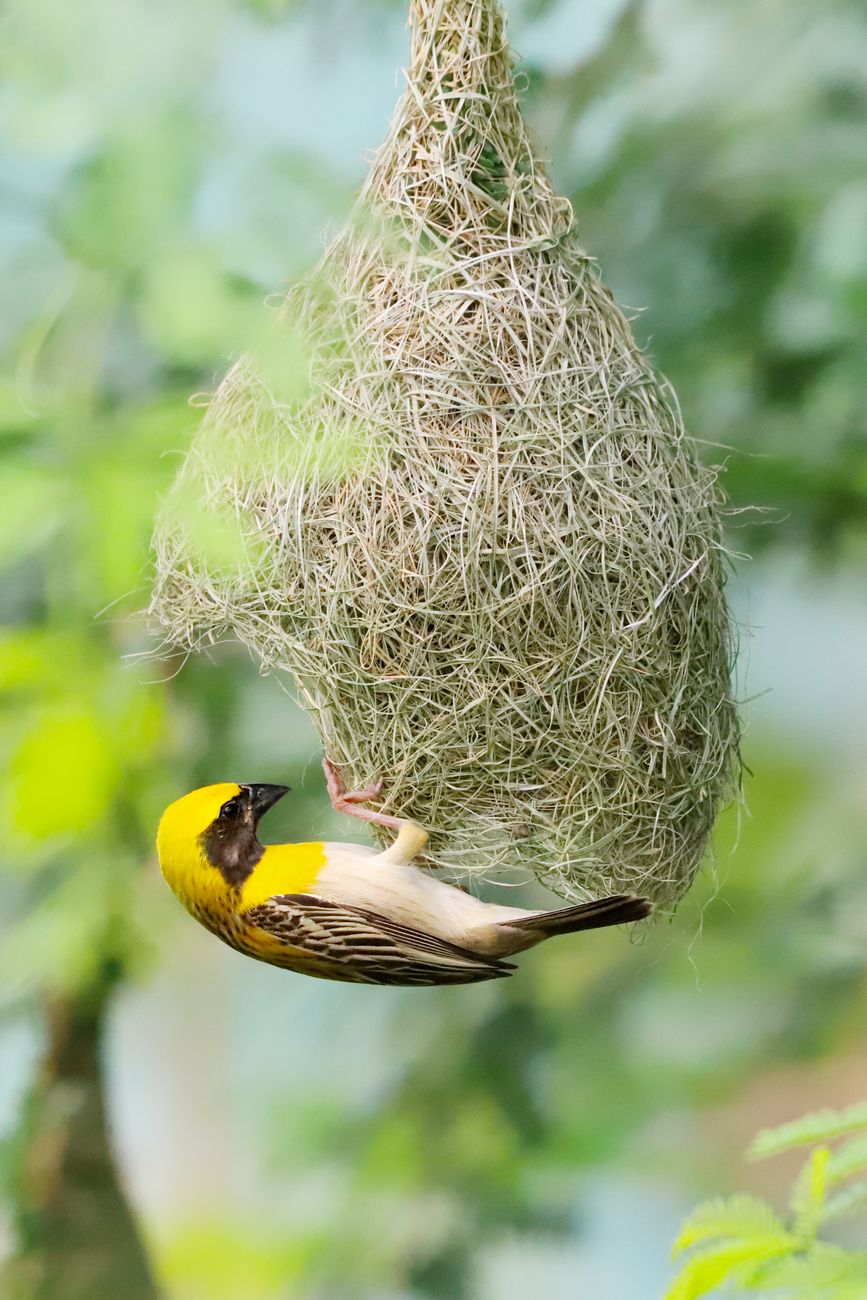
WEAVER BIRD
DESCRIPTION
Weaver Bird is commonly known as the weaver finch and village weaver. These birds are characterized by their intricate nest-building skills, often weaving elaborate structures from grass and other plant materials. They are social creatures, frequently found in large colonies, and exhibit vibrant plumage, particularly in males during the breeding season.
FUN FACTS
- Weaver Birds are known for their remarkable nest-building abilities, which can take several days to complete
- Some species create nests that can house multiple families, showcasing their social nature
- | The village weaver is particularly famous for its vibrant yellow plumage and is often seen in large flocks, creating a stunning visual display in their natural habitat
- Their nests can be so large and complex that they can weigh several kilograms
QUICK INFO
Lifespan5-10 years in the wild, up to 15 in captivity
Average Weight20-50 g
Average Length12-20 cm
Diet TypeOmnivore
Social Structuregroup — they are often found in large colonies, especially during breeding.
Activity PatternDiurnal
Breeding SeasonVaries by region, often during the rainy season
- Habitat
- Weaver Birds inhabit a variety of environments, including grasslands, savannas, and wetlands. They prefer areas with abundant vegetation for nesting and foraging.
- Biomes
- Savanna, Grassland, Wetland
- Native Range
- Weaver Birds are native to Africa and parts of Asia, with a significant presence in sub-Saharan regions.
- Continent
- Africa, Asia
- Countries
- South Africa, Kenya, India, Tanzania
- Diet
- Weaver Birds primarily feed on seeds, grains, and fruits, often foraging in flocks. They are known to also consume insects, especially during the breeding season to provide protein for their young.
- Diet Type
- Omnivore
- Favorite Food
- seeds, grains, fruits
- Social Structure
- group — they are often found in large colonies, especially during breeding.
- Activity Pattern
- Diurnal
- Group Size
- 20-100
- Territorial
- 0
 LC
LC
 VU
VU

20-50 g
Weight
12-20 cm
Length
- Coloration
- males are typically bright yellow or orange with black markings, while females are more subdued in color.
- Sexual Dimorphism
- males are more colorful than females, especially during breeding season.
- Lifespan
- 5-10 years in the wild, up to 15 in captivity
- Offspring per Birth
- 3-5
- Sexual Maturity
- 1 year
- Breeding Season
- Varies by region, often during the rainy season
LC
Least Concern
IUCN Red List Status
- Population Status
- Weaver Birds are generally abundant, with some species experiencing population declines due to habitat loss.
- Wild Population Estimate
- 1,000,000+
- Population Trend
- Stable
- Endangered
- 0
- Threats
- Main threats include habitat destruction due to agriculture and urbanization. Some species are also affected by climate change, which alters their breeding habitats.
- Predators
- snakes, birds of prey, and small mammals
- Defense Mechanisms
- Weaver Birds often build their nests high in trees to avoid predators and may use alarm calls to warn others of danger.
- Found in Zoos
- Common