


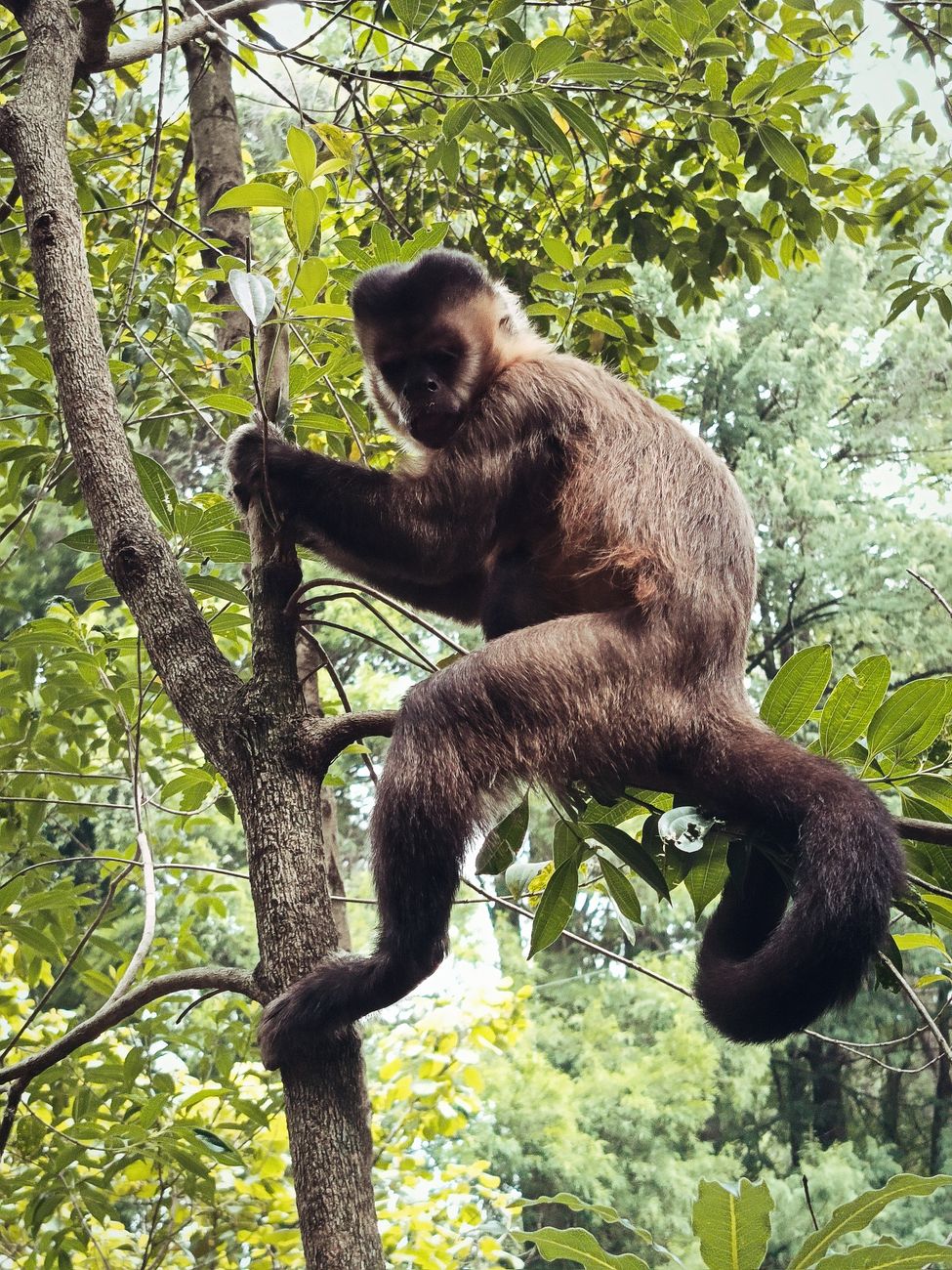
WEEPER CAPUCHIN
Sapajus libidinosus
DESCRIPTION
Weeper Capuchin (Sapajus libidinosus) is a medium-sized primate known for its expressive face and vocalizations, which include a distinctive weeping call. This species has a robust body with a long tail that is often used for balance and support while navigating through the trees. They are highly intelligent and social animals, often seen foraging in groups and using tools to access food.
FUN FACTS
- Weeper Capuchins are known for their impressive problem-solving skills, often using tools such as sticks to extract insects from tree bark
- They also exhibit a range of emotions and social behaviors, making them one of the most studied primate species in terms of social dynamics and intelligence
QUICK INFO
Lifespan15-25 years in the wild, up to 30 years in captivi
Average Weight3-4.5 kg
Average Length40-55 cm
Diet TypeOmnivore
Social StructureThey live in groups, typically consisting of 10-30 individuals, with a matriarchal social structure.
Activity PatternDiurnal
Breeding SeasonYear-round, with peaks depending on local conditions
- Habitat
- Weeper Capuchins inhabit tropical rainforests, where they are often found in the canopy layer. They prefer areas with abundant fruiting trees and access to water sources.
- Biomes
- Tropical Rainforest
- Native Range
- They are native to the central and eastern regions of South America, particularly in Brazil, Bolivia, and Paraguay.
- Continent
- South America
- Countries
- Brazil, Bolivia, Paraguay
- Diet
- Weeper Capuchins are omnivorous, feeding on a variety of fruits, seeds, insects, and small vertebrates. Their diet can vary significantly based on seasonal availability of food sources.
- Diet Type
- Omnivore
- Favorite Food
- fruits, seeds, insects
- Social Structure
- They live in groups, typically consisting of 10-30 individuals, with a matriarchal social structure.
- Activity Pattern
- Diurnal
- Group Size
- 10-30
- Territorial
- 1
 VU
VU
 LC
LC
3-4.5 kg
Weight
40-55 cm
Length
- Coloration
- They have a dark brown to black fur with lighter underparts and a distinctive white or cream-colored face.
- Sexual Dimorphism
- Males are generally larger than females.
- Lifespan
- 15-25 years in the wild, up to 30 years in captivi
- Gestation Period
- 160-170 days
- Offspring per Birth
- 1-2
- Sexual Maturity
- 3-4 years
- Breeding Season
- Year-round, with peaks depending on local conditions
LC
Least Concern
IUCN Red List Status
- Population Status
- The population is currently stable, but habitat loss poses a threat.
- Wild Population Estimate
- Unknown, but considered stable in some areas
- Population Trend
- Stable
- Endangered
- 0
- Threats
- Main threats include habitat destruction due to deforestation and hunting. These activities have led to localized declines in their populations.
- Predators
- Large birds of prey, snakes, and jaguars are known to prey on Weeper Capuchins.
- Defense Mechanisms
- They use vocalizations to alert the group of potential threats and can also flee to the safety of trees.
- Compatible Animals
- Other capuchins, tamarins, squirrel monkeys
- Found in Zoos
- Common