


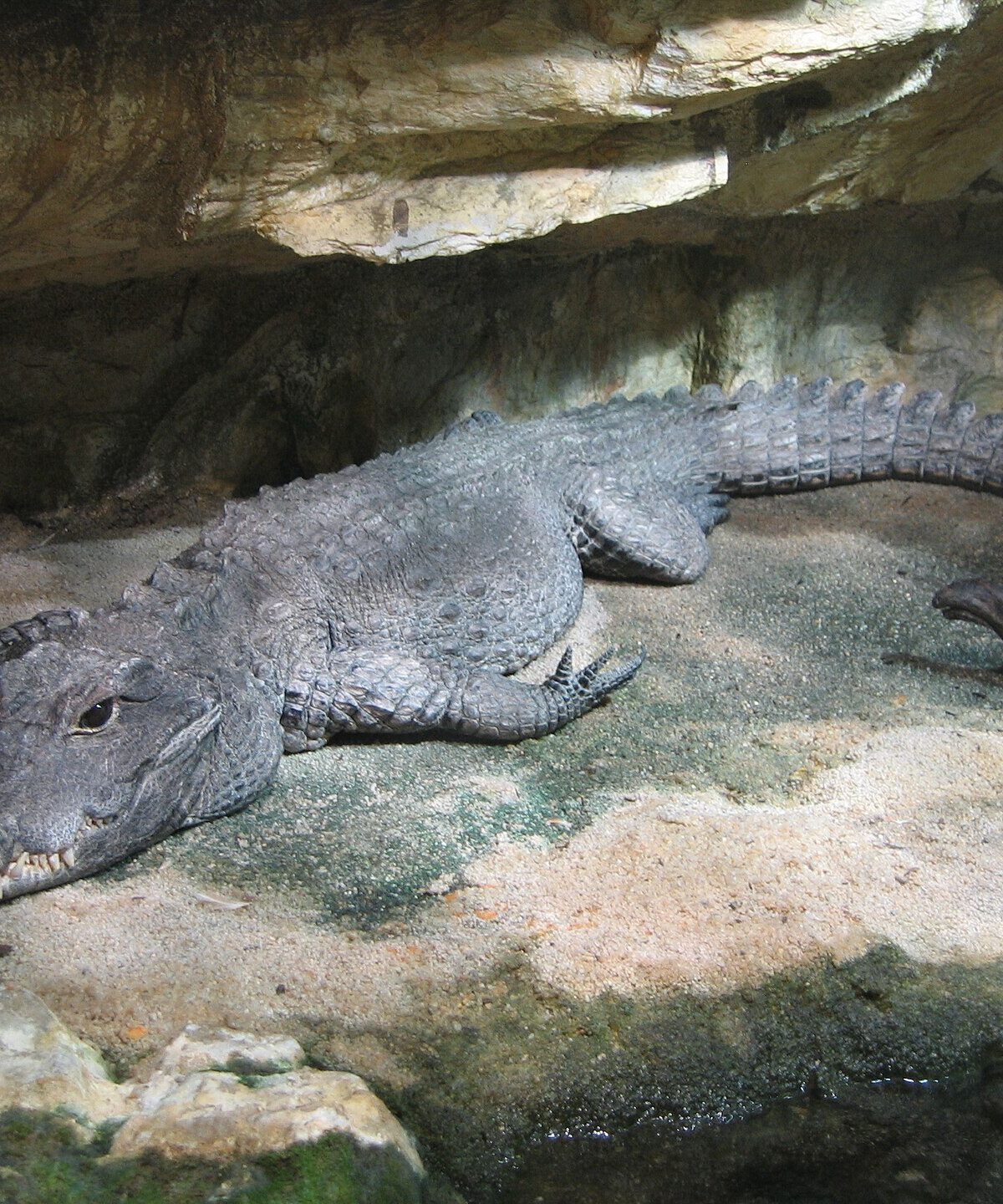
WEST AFRICAN DWARF CROCODILE
DESCRIPTION
Also called the African Dwarf Crocodile, the West African Dwarf Crocodile is a small species of crocodile that typically measures between 1.5 to 1.9 meters in length. It has a robust body with a broad snout and dark coloration, often featuring a pattern of lighter spots or stripes. This species is primarily found in freshwater habitats such as swamps, rivers, and lakes, where it exhibits a mostly nocturnal behavior, hunting and foraging under the cover of darkness.
FUN FACTS
- West African Dwarf Crocodiles are among the smallest crocodile species, making them less intimidating than their larger relatives
- They are also known for their unique nesting behavior, where females build nests using vegetation and lay their eggs in a mound, which helps to regulate temperature during incubation.| These crocodiles have a unique adaptation that allows them to thrive in low-oxygen environments, often found in stagnant waters
- Their ability to remain submerged for extended periods helps them avoid detection by both prey and potential threats
QUICK INFO
Lifespan20-30 years in the wild
Average Weight50-100 kg
Average Length1.5-1.9 m
Diet TypeCarnivore
Social Structuresolitary, occasionally seen in small groups during basking
Activity PatternNocturnal
Breeding SeasonWet season (May-August)
- Habitat
- This species inhabits freshwater environments, particularly in slow-moving rivers, swamps, and marshes. They prefer areas with dense vegetation that provide cover and nesting sites.
- Biomes
- Wetlands, Tropical Rainforest
- Native Range
- The West African Dwarf Crocodile is native to the tropical regions of West Africa.
- Continent
- Africa
- Countries
- Ghana, Nigeria, Cameroon, Ivory Coast, Senegal
- Diet
- The West African Dwarf Crocodile primarily feeds on small fish, amphibians, and invertebrates. It uses its powerful jaws to catch prey in the water.
- Diet Type
- Carnivore
- Favorite Food
- small fish, amphibians
- Social Structure
- solitary, occasionally seen in small groups during basking
- Activity Pattern
- Nocturnal
- Group Size
- 1-5
- Territorial
- 0
 VU
VU
50-100 kg
Weight
1.5-1.9 m
Length
- Coloration
- dark brown to olive green with lighter spots or stripes
- Sexual Dimorphism
- males are generally larger than females
- Lifespan
- 20-30 years in the wild
- Gestation Period
- 90-100 days
- Offspring per Birth
- 10-20
- Sexual Maturity
- 4-5 years
- Breeding Season
- Wet season (May-August)
EN
Endangered
IUCN Red List Status
- Population Status
- The population of West African Dwarf Crocodiles is currently declining due to habitat loss and hunting.
- Wild Population Estimate
- unknown
- Population Trend
- Decreasing
- Endangered
- 1
- Threats
- Main threats include habitat destruction due to agriculture and urbanization, as well as hunting for their skin and meat. These pressures have led to a significant decline in their populations.
- Predators
- Humans, large birds of prey, and larger crocodilians may pose threats to juvenile West African Dwarf Crocodiles.
- Defense Mechanisms
- They rely on camouflage and their ability to remain still in the water to avoid detection by predators.
- Found in Zoos
- Uncommon