


WEST INDIAN IGUANA
Cyclura spp.
DESCRIPTION
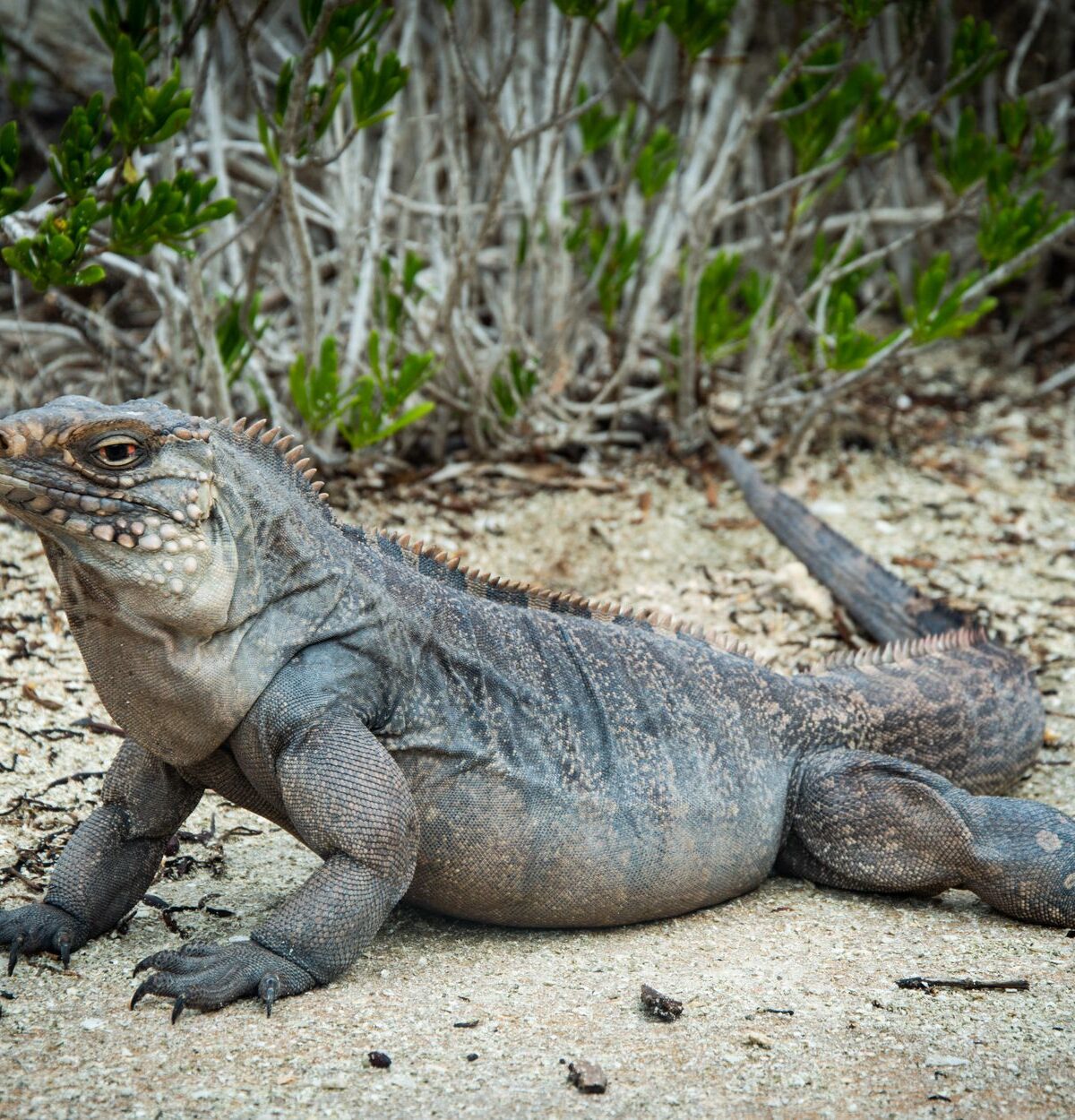
West Indian Iguana (Cyclura spp.) is commonly known as the Rock Iguana and is characterized by its robust body and strong limbs. These iguanas exhibit a range of colors from gray to greenish-brown, often with distinctive spines along their backs. They are primarily terrestrial and are known for their burrowing behavior, creating extensive tunnel systems in their natural habitats.
FUN FACTS
- West Indian Iguanas are known for their impressive climbing abilities, often seen basking on rocky outcrops or trees
- They play a crucial role in their ecosystem by helping to disperse seeds through their herbivorous diet.|These iguanas have a unique social structure, where males establish territories and engage in displays of strength to attract females during the breeding season
- Their vibrant colors and distinctive spines make them a fascinating subject for both researchers and reptile enthusiasts
QUICK INFO
Lifespan20-30 years in the wild
Average Weight4-6 kg
Average Length1-1.5 m
Diet TypeHerbivore
Social Structuresolitary, occasionally seen in small groups during basking
Activity PatternDiurnal
Breeding SeasonSpring (April-June)
- Habitat
- These iguanas inhabit dry forests, scrublands, and coastal areas, often favoring rocky terrains where they can bask in the sun. They require access to vegetation for food and shelter.
- Biomes
- Tropical Dry Forest, Coastal Scrub
- Native Range
- The native range of the West Indian Iguana includes several Caribbean islands, particularly the Bahamas, the Cayman Islands, and parts of Hispaniola.
- Continent
- North America, Caribbean
- Countries
- Bahamas, Cayman Islands, Haiti, Dominican Republic
- Diet
- West Indian Iguanas are primarily herbivorous, feeding on a variety of leaves, fruits, and flowers. They may occasionally consume insects or small animals, but plant matter constitutes the bulk of their diet.
- Diet Type
- Herbivore
- Favorite Food
- leaves, fruits, flowers
- Social Structure
- solitary, occasionally seen in small groups during basking
- Activity Pattern
- Diurnal
- Group Size
- 1-5
- Territorial
- 1

 LC
LC
4-6 kg
Weight
1-1.5 m
Length
- Coloration
- gray to greenish-brown with spines along the back
- Sexual Dimorphism
- males are generally larger and more robust than females
- Lifespan
- 20-30 years in the wild
- Gestation Period
- 90-120 days
- Offspring per Birth
- 2-20
- Sexual Maturity
- 3-4 years
- Breeding Season
- Spring (April-June)
EN
Endangered
IUCN Red List Status
- Population Status
- The population of West Indian Iguanas is declining due to habitat loss and predation.
- Wild Population Estimate
- 10,000-15,000
- Population Trend
- Decreasing
- Endangered
- 1
- Threats
- Main threats include habitat destruction, invasive species, and predation by dogs and rats. These factors have significantly impacted their populations across their native range.
- Conservation Program
- Conservation efforts include habitat restoration and breeding programs in captivity.
- Predators
- Dogs, rats, and birds of prey are known to prey on West Indian Iguanas.
- Defense Mechanisms
- They can use their strong limbs to dig burrows quickly and may also display aggressive behaviors to deter threats.
- Found in Zoos
- Uncommon