


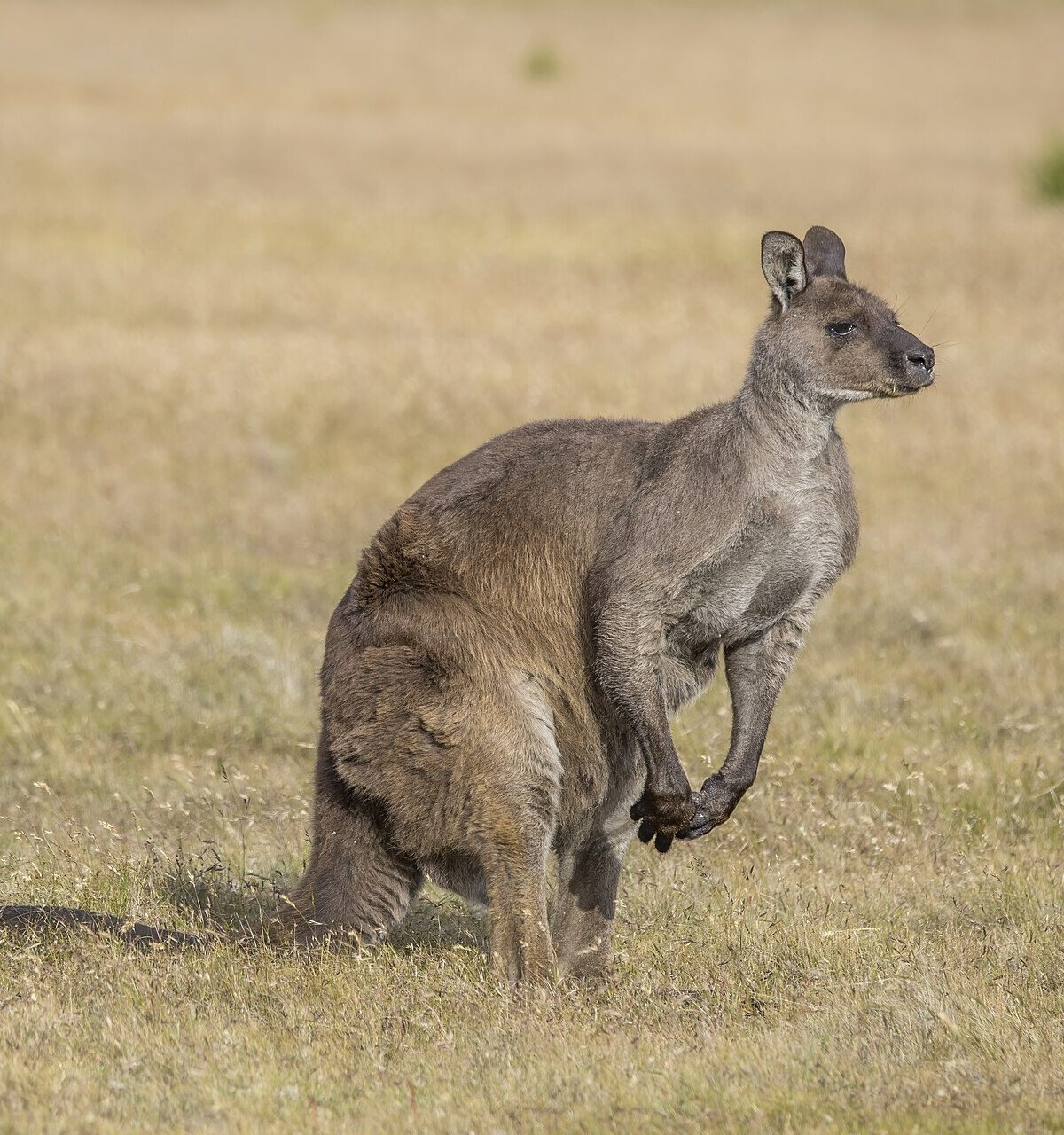
WESTERN GREY KANGAROO
Macropus fuliginosus
DESCRIPTION
The Western Grey Kangaroo is a large marsupial characterized by its robust body and long, powerful hind legs, which are adapted for jumping. Its fur is typically a grey-brown color, with lighter underparts and a distinctive long tail that aids in balance. These kangaroos are social animals, often seen in groups, and they exhibit a range of behaviors including grooming and playing, which are important for social bonding.
FUN FACTS
- Western Grey Kangaroos can leap over 3 meters in a single bound, which allows them to cover large distances quickly in search of food
- They are also known for their unique method of locomotion, using their strong hind legs to hop rather than walk, which is energy-efficient over long distances.|These kangaroos have a unique social structure where they communicate through a variety of vocalizations and body language
- They can express different emotions and intentions, such as alarm or contentment, through their movements and sounds
QUICK INFO
Lifespan10-15 years in the wild, up to 20 years in captivi
Average Weight40-54 kg
Average Length1.2-1.5 m
Diet TypeHerbivore
Social Structuregroup — they often form mobs that provide social interaction and protection from predators.
Activity PatternCrepuscular
Breeding SeasonYear-round, with peaks in spring and summer
- Habitat
- They inhabit a variety of environments, including woodlands, grasslands, and scrublands. These kangaroos prefer areas with ample vegetation for grazing and shelter.
- Biomes
- Grassland, Woodland, Scrubland
- Native Range
- The Western Grey Kangaroo is native to southern and western Australia.
- Continent
- Australia
- Countries
- Australia
- Diet
- Western Grey Kangaroos are herbivores that primarily feed on grasses, leaves, and shrubs. They are known to graze in open areas and can adapt their diet based on seasonal availability.
- Diet Type
- Herbivore
- Favorite Food
- grasses, leaves, shrubs
- Social Structure
- group — they often form mobs that provide social interaction and protection from predators.
- Activity Pattern
- Crepuscular
- Group Size
- 5-30
- Territorial
- 0
 LC
LC
 LC
LC
40-54 kg
Weight
1.2-1.5 m
Length
1.0 m at shoulder
Height (Shoulder)
- Coloration
- grey-brown fur with lighter underparts
- Sexual Dimorphism
- males are generally larger than females
- Lifespan
- 10-15 years in the wild, up to 20 years in captivi
- Gestation Period
- 30-36 days
- Offspring per Birth
- 1
- Sexual Maturity
- 2-3 years
- Breeding Season
- Year-round, with peaks in spring and summer
LC
Least Concern
IUCN Red List Status
- Population Status
- The population of Western Grey Kangaroos is currently stable, with large numbers in the wild.
- Wild Population Estimate
- over 1 million
- Population Trend
- Stable
- Endangered
- 0
- Threats
- Main threats include habitat loss due to agriculture and urban development, as well as hunting in some areas. However, they are generally adaptable and can thrive in modified landscapes.
- Predators
- Dingoes, eagles, and humans are the primary predators of Western Grey Kangaroos.
- Defense Mechanisms
- They use their powerful legs to kick and can also use their speed to escape from threats.
- Found in Zoos
- Common