


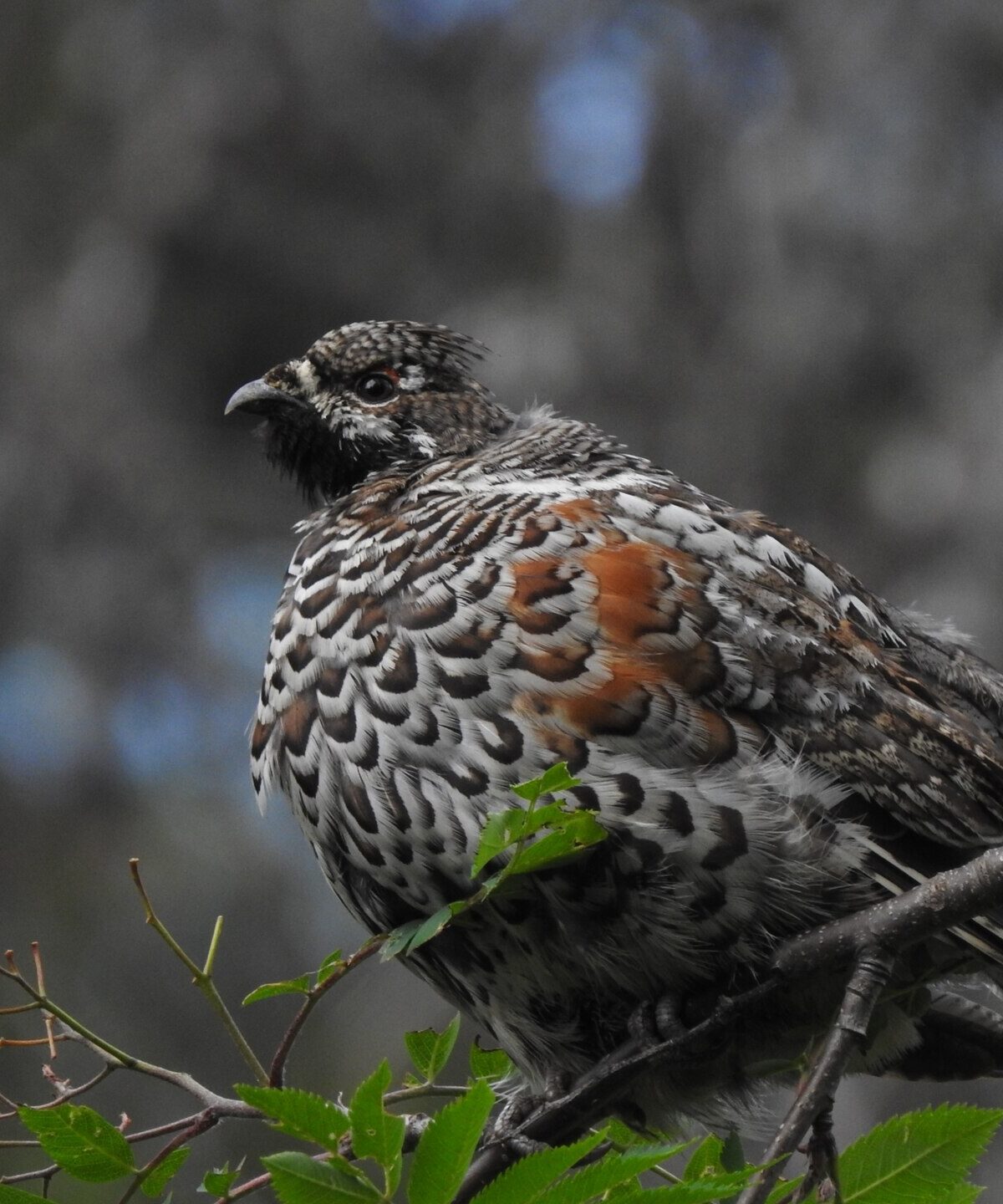
WESTERN HAZELHEN
Bonasa bonasia
DESCRIPTION
Western Hazelhen (Bonasa bonasia) is also known as the Hazel Grouse, a medium-sized bird characterized by its mottled brown and gray plumage, which provides excellent camouflage in its forested habitat. This species is known for its elusive behavior, often remaining hidden among the underbrush and relying on its cryptic coloration to avoid detection by predators. Western Hazelhen primarily inhabits dense, mixed forests and is known for its distinctive, soft calls during the breeding season, which are used to attract mates.
FUN FACTS
- Western Hazelhen is known for its unique courtship displays, where males perform elaborate rituals to attract females, including puffing up their feathers and making soft calls
- This species has a remarkable ability to blend into its surroundings, making it difficult for both predators and birdwatchers to spot them in the wild.| The Western Hazelhen has a specialized diet that changes with the seasons, relying more on insects during the breeding season to provide the necessary protein for raising chicks, while in other seasons, it primarily consumes plant material
QUICK INFO
Lifespan5-10 years in the wild
Average Weight400-600 g
Average Length35-40 cm
Diet TypeOmnivore
Social Structuresolitary or in pairs, often seen alone except during the breeding season
Activity PatternDiurnal
Breeding SeasonSpring (April-June)
- Habitat
- This species prefers dense, mixed forests with ample undergrowth, which provides both food and cover from predators. It is often found in areas with a mix of coniferous and deciduous trees.
- Biomes
- Temperate Forest
- Native Range
- Western Hazelhen is native to parts of Europe and Asia, particularly in regions with suitable forest habitats.
- Continent
- Europe, Asia
- Countries
- Austria, Germany, Poland, Czech Republic, Slovakia, Romania, Russia
- Diet
- Western Hazelhen primarily feeds on a variety of plant materials, including leaves, buds, and berries, as well as insects during the breeding season.
- Diet Type
- Omnivore
- Favorite Food
- leaves, buds, berries, insects
- Social Structure
- solitary or in pairs, often seen alone except during the breeding season
- Activity Pattern
- Diurnal
- Group Size
- 1-2
- Territorial
- 1

 VU
VU
 LC
LC
400-600 g
Weight
35-40 cm
Length
- Coloration
- mottled brown and gray plumage with a lighter underbelly
- Sexual Dimorphism
- males are generally larger and have more vibrant coloration than females
- Lifespan
- 5-10 years in the wild
- Offspring per Birth
- 4-6 eggs
- Sexual Maturity
- 1 year
- Breeding Season
- Spring (April-June)
LC
Least Concern
IUCN Red List Status
- Population Status
- The population of Western Hazelhen is currently stable in some areas, but it faces threats from habitat loss.
- Wild Population Estimate
- unknown
- Population Trend
- Stable
- Endangered
- 0
- Threats
- Main threats include habitat destruction due to logging and land conversion for agriculture, which reduces their natural habitat. Additionally, hunting in some regions poses a risk to local populations.
- Predators
- foxes, birds of prey, and domestic cats
- Defense Mechanisms
- Western Hazelhen relies on its cryptic coloration and secretive behavior to avoid detection by predators.
- Found in Zoos
- Rare