


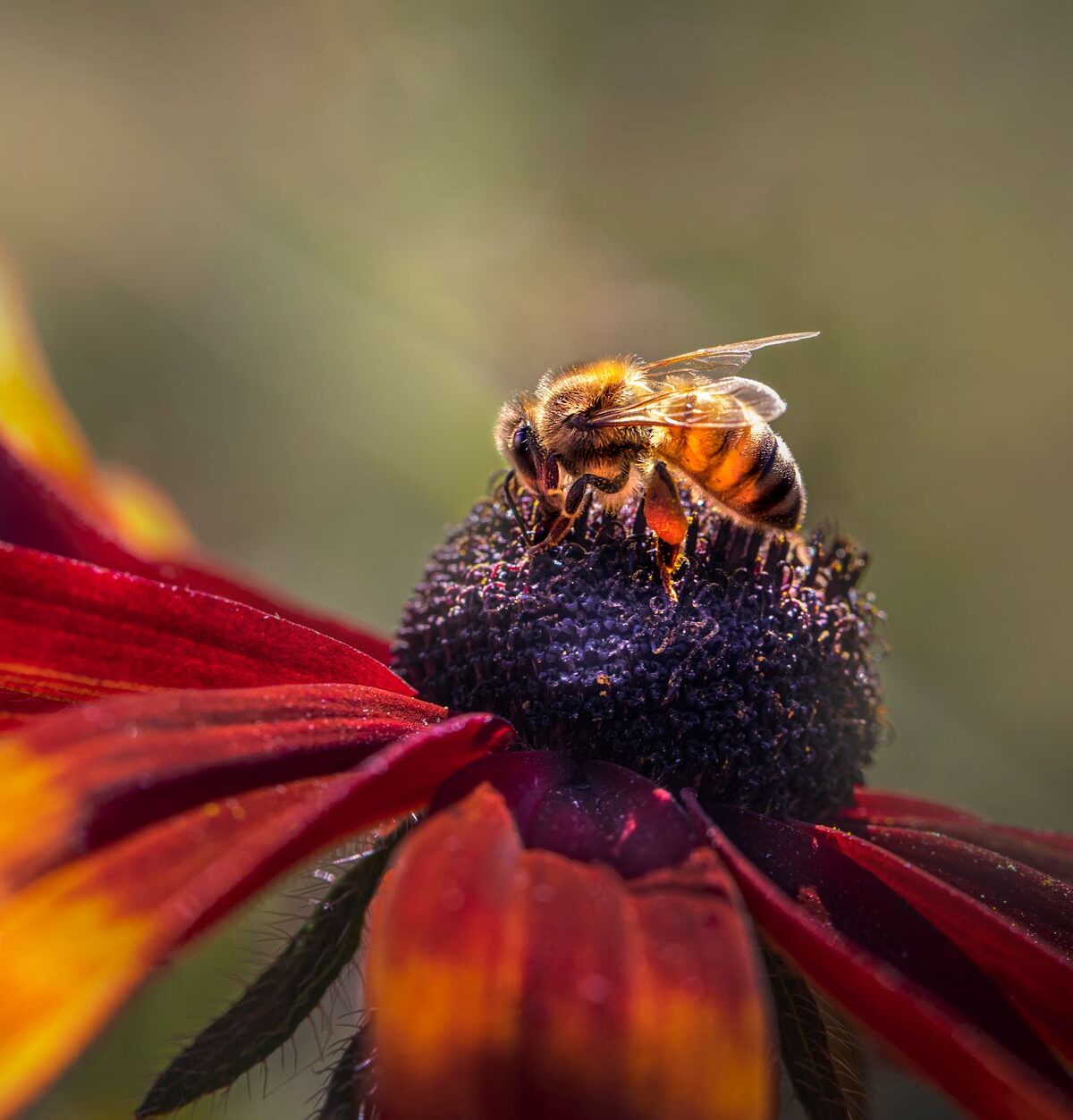
WESTERN HONEY BEE
Apis mellifera
DESCRIPTION
Western Honey Bee (Apis mellifera) is commonly known as the Honey Bee. This species is characterized by its robust body, which is typically covered in fine hairs that help in pollen collection. They exhibit complex social behaviors, living in colonies that can number in the thousands, and play a crucial role in pollination, making them vital to ecosystems and agriculture.
FUN FACTS
- Honey Bees can recognize human faces and remember them for several days, which is quite remarkable for an insect
- Additionally, they perform a unique 'waggle dance' to communicate the distance and direction of food sources to other bees in the hive
QUICK INFO
LifespanQueen can live up to 5 years, workers live about 5
Average Weight0.1-0.2 g
Average Length1.2-1.5 cm
Diet TypeHerbivore
Social StructureHighly social, living in colonies with a queen, workers, and drones.
Activity PatternDiurnal
Breeding SeasonSpring to early summer.
- Habitat
- Western Honey Bees thrive in a variety of habitats, including gardens, forests, and agricultural fields. They prefer areas rich in flowering plants for foraging.
- Biomes
- Temperate Forest, Grassland, Agricultural
- Native Range
- Originally native to Europe, Asia, and Africa, they have been introduced worldwide.
- Continent
- North America, Europe, Asia, Africa, Australia
- Countries
- United States, Canada, United Kingdom, Germany, Australia, France
- Diet
- Western Honey Bees primarily feed on nectar and pollen from flowering plants. They convert nectar into honey, which serves as a food source for the colony.
- Diet Type
- Herbivore
- Favorite Food
- nectar, pollen
- Social Structure
- Highly social, living in colonies with a queen, workers, and drones.
- Activity Pattern
- Diurnal
- Group Size
- 20,000-80,000
- Territorial
- 0
 VU
VU
 EN
EN
0.1-0.2 g
Weight
1.2-1.5 cm
Length
- Coloration
- Typically brown with black bands, varying slightly by subspecies.
- Sexual Dimorphism
- Drones are larger than workers and have larger eyes.
- Lifespan
- Queen can live up to 5 years, workers live about 5
- Offspring per Birth
- 1 (queen lays eggs)
- Sexual Maturity
- About 3 weeks for workers, 5-6 weeks for drones.
- Breeding Season
- Spring to early summer.
LC
Least Concern
IUCN Red List Status
- Population Status
- Population status varies by region, with some areas experiencing declines due to environmental factors.
- Wild Population Estimate
- Unknown
- Population Trend
- Decreasing
- Endangered
- 0
- Threats
- Main threats include habitat loss, pesticide exposure, and diseases. These factors contribute to declining populations in many regions.
- Conservation Program
- Pollinator protection initiatives in various countries.
- Predators
- Birds, wasps, and certain mammals such as bears.
- Defense Mechanisms
- Honey Bees defend their hive aggressively, using stingers to deter predators.
- Compatible Animals
- None
- Found in Zoos
- Uncommon