


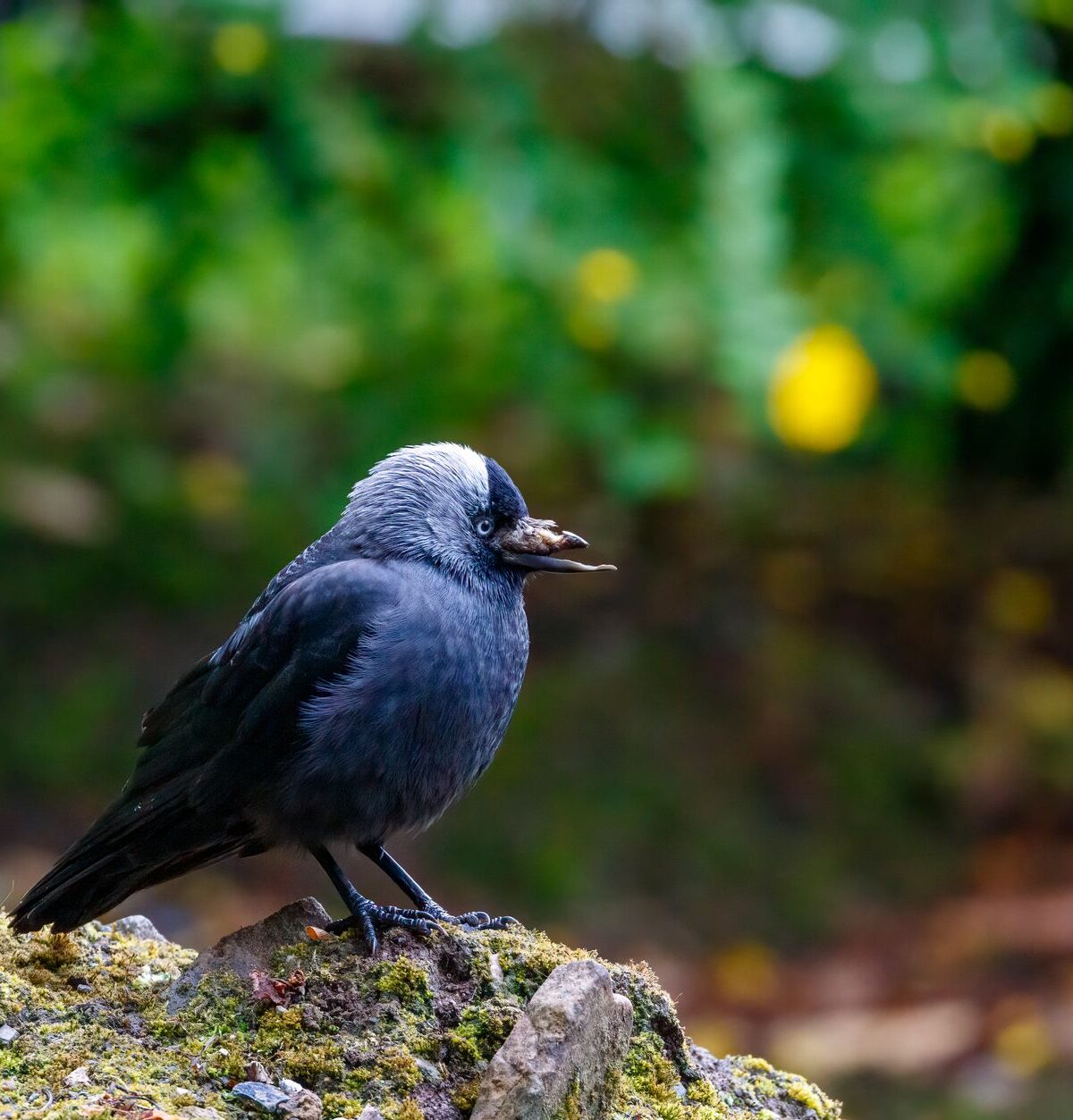
WESTERN JACKDAW
Corvus monedula
DESCRIPTION
Western Jackdaw (Corvus monedula) is a small, intelligent bird known for its striking appearance, characterized by a black plumage with a distinctive silvery nape and pale blue eyes. These birds are highly social and often found in groups, displaying complex behaviors such as problem-solving and tool use. They are adaptable and can thrive in various environments, often seen in urban areas as well as rural landscapes.
FUN FACTS
- Western Jackdaws are known for their remarkable intelligence, often using tools to obtain food and solve complex problems
- They have been observed using sticks to extract insects from tree bark, showcasing their cognitive abilities
- | These birds have a unique social structure and are known to recognize human faces, remembering those who pose a threat and reacting accordingly
- This ability to recognize individuals extends to their interactions with other jackdaws, strengthening their social bonds
QUICK INFO
Lifespan5-10 years in the wild, up to 15 years in captivit
Average Weight200-300 g
Average Length34-39 cm
Diet TypeOmnivore
Social Structuregroup — they are highly social birds that often form large flocks.
Activity PatternDiurnal
Breeding SeasonSpring (March-May)
- Habitat
- Western Jackdaws prefer open habitats such as farmland, urban areas, and woodlands. They often nest in trees, cliffs, or buildings, showcasing their adaptability to different environments.
- Biomes
- Temperate Forest, Urban
- Native Range
- Western Jackdaws are native to Europe and parts of Asia, ranging from the British Isles to western Siberia.
- Continent
- Europe, Asia
- Countries
- United Kingdom, France, Germany, Russia, Spain, Italy
- Diet
- Western Jackdaws are omnivorous, feeding on a variety of food sources including insects, seeds, and scraps from human activities. They are known to forage in groups, which helps them locate food more efficiently.
- Diet Type
- Omnivore
- Favorite Food
- insects, seeds, human food scraps
- Social Structure
- group — they are highly social birds that often form large flocks.
- Activity Pattern
- Diurnal
- Group Size
- 5-50
- Territorial
- 0
 CR
CR
 LC
LC
200-300 g
Weight
34-39 cm
Length
- Coloration
- black with a silvery nape and pale blue eyes
- Lifespan
- 5-10 years in the wild, up to 15 years in captivit
- Offspring per Birth
- 3-6
- Sexual Maturity
- 1-2 years
- Breeding Season
- Spring (March-May)
LC
Least Concern
IUCN Red List Status
- Population Status
- The population of Western Jackdaws is generally stable, with large numbers across their range.
- Wild Population Estimate
- 1,000,000-2,000,000
- Population Trend
- Stable
- Endangered
- 0
- Threats
- Main threats include habitat loss and changes in agricultural practices. However, they are generally adaptable and can thrive in urban environments.
- Predators
- hawks, owls, foxes, domestic cats
- Defense Mechanisms
- They often use mobbing behavior to deter predators, working together in groups to chase away threats.
- Compatible Animals
- other corvids, pigeons, doves
- Found in Zoos
- Common