


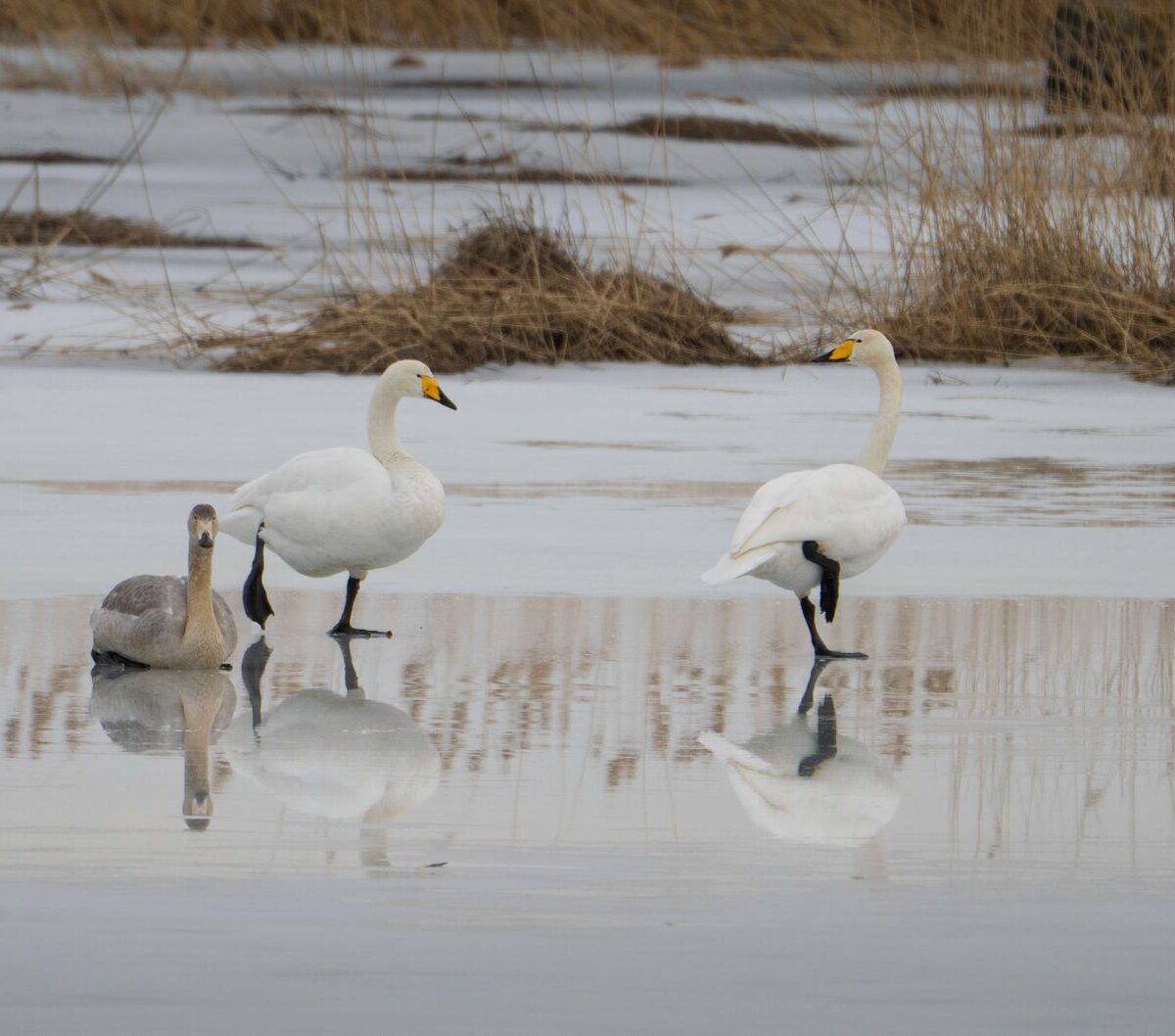
WHISTLING SWAN
Cygnus cygnus
DESCRIPTION
Whistling swan (Cygnus cygnus) is commonly known as the whooper swan, recognized for its striking white plumage and long neck. These large waterfowl are known for their graceful swimming and strong migratory behavior, often traveling in V-shaped formations. They inhabit wetlands and are social birds, frequently seen in pairs or small groups, especially during the breeding season.
FUN FACTS
- Whistling swans are known for their impressive migratory journeys, traveling thousands of kilometers between their breeding and wintering grounds
- They can fly at altitudes of up to 8,000 feet, making them one of the highest-flying bird species
- | These swans are also remarkable for their vocal abilities; their calls can be heard over long distances, and they are often described as sounding like a musical whistle
- Their vocalizations play a crucial role in communication, especially during courtship and territorial displays
QUICK INFO
Lifespan10-20 years in the wild
Average Weight8-12 kg
Average Length1.5-1.8 m
Diet TypeHerbivore
Social Structurepair, often seen in family groups during breeding season
Activity PatternDiurnal
Breeding SeasonSpring (April-June)
- Habitat
- Whistling swans are typically found in freshwater lakes, marshes, and estuaries. They prefer shallow waters where they can easily access submerged vegetation.
- Biomes
- Wetlands, Temperate Forests
- Native Range
- Whistling swans are native to parts of Europe and Asia, migrating to warmer regions during winter.
- Continent
- Europe, Asia
- Countries
- Norway, Sweden, Finland, Russia, Mongolia
- Diet
- Whistling swans primarily feed on aquatic vegetation, including roots, tubers, and leaves. They may also consume some grains and grasses when foraging on land.
- Diet Type
- Herbivore
- Favorite Food
- aquatic plants, grains
- Social Structure
- pair, often seen in family groups during breeding season
- Activity Pattern
- Diurnal
- Group Size
- 2-30
- Territorial
- 1

 LC
LC
8-12 kg
Weight
1.5-1.8 m
Length
1.2 m at shoulder
Height (Shoulder)
- Coloration
- primarily white with a black neck and yellow patch near the bill
- Sexual Dimorphism
- males and females are similar in appearance
- Lifespan
- 10-20 years in the wild
- Offspring per Birth
- 3-8
- Sexual Maturity
- 3-4 years
- Breeding Season
- Spring (April-June)
LC
Least Concern
IUCN Red List Status
- Population Status
- The population of whistling swans is currently stable, with some local increases noted.
- Wild Population Estimate
- 100,000-200,000
- Population Trend
- Stable
- Endangered
- 0
- Threats
- Main threats include habitat loss due to wetland drainage and pollution. Additionally, hunting and disturbance during breeding season can impact local populations.
- Predators
- foxes, eagles, and large birds of prey may pose threats to eggs and young swans.
- Defense Mechanisms
- Whistling swans can be aggressive when defending their nests and will use their size and vocalizations to deter potential threats.
- Compatible Animals
- other waterfowl, ducks, geese
- Found in Zoos
- Uncommon