


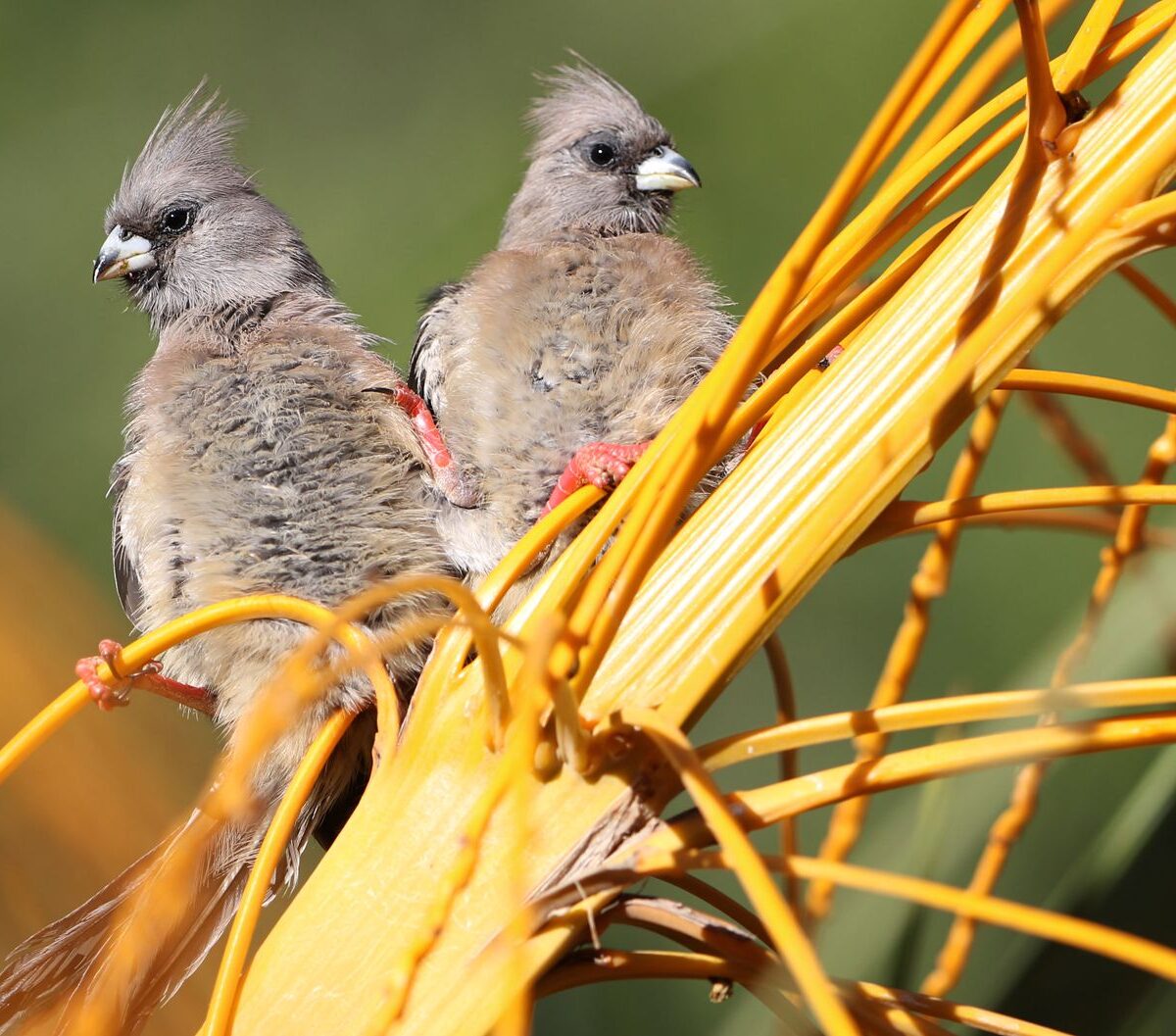
WHITE-BACKED MOUSEBIRD
Colius colius
DESCRIPTION
White-backed Mousebird (Colius colius) is a distinctive bird known for its long tail and unique coloration, featuring a white back and a grayish body. This species is often seen in small groups, where they exhibit social behaviors such as preening and vocalizing. They are agile climbers, often found foraging in trees and shrubs, where they can be observed hanging upside down while searching for food.
FUN FACTS
- White-backed Mousebirds are known for their unique social behavior, often seen grooming each other in their flocks, which helps strengthen social bonds
- Additionally, they have a distinctive flight pattern, characterized by a series of rapid flaps followed by short glides, making them quite agile in the air
QUICK INFO
Lifespan5-10 years in the wild
Average Weight50-70 g
Average Length30-35 cm
Diet TypeHerbivore
Social StructureThey are typically found in small groups, often consisting of family units.
Activity PatternDiurnal
Breeding SeasonSpring to early summer
- Habitat
- White-backed Mousebirds inhabit open woodlands, savannas, and scrublands. They prefer areas with plenty of trees and shrubs for foraging and nesting.
- Biomes
- Savanna, Woodland
- Native Range
- They are native to parts of sub-Saharan Africa, particularly in the eastern and southern regions.
- Continent
- Africa
- Countries
- South Africa, Namibia, Botswana, Zimbabwe, Mozambique
- Diet
- They primarily feed on fruits, seeds, and leaves, occasionally supplementing their diet with insects. Their foraging behavior often involves gleaning food from foliage.
- Diet Type
- Herbivore
- Favorite Food
- fruits, seeds, leaves
- Social Structure
- They are typically found in small groups, often consisting of family units.
- Activity Pattern
- Diurnal
- Group Size
- 5-15
- Territorial
- 0
 LC
LC
 VU
VU
50-70 g
Weight
30-35 cm
Length
- Coloration
- They have a grayish body with a distinctive white back and a long tail.
- Sexual Dimorphism
- Males and females are similar in appearance.
- Lifespan
- 5-10 years in the wild
- Offspring per Birth
- 2-4 eggs
- Sexual Maturity
- 1 year
- Breeding Season
- Spring to early summer
LC
Least Concern
IUCN Red List Status
- Population Status
- The population is currently stable, with no major declines reported.
- Wild Population Estimate
- 100,000+
- Population Trend
- Stable
- Endangered
- 0
- Threats
- Habitat loss due to agricultural expansion and urbanization poses a threat to their populations. However, they are generally adaptable and can thrive in modified habitats.
- Predators
- Snakes, birds of prey, and domestic cats are known to prey on White-backed Mousebirds.
- Defense Mechanisms
- They rely on their agility and ability to blend into their surroundings to evade predators.
- Found in Zoos
- Uncommon